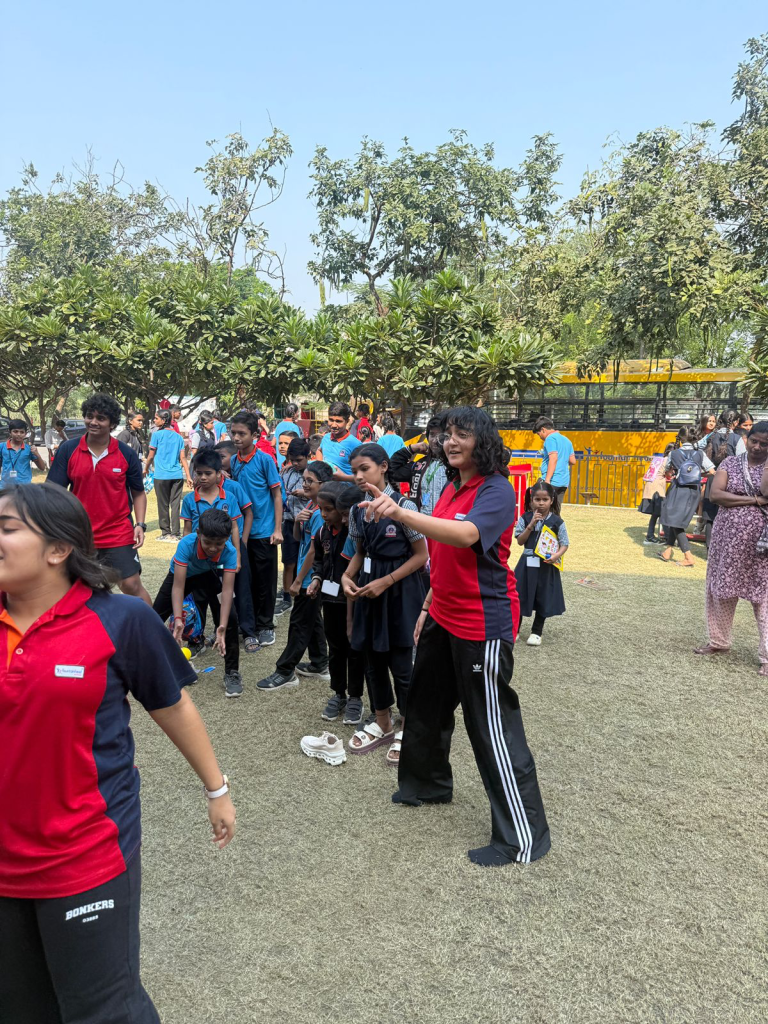
For this CAS experience, I helped organise an interactive activity for visiting government school children, where we designed a “Negativity Cup Knockdown” game. Each cup had a negative word written on it—like “weak,” “slow,” or “can’t”—and the children had to throw a soft ball to knock the cup down. After knocking it down, they were encouraged to replace the negative word with a positive one such as “strong,” “capable,” “brave,” or “I can.” This activity turned out to be a meaningful blend of fun, learning, emotional awareness, and community engagement. It also aligned strongly with LO5, LO6, and LO7.
This activity demonstrated strong collaboration and teamwork (LO5).
Before the children arrived, my team and I worked together to plan the setup—choosing appropriate words, arranging the cups, ensuring safety, and deciding how we would support the children during the activity. During the session, we had to coordinate constantly: some of us explained the rules, some helped children who were hesitant, while others encouraged them to think of positive replacement words. This required clear communication, patience, and shared responsibility. We also collaborated with the children themselves, guiding them gently when they struggled to think of a positive word and celebrating their efforts as a group. Through this, I learned how effective teamwork makes an activity smoother, more enjoyable, and more impactful.
The activity also connected to a larger global issue—mental and emotional well-being (LO6).
Although the task was playful, its purpose carried deeper significance. Children, especially those from under-resourced schools, often face challenges such as low confidence, negative self-beliefs, social pressure, or lack of emotional support. These issues relate to the global concern of youth mental health and the importance of building resilience. Our activity helped them recognise the power of positive thinking in a simple but memorable way. Replacing negative words with positive ones mirrors a real-life skill: reframing negative emotions with self-affirming thoughts. This directly connects to the UN Sustainable Development Goals, particularly SDG 4: Quality Education, by promoting emotional literacy and self-awareness in a fun, accessible way.
Finally, the experience made me reflect deeply on ethical choices and actions (LO7).
We had to be sensitive and responsible throughout the activity, especially because the negative words on the cups could trigger insecurity or discomfort in some children. We chose words carefully to ensure they were general and not personally directed at anyone. During the game, I had to make ethical decisions—like reassuring a child who missed the cup repeatedly, praising effort instead of performance, and ensuring no one felt embarrassed or pressured. We also had to be fair, giving each child equal chances and making sure the environment felt safe, encouraging, and non-judgmental. This reminded me that ethical behaviour isn’t only about big decisions—it appears in everyday actions such as empathy, tone of voice, fairness, and respect for others’ feelings.
Overall, the Negativity Cup Knockdown activity became much more than a simple game. It taught teamwork, encouraged emotional growth, and emphasised the ethical responsibility we have when working with younger children. Seeing the government school students smile proudly as they replaced negative words with positive ones was incredibly rewarding. This experience strengthened my belief that small activities, when thoughtfully designed, can make a meaningful difference in building confidence, kindness, and community connection.