
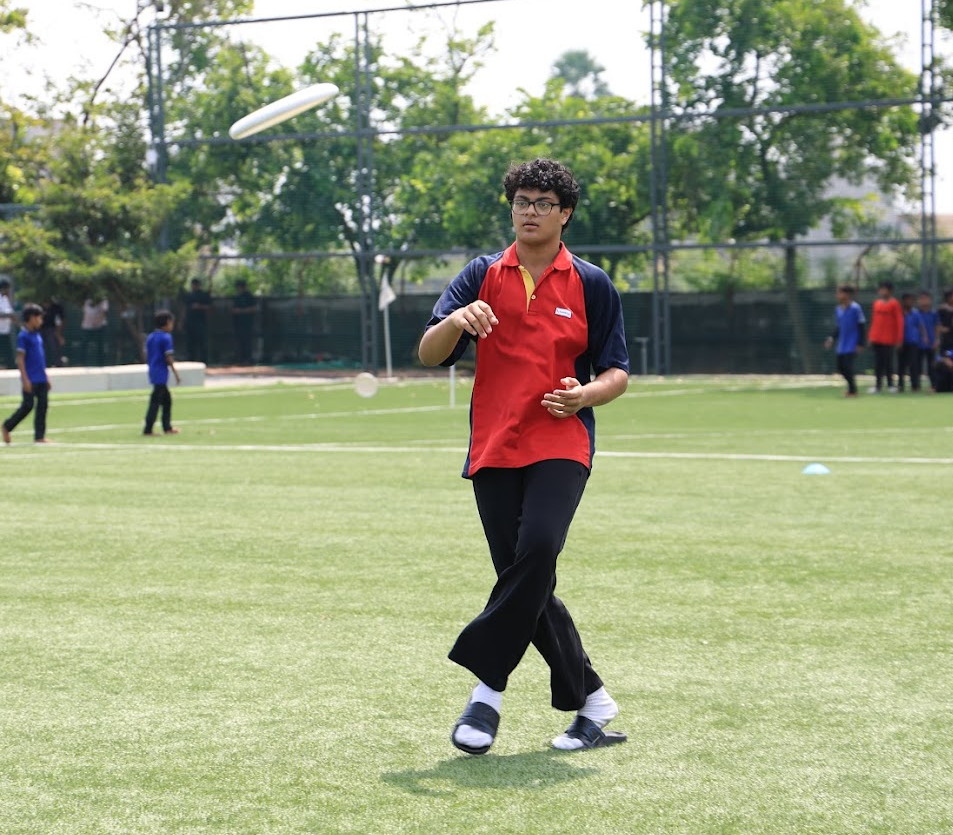
As part of my CAS Service strand, I volunteered to teach frisbee to government school children at my school over a total of six days, conducted across Fridays and Saturdays. During these sessions, hundreds of children participated in learning and playing frisbee. The aim of this initiative was to introduce the children to a new sport while encouraging physical activity, teamwork, and enjoyment through structured play. Throughout the six days, I helped teach basic frisbee skills such as throwing, catching, movement, and simple game rules. Many of the children had never played frisbee before, so it was important to explain the activity in a simple and engaging manner. This experience required patience, responsibility, and consistent effort, as each session involved managing large groups and ensuring that every child felt included and motivated.
Learning Outcome 1: Identify own strengths and develop areas for growth
This CAS service experience helped me gain a deeper understanding of my personal strengths and areas for improvement. One of my key strengths was my ability to interact positively with children and explain instructions in a simple and encouraging way. I was able to motivate participants, maintain a friendly environment, and ensure that most children felt confident enough to participate, even if they were initially hesitant. At the same time, I recognised areas where I needed growth, particularly in managing very large groups and handling distractions effectively. Working with hundreds of children required stronger organisational and leadership skills than I initially expected. Over the six days, I gradually improved in giving clearer instructions, setting boundaries, and maintaining discipline without discouraging participation. This experience helped me become more self-aware and showed me how reflection can lead to personal developmen
Learning Outcome 2: Demonstrate that challenges have been undertaken, developing new skills
Teaching frisbee to a large number of children presented several challenges, especially because many of them had no prior exposure to the sport. Explaining basic skills such as throwing and catching required patience, repetition, and adaptability. Additionally, working with children of different ages and skill levels meant that activities had to be modified to suit everyone. By facing these challenges, I developed important new skills such as leadership, adaptability, problem-solving, and effective communication. I learned how to break down complex movements into simpler steps and adjust my teaching approach based on the children’s responses. This experience pushed me outside my comfort zone and allowed me to grow both practically and personally.
Learning Outcome 4: Show perseverance and commitment in CAS experience
This experience required consistent perseverance and long-term commitment, as I participated actively across all six Fridays and Saturdays. Each session demanded sustained energy, patience, and focus, especially when working outdoors and managing large groups of children. Despite physical tiredness or repetition, I remained engaged and responsible throughout the activity My commitment ensured that the children received continuous guidance and support, allowing them to gradually improve their frisbee skills over time. Attending all sessions demonstrated reliability and dedication, which are essential qualities in service-based experiences. This reinforced the importance of following through on responsibilities and contributing consistently to a shared goal.
Learning Outcome 5: Demonstrate skills and benefits of working collaboratively
Collaboration played a crucial role in the success of this service activity. I worked closely with peers to plan sessions, divide responsibilities, and manage different groups of children. Effective teamwork allowed us to handle challenges such as crowd management, safety, and instruction more efficiently. Through this collaboration, I improved my communication and coordination skills while learning to trust and support others. Working as a team created a structured and positive environment for the children and enhanced the overall impact of the sessions. This experience highlighted how collaboration not only reduces individual pressure but also leads to better outcomes in service initiatives.
Sustainable Development Goals (SDGs)
This CAS experience is strongly connected to SDG 3 – Good Health and Well-Being, as teaching frisbee encouraged physical activity, fitness, and healthy lifestyles among children. Regular participation in sports supports both physical and mental well-being. It also relates to SDG 4 – Quality Education, as the sessions provided informal education through learning a new sport, developing discipline, teamwork, and coordination outside the traditional classroom environment.
Overall, teaching frisbee to government school children over six days was a meaningful and rewarding CAS Service experience. It allowed me to contribute positively to the community while developing important personal and interpersonal skills. Through this experience, I improved my communication, leadership, teamwork, and perseverance. Engaging with the children and helping them learn a new sport reinforced the importance of service and showed me how consistent effort can create a positive impact on others.