Introduction
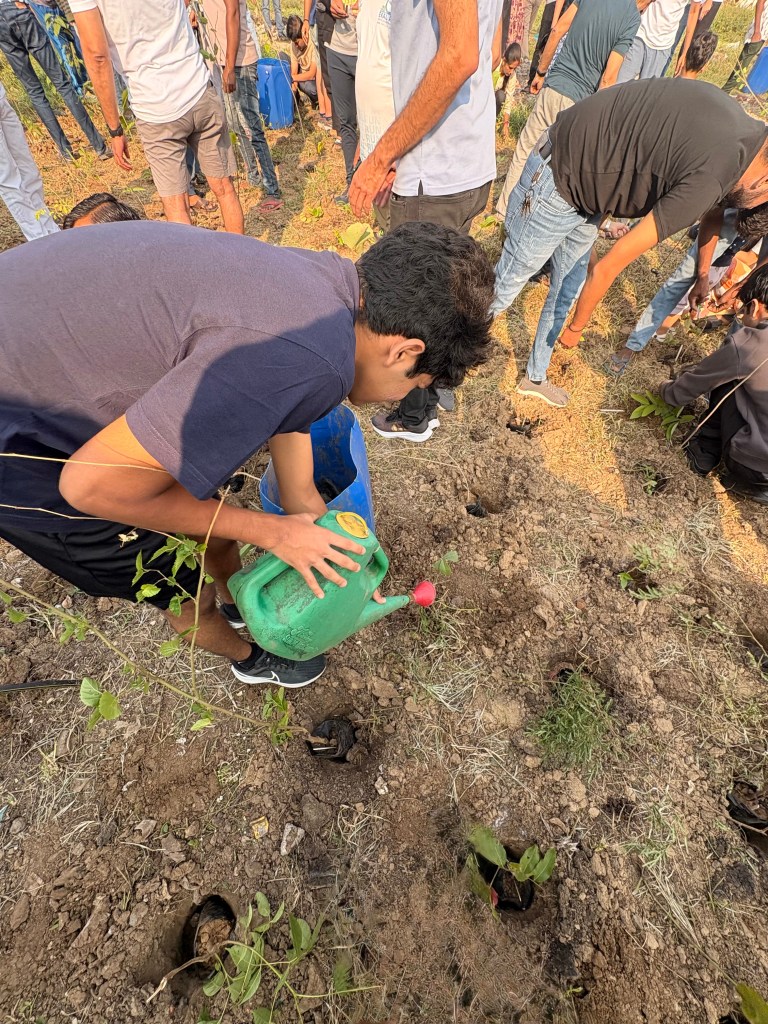
As part of my CAS Service component, I participated in three tree plantation drives conducted at Althan, BSNL premises, and a Miyawaki forest site. My role involved planting native saplings, preparing soil, watering plants, and helping maintain the plantation areas.
This service experience focused on addressing environmental issues such as deforestation, climate change, air pollution, and biodiversity loss. The Miyawaki plantation method, in particular, aimed to restore degraded land by densely planting indigenous species, which helped create a self-sustaining forest ecosystem in a shorter period of time.
Through these activities, I contributed to improving air quality, increasing green cover, preventing soil erosion, and supporting biodiversity. Most importantly, this experience allowed me to take part in community-led environmental sustainability efforts and contribute to solving global issues at a local level.
Explanation of CAS Learning Outcomes
LO1 – Identify own strengths and develop areas for growth
Through this experience, I recognised my strengths in teamwork and hands-on outdoor work. I was comfortable working with others and contributing physically to the task. At the same time, I realised that I could improve my leadership skills by taking more initiative during group activities and guiding others when needed. This helped me become more aware of my personal strengths and areas for growth.
LO2 – Demonstrate that challenges have been undertaken, developing new skills
Plantation drives involved physical effort, working under the sun, and managing time effectively. These conditions were challenging, especially during long hours of planting and maintenance work. By pushing myself to complete these tasks, I developed resilience, better stamina, and practical environmental skills such as proper sapling placement and soil preparation techniques.
LO4 – Show perseverance and commitment in CAS experience
I showed perseverance by participating in multiple plantation drives instead of treating this as a one-time activity. Even when the work was tiring, I stayed committed to completing my tasks responsibly. This taught me the importance of long-term commitment when working towards sustainable change.
LO5 – Demonstrate skills and benefits of working collaboratively
This service experience required strong teamwork. I worked alongside volunteers, coordinators, and peers, where each person had a specific role. Effective communication and cooperation were necessary to plant saplings efficiently and maintain the plantation areas. This helped me understand how collaboration leads to better outcomes and strengthens community impact.
LO6 – Engagement with issues of global significance
By participating in tree plantation drives, I actively engaged with global issues such as climate change, deforestation, air pollution, and biodiversity loss. Although my actions were local, they contributed to global environmental sustainability efforts. This helped me realise how individual actions can collectively make a difference on a global scale.
LO7 – Recognise and consider the ethics of choices and actions
This experience made me reflect on the ethical responsibility humans have toward the environment. Choosing to contribute to environmental conservation highlighted the importance of making responsible choices that protect natural resources for future generations. It helped me become more aware of how everyday actions can either harm or protect the environment.
IB Learner Profile Development
This CAS service experience helped me develop several IB learner profile attributes:
- Caring – I showed care for the environment by contributing to plantation drives and supporting ecological restoration in my city.
- Principled – I made ethical choices by supporting sustainable practices and environmental conservation.
- Communicator – I worked collaboratively with volunteers and shared responsibilities effectively.
Personal Reflection and Conclusion
This CAS service experience helped me understand that meaningful change begins with small, consistent actions. Planting trees may seem simple, but when done collectively, it contributes to long-term environmental protection. The Miyawaki forest experience showed me how innovative and science-based methods can restore degraded land effectively.
Overall, this experience made me more environmentally conscious and motivated me to continue participating in sustainability initiatives beyond CAS. It strengthened my sense of responsibility toward nature and encouraged me to adopt more eco-friendly habits in my daily life. 🌍💚