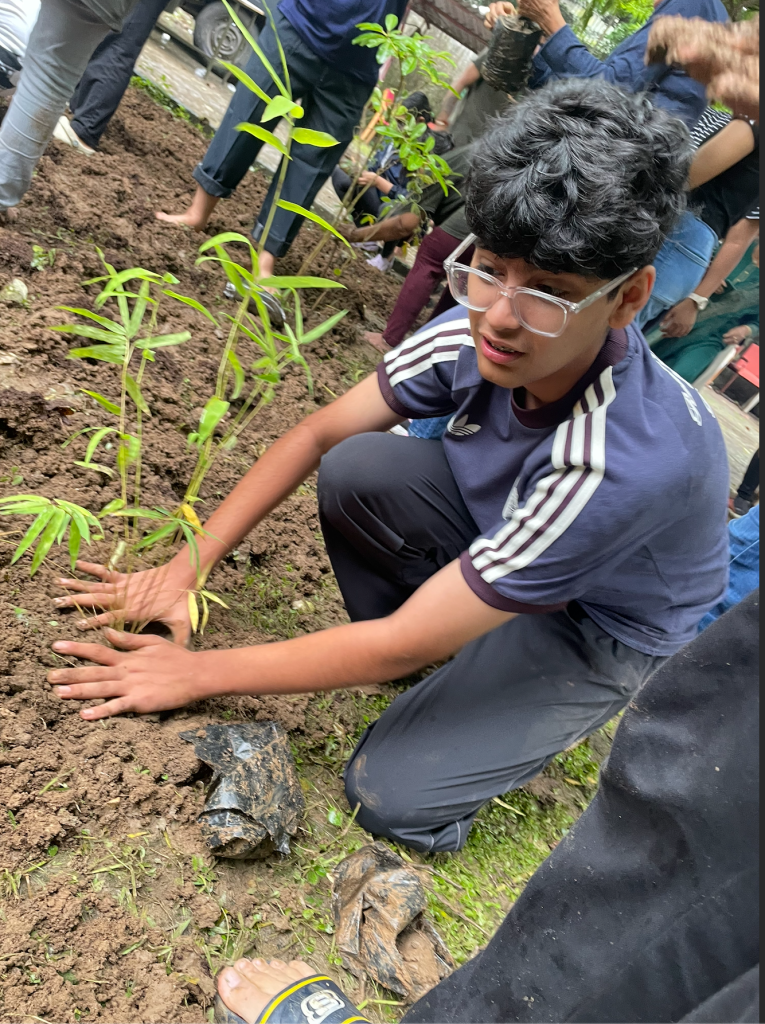
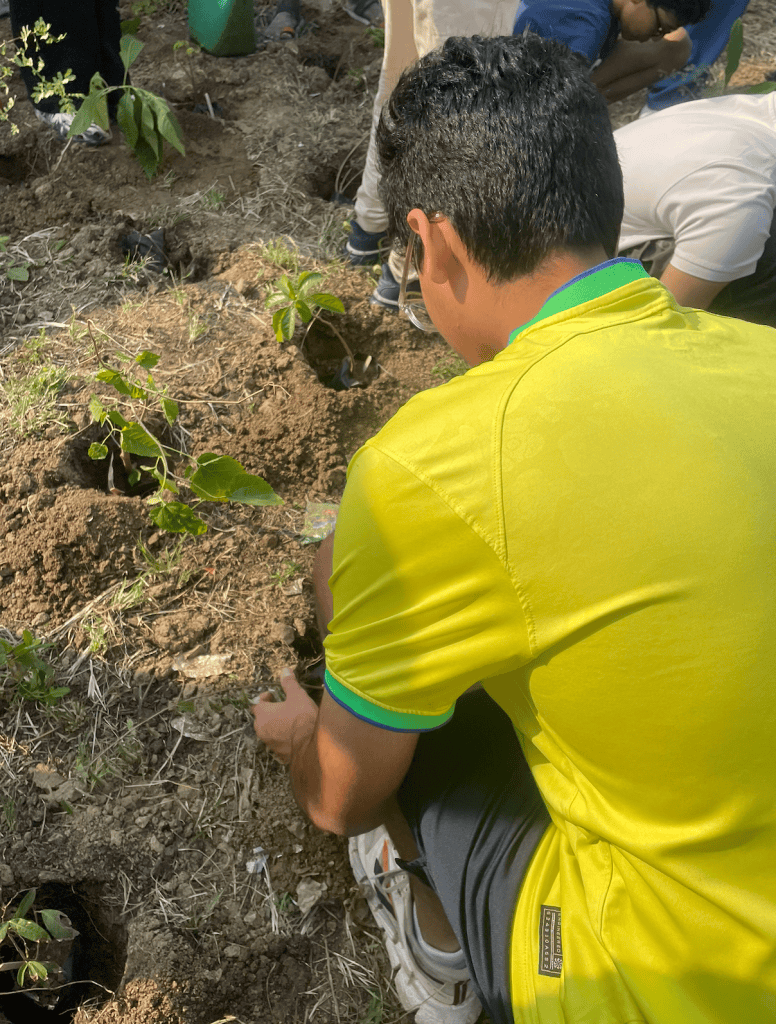
The whole experience of plantation drives included participating in three plantation drives; in all the drives, the “Miyawaki” technique was used for performing the drive. For all of the drives, two different places were visited, and more than 30 plants were planted. The experience gave the knowledge of how the plants are planted and how significant number of trees for the environment is to be planted. The activity fulfilled the needs of several CAS Learning Outcomes, which are explained below in detail.
LO2 – Before the experience, I did not know anything about the Miyawaki technique and how trees can be grown “naturally” in the shortest periods possible. The whole concept of picking the right place or species was the new skill I learned. Using this technique in practice was a challenge that made me develop the practical skills necessary for sustainable afforestation.
LO4 –The drives took place on Sundays and during the school hours throughout a period of three days. Thus, it required continuous presence and commitment to the cause for me even during the weekends. Participating in every drive and helping with the plantation process is a good example of my commitment and persistence during the whole experience.
LO5 –The given experience contributed to the improvement of my social skills, as there were numerous volunteers working with me on the plantation drives. The collaboration with other people helped us to work over larger territories planting more trees in the process, thus making it beneficial for the general goal. At the same time, the possibility to share various tasks, such as digging, planting, and watering made the work much easier.
LO6 – I was closely involved with the global issue of deforestation. By planting trees according to a specific scientific technique for planting trees, I was able to get involved in a serious way. Since we covered wider areas in various trips, I can say that this work did make an impact on a small scale.
LO7 – Planting a lot of trees, bushes, and plants was an act of responsibility for the environment. Looking at the native species and thinking about their impact on the future generations, I was able to think about ethical aspects of my actions and decisions during this experience.
Anyway, the CAS experience was practical and interesting, and it gave me a lot of information about tree species and Miyawaki planting method. I am grateful for having this experience.