Rural Immersion Trip to Padamdungri
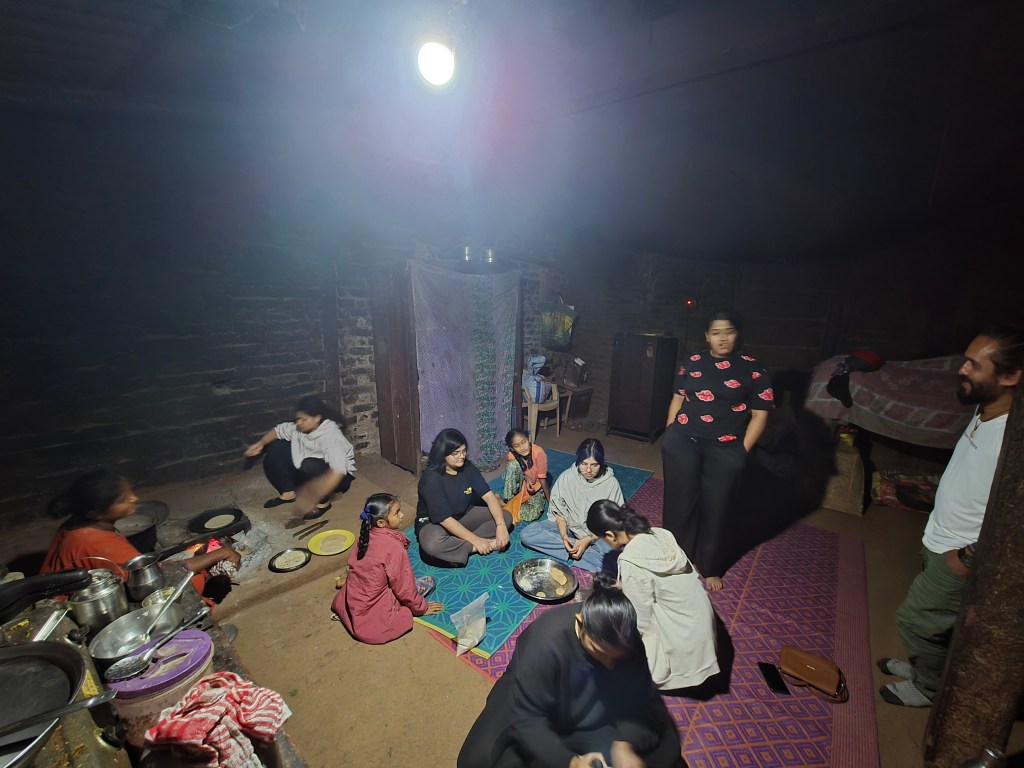
The Rural Immersion trip to Padamdungri was an experience that challenged many of my assumptions about rural life and made me reflect on my own experiences and privileges. Being placed in an unfamiliar environment required me to adapt to different routines, surroundings, and ways of communicating. What initially felt unfamiliar gradually became an opportunity to learn from the people around me and understand their perspectives. Rather than simply observing rural life, I became involved in activities and interactions that allowed me to experience aspects of the community firsthand. The trip therefore became an important experience of personal growth, collaboration, and social awareness.
LO1: Identify own strengths and develop areas for growth
One of the main strengths I recognised during the trip was my ability to adapt when situations did not go as expected. I had to adjust to an environment that was very different from my usual surroundings, and I learned that being comfortable with uncertainty is an important part of personal growth. I also recognised that I communicate well when working as part of a group, particularly when responsibilities need to be divided and completed efficiently.
However, the experience also highlighted areas that I need to improve. I realised that I sometimes hesitate when entering unfamiliar social situations because I am unsure of how I will be perceived. Interacting with people whose experiences were very different from mine encouraged me to become more confident and less self-conscious. I learned that genuine curiosity and respectful listening are often more important than trying to find the perfect thing to say.
LO2: Demonstrate that challenges have been undertaken, developing new skills in the process
The immersion required me to step beyond the routines and conveniences I am accustomed to. Adapting to unfamiliar surroundings and participating in activities that were outside my normal routine was challenging at first. Instead of allowing this discomfort to limit my participation, I learned to approach unfamiliar situations with greater openness.
Through these challenges, I developed practical skills such as problem-solving, communication, flexibility, and patience. I also became better at responding to unexpected situations without immediately becoming frustrated. The experience showed me that developing a skill does not always require formal instruction; sometimes, it comes from repeatedly putting yourself in situations where you have to adapt.
LO3: Demonstrate how to initiate and plan a CAS experience
Although the immersion was organised as a group experience, my participation involved preparation, responsibility, and active involvement rather than simply attending the trip. Before and during the experience, I had to understand the purpose of the activities, prepare myself for the different conditions, and work with others to ensure that responsibilities were completed.
I also learned that planning an experience does not mean that everything will happen exactly as expected. In an unfamiliar environment, plans may need to change depending on the circumstances. Being able to adjust while still working towards the original purpose of an activity was therefore an important lesson for me. It helped me understand planning as a balance between preparation and adaptability.

LO4: Show commitment to and perseverance in CAS experiences
The experience required consistent participation rather than involvement in only the activities that I personally found comfortable or enjoyable. There were moments when the unfamiliar environment and physically demanding aspects of the trip were tiring, but I continued to participate and contribute.
My commitment was particularly evident in my willingness to remain involved even when activities became challenging or did not go exactly as I expected. Instead of viewing discomfort as a reason to withdraw, I treated it as part of the experience. This helped me understand that perseverance is not necessarily about enjoying every moment; it is about remaining committed to an experience and learning from it even when it becomes difficult.
LO5: Demonstrate the skills and recognise the benefits of working collaboratively
Working with others was central to almost every aspect of the immersion. I had to cooperate with my peers, communicate clearly, divide responsibilities, and consider different approaches to completing tasks. I learned that effective teamwork is not simply about everyone contributing equally; it also involves recognising individual strengths and helping each other when someone is struggling.
The experience also showed me how different perspectives can improve the way a group approaches a problem. I became more conscious of listening before making decisions and of valuing contributions that differed from my own. This strengthened my understanding that collaboration requires patience, compromise, and mutual respect.
LO6: Demonstrate engagement with issues of global significance
One of the most significant aspects of the trip was seeing issues that are often discussed abstractly in classrooms in a much more personal context. Concepts such as inequality, access to resources, education, economic opportunity, and sustainable development became easier to understand when viewed through the experiences of a rural community.
The experience also made me reconsider the assumptions I had formed about rural communities. It would be easy to define such communities only through the challenges they face, but interacting with people directly showed me the importance of recognising their knowledge, resilience, traditions, and strengths as well. This encouraged me to think about inequality in a more nuanced way and to understand that development should involve listening to communities rather than simply imposing outside solutions.
LO7: Recognise and consider the ethics of choices and actions
The trip made me particularly conscious of the responsibility that comes with entering another community as an outsider. I realised that taking part in a rural immersion should not mean treating the community as something to observe or as an educational experience that exists solely for my benefit.
I therefore became more aware of the importance of behaving respectfully, listening without judgement, and avoiding assumptions about people’s lives based on differences in lifestyle or access to resources. The experience taught me that empathy involves more than feeling sympathy for someone else’s circumstances; it requires making an effort to understand their perspective and recognising their dignity and individuality. This changed the way I think about my responsibility when interacting with people whose experiences differ from my own.
Conclusion
The Rural Immersion trip to Padamdungri was meaningful because it challenged me to learn outside the familiar environment of school and my everyday life. I returned with greater confidence in my ability to adapt, communicate, and work with others, but also with a greater awareness of the assumptions I can make when I encounter unfamiliar circumstances. Most importantly, the experience taught me to approach differences with curiosity rather than judgement. It helped me understand that personal growth can come from discomfort and that meaningful engagement with a community requires respect, humility, and willingness to listen. The lessons from Padamdungri will influence how I approach unfamiliar people, environments, and social issues in the future.