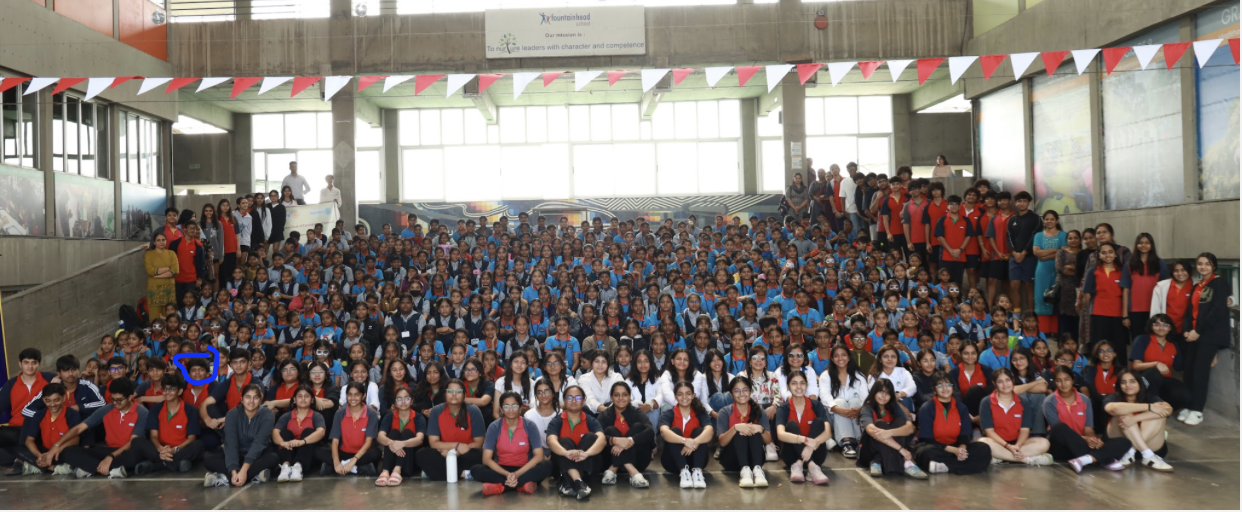
On 27th November 2025, I participated in a Children’s Carnival organized by the Interact Club in collaboration with Rotary Downtown and Inner Wheel. I chose to take this experience under Creativity in CAS because I designed and developed an original educational game that combined fun with practical learning. The game involved showing students images of everyday items and asking them to guess the correct prices. Based on how accurate their guesses were, they received tokens, which they could later use to “purchase” gifts and prizes. This activity allowed children to learn about pricing, value, and budgeting in an interactive and engaging way while allowing me to demonstrate all seven CAS Learning Outcomes.
LO1 – Identify Own Strengths and Develop Areas for Growth
Through this creativity-based project, I discovered that one of my strengths is innovative thinking. I was able to come up with a unique idea that blended entertainment with education. Designing the structure of the game showed me that I can think creatively while still focusing on a clear learning objective. I also realized that I am confident when presenting and explaining ideas, especially to younger children. I could communicate the rules clearly and maintain their interest.
However, I also identified areas for growth. While I was creative in planning the game, I initially underestimated how excited and competitive the children would become. Managing time and ensuring everyone got a fair chance to participate was challenging. This helped me understand the importance of anticipating practical challenges when turning a creative idea into a real activity. It showed me that creativity also requires strong organization and planning.
LO2 – Undertake Challenges and Develop New Skills
Executing my idea came with challenges. Some students had very little understanding of pricing, so their guesses were either extremely high or extremely low. I had to guide them by giving hints and explaining the concept of value without giving away the answer. Additionally, I needed to ensure that the token system was clearly understood so there was no confusion about how prizes were earned.
Through these challenges, I developed stronger adaptability, patience, and leadership skills. I improved my ability to adjust explanations based on different age groups and learning levels. I also learned how to think quickly and make small changes during the event to improve clarity and fairness. This experience strengthened my confidence in managing a creative project independently.
LO3 – Initiate and Plan a CAS Experience
This activity required significant initiative and planning from my side. I first developed the concept of a “guess the price” game combined with a token-based reward system to simulate a simple marketplace experience. I selected appropriate everyday items, researched accurate prices, prepared printed visuals, and organized tokens and prizes in advance.
I also planned how to determine whether an answer was close enough to be rewarded. This required me to think logically and create clear guidelines to avoid confusion. Taking responsibility for planning every aspect of the activity helped me understand the process of transforming a creative idea into a structured and successful event. It strengthened my organizational and decision-making skills.
LO4 – Show Perseverance and Commitment
Throughout the carnival, I remained fully committed to my booth and the smooth functioning of the game. Managing the activity for several hours required continuous enthusiasm and focus. As more students gathered, it became noisy and slightly overwhelming, but I stayed patient and energetic.
Even when I felt tired, I continued explaining the game clearly and encouraging participation. My commitment ensured that each child had a positive and fair experience. This demonstrated perseverance and responsibility, especially in maintaining quality and fairness until the very end of the event.
LO5 – Demonstrate Skills and Benefits of Working Collaboratively
Although the game was my original idea, it could not have run smoothly without teamwork. I coordinated with other volunteers who helped manage the prize counter, distribute tokens, and maintain order during busy periods. Clear communication was essential to ensure that the token exchange system worked properly.
Working with members from Interact Club, Rotary Downtown, and Inner Wheel helped me appreciate the value of collaboration. By sharing responsibilities and supporting one another, we ensured that the carnival was organized and enjoyable for all participants. This experience reinforced that creativity becomes more impactful when supported by teamwork.
LO6 – Engage with Issues of Global Significance
The main concept of my game focused on financial literacy, which is an important global life skill. Many children are not formally introduced to concepts such as pricing, value, and budgeting at a young age. Through this activity, I introduced them to basic economic thinking in a simple and engaging way.
Teaching children to think about the worth of items and how to “spend” their tokens wisely highlighted the importance of responsible decision-making. This experience made me realize how creative educational activities can contribute to addressing broader issues such as financial awareness and life skills development.
LO7 – Recognize and Consider the Ethics of Choices and Actions
Ethical responsibility was an important aspect of organizing this activity. I ensured that all students were treated equally and that rules were applied consistently. Tokens were awarded fairly based on how accurate their answers were, without favoritism. I also selected appropriate and age-suitable items to maintain a respectful environment.
Transparency in distributing prizes was important to maintain trust and fairness. This experience reinforced the importance of integrity and responsibility, especially when organizing activities that involve rewards and competition. Acting ethically ensured that the experience remained positive and meaningful for every participant.
The Children’s Carnival on 27th November 2025 was a highly enriching Creativity CAS experience. Designing and implementing my business-themed pricing game allowed me to apply innovation, leadership, perseverance, teamwork, and ethical awareness in a real-world setting. By successfully demonstrating all seven CAS Learning Outcomes, I not only contributed to the success of the carnival but also grew personally and strengthened my ability to transform creative ideas into impactful learning experiences.