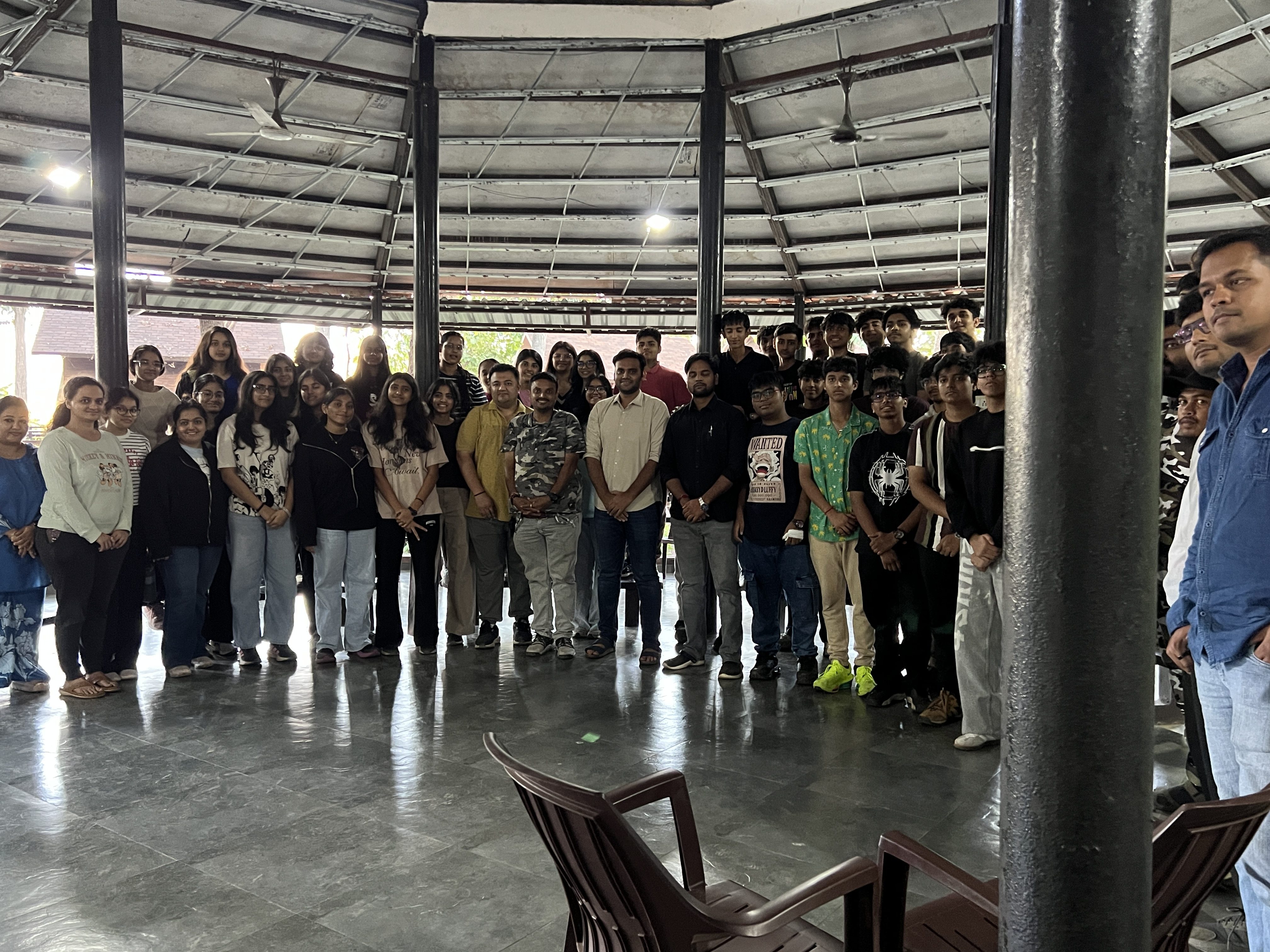
As part of a CAS experiential learning activity, I participated in a six-day rural immersion camp in Ambapani. The camp focused on sustainability, community engagement, environmental awareness, and cultural understanding. Through activities such as farming, bamboo product making, Warli painting, bird identification, and interactions with local villagers, I gained a deeper appreciation for rural life and the importance of sustainable living. This experience allowed me to step outside my comfort zone and understand the strong connection between nature and community life.
LO1 – Identifying Strengths and Areas for Growth
During the camp, I demonstrated adaptability and teamwork while adjusting to a simple rural lifestyle away from urban comforts. Participating in farming, plastic collection, and village activities showed my willingness to contribute actively. However, I also realized that I need to improve my physical endurance and time management, as the schedule was structured and sometimes physically demanding. This experience helped me recognize areas where I can grow stronger, both mentally and physically.
LO2 – Undertaking New Challenges and Developing New Skills
The camp involved many new challenges, such as river bathing, bamboo crafting, mud lipan art, and learning traditional Warli painting. These activities required patience, creativity, and focus. I also learned about making Baaj (leaf plates), identifying birds through their calls, and understanding local agricultural practices. Interacting with village students at the Aasaramsala and speaking with local families improved my communication skills and broadened my cultural awareness.
LO3 – Demonstrating Engagement with Issues of Global Significance
Through plastic collection drives and discussions about waste disposal with the village Sarpanch, I understood the importance of environmental sustainability. Observing how villagers depend directly on natural resources made me reflect on global issues such as environmental degradation and sustainable development. The experience highlighted how small community actions can contribute to larger environmental solutions.
LO4 – Showing Commitment and Perseverance
The six-day schedule was active and required consistent participation in treks, farming, art activities, and adventure tasks like valley crossing. Despite moments of tiredness, I remained committed and engaged in every activity. Reflection sessions each night encouraged me to think critically about my learning and maintain a positive attitude throughout the camp.
Overall Reflection
Overall, the Ambapani camp was a transformative experience that strengthened my teamwork, adaptability, and appreciation for sustainable living. It taught me that rural communities thrive through cooperation, respect for nature, and cultural traditions. This experience not only enhanced my personal growth but also motivated me to become more environmentally responsible and socially aware in my daily life.