Introduction
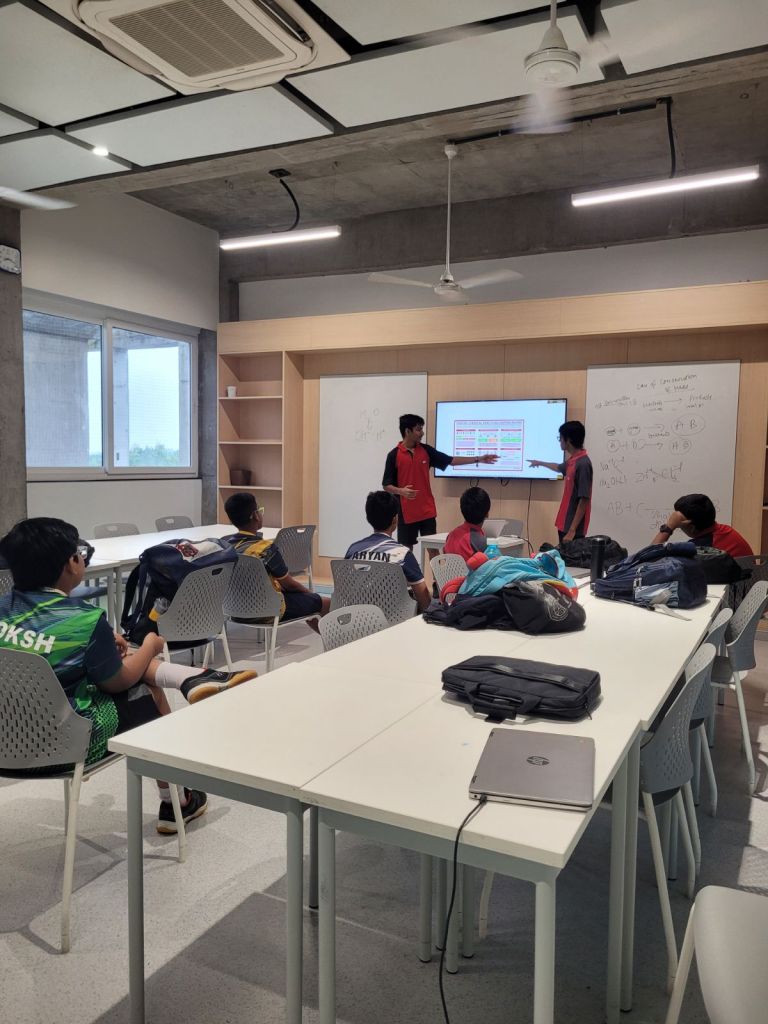
As part of my CAS journey in the IB Diploma Programme, I co-initiated and led Eureka Society, a student-led science initiative conducted in collaboration with my friend. The project emerged from a simple observation: many younger students perceived science as a subject centred around memorisation rather than understanding.
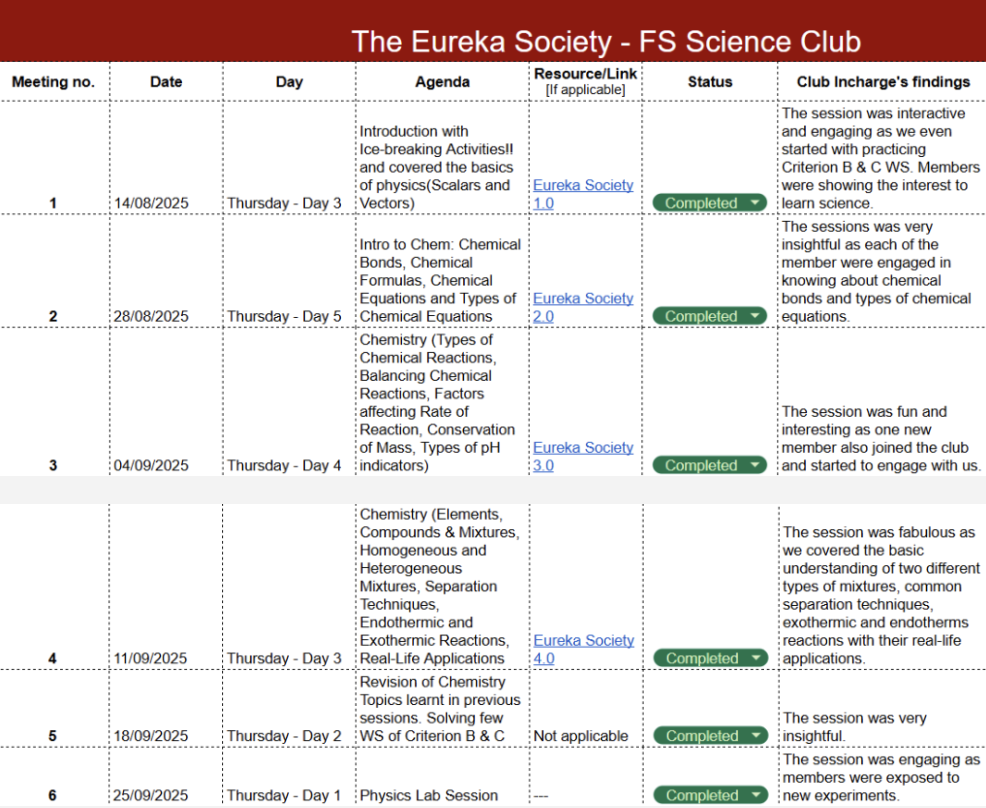
To address this, we designed and facilitated weekly early-morning sessions for MYP Grade 7 and 8 students over a seven-month period. These sessions aimed to transform scientific learning into an interactive and inquiry-based experience by integrating demonstrations, experiments, discussions, simulations, and real-life applications across physics and chemistry concepts.
The project combined Creativity, Activity, and Service, as it required designing learning experiences, actively facilitating sessions, and contributing to the academic development of younger students within our school community.
Project Planning and Implementation
The planning phase involved identifying learning gaps among middle school students and structuring sessions that prioritised conceptual clarity over syllabus completion. Each session was conducted once a week before regular school hours, requiring sustained commitment, preparation, and coordination.
We designed activities covering topics such as:
- Motion and forces
- Everyday physics applications
- Fundamental chemistry concepts
- Scientific reasoning and experimentation
Sessions emphasised participation rather than passive learning. Students were encouraged to question assumptions, predict outcomes, and analyse observations independently.
Over time, internal academic observations indicated an average improvement of approximately one proficiency level (out of seven) in Integrated Science among participating students, alongside increased classroom confidence and engagement.
CAS Learning Outcomes
Learning Outcome 1: Identify own strengths and develop areas for growth
Through leading Eureka Society, I recognised strengths in communication, conceptual explanation, and initiative-taking. However, I also identified areas requiring development, particularly adapting explanations for diverse learning speeds and maintaining engagement among students with varying academic confidence.
This experience strengthened my ability to simplify complex scientific ideas and communicate effectively with younger learners.
Learning Outcome 2: Demonstrate that challenges have been undertaken, developing new skills
Conducting weekly sessions presented multiple challenges, including managing time alongside IB academics, maintaining session planning consistency, and sustaining student interest over several months.
I developed new skills such as:
- Educational planning
- Public speaking and facilitation
- Collaborative leadership
- Problem-solving during live demonstrations
Balancing academic commitments with project responsibilities required discipline and adaptability.
Learning Outcome 3: Demonstrate how to initiate and plan a CAS experience
Eureka Society originated as a student initiative rather than an assigned activity. From conceptualisation to execution, we planned session structures, learning objectives, material requirements, and engagement strategies.
The project required long-term scheduling, coordination with mentors, and iterative improvement based on feedback and student response, demonstrating effective initiation and sustained planning.
Learning Outcome 4: Show commitment and perseverance in CAS experiences
The project extended over seven months with weekly sessions conducted before school hours. Maintaining continuity despite academic workload, examinations, and logistical challenges demonstrated perseverance.
Consistency became a defining aspect of the initiative, gradually building trust among participating students and mentors.
Learning Outcome 5: Demonstrate skills and recognise the benefits of working collaboratively
Eureka Society was co-led with my friend, requiring continuous collaboration in planning, teaching, and evaluating sessions.
Through this partnership, I learned to:
- Share responsibilities effectively
- Respect differing teaching approaches
- Make collective decisions
- Support mutual leadership
Collaboration strengthened both the project’s quality and our ability to sustain it long term.
Learning Outcome 6: Demonstrate engagement with issues of global significance
Quality education and scientific literacy are globally recognised developmental priorities. By promoting inquiry-based STEM learning at an early stage, Eureka Society contributed to improving educational accessibility and encouraging critical thinking skills essential for future global problem-solving.
The project addressed the broader issue of rote learning culture by promoting conceptual understanding.
Learning Outcome 7: Recognise and consider the ethics of choices and actions
While facilitating sessions, we ensured inclusivity, respect for diverse learning abilities, and equal participation opportunities. Ethical considerations included maintaining academic honesty, avoiding misinformation, and creating a psychologically safe environment where students felt comfortable asking questions without fear of judgment.

Personal Growth and Impact
Beyond measurable academic improvement, the most meaningful outcomes were behavioural changes observed among students. Questions shifted from examination-oriented concerns to curiosity-driven inquiry. Students increasingly demonstrated confidence in experimenting, discussing, and analysing scientific concepts.
Personally, this experience reshaped my understanding of leadership. I realised leadership is not defined by authority but by creating environments where others feel empowered to grow.
Conclusion
Eureka Society evolved from a simple idea into a sustained learning community built on curiosity, collaboration, and consistency. The project allowed me to apply creativity, service, and leadership while contributing meaningfully to my school environment.
Through this CAS project, I developed organisational, interpersonal, and reflective skills that extend beyond academics. Most importantly, the experience reinforced my belief that education becomes impactful when knowledge is shared collaboratively.
The journey continues, and the lessons learned through Eureka Society will influence my future academic, leadership, and community initiatives.

