There is a moment in Hayao Miyazaki’s Spirited Away where the protagonist, Chihiro, watches her parents transform into pigs after consuming food that was not theirs to take. The scene lasts barely two minutes. Yet in that brief sequence, Miyazaki employs dramatic irony, mythological allusion, visual symbolism, and a sharp social commentary on greed — all without a single line of explanatory dialogue. It is, by any measure, a feat of literary craft.
And yet, for most of my school life, anime occupied a completely separate mental category from “literature.” It was something I watched at home, not something I analysed in class. That changed during an English lesson when I found myself applying the lens of narrative perspective to a scene I had rewatched a dozen times — and suddenly seeing it entirely differently. That moment planted the seed for this CAS project: a literature club dedicated to watching anime and analysing it through the same tools we use in IB English.
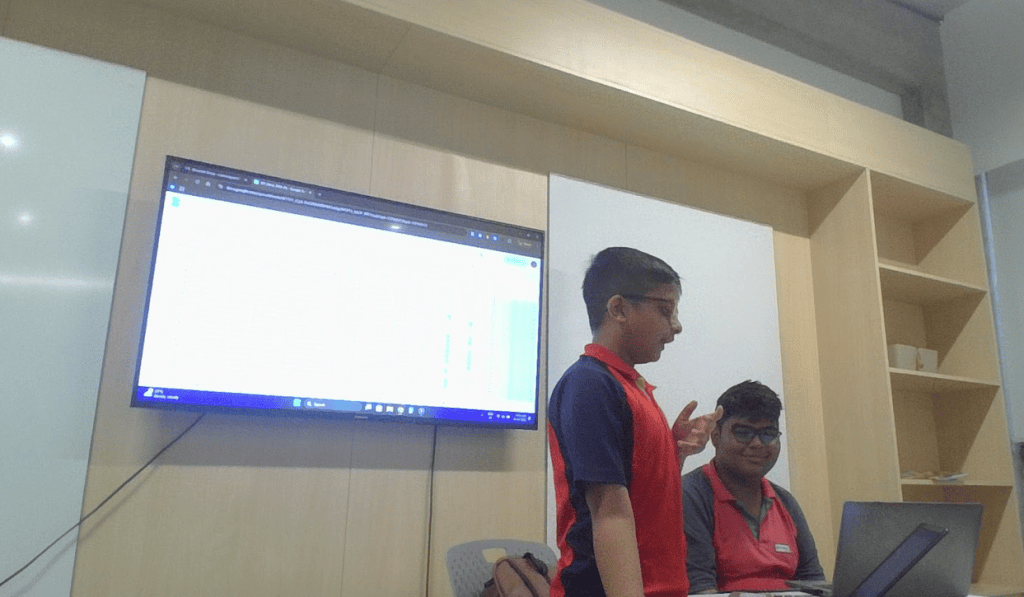
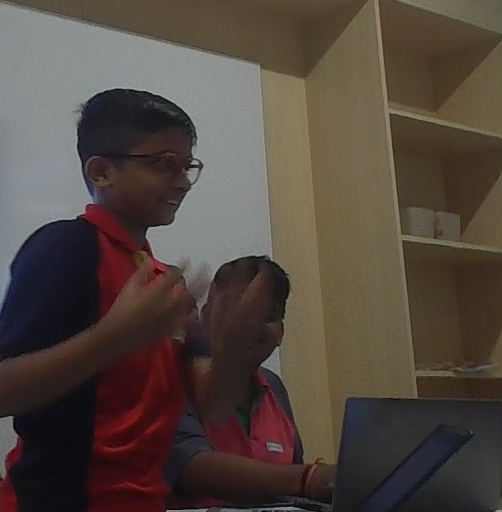
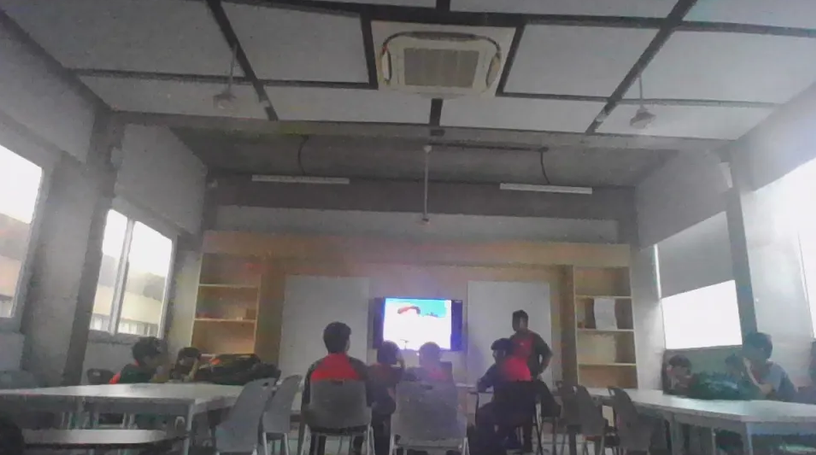
Over the course of several months, I planned, launched, and ran this club — navigating challenges, building community, and arriving at insights about storytelling, culture, and literature that I genuinely could not have reached alone. This blog reflects on that journey through the lens of Learning Outcomes 3, 4, 5, and 7.
LO 3 – Demonstrate initiative & planning
Taking the initiative to formally establish this as a CAS project required more planning than I had initially anticipated. I drafted a proposal outlining the club’s purpose, schedule, and curriculum. I approached my school’s English department for faculty support, created a sign-up form, and curated a list of anime titles that offered strong literary and cinematic content — from Neon Genesis Evangelion‘s psychoanalytic symbolism to Princess Mononoke‘s environmental allegory.
Every session was planned in advance with a viewing guide I prepared, listing key scenes to watch closely, discussion questions rooted in English literary analysis, and a short glossary of visual techniques for members less familiar with analytical frameworks. Planning these sessions taught me that good ideas require structured execution — enthusiasm alone does not sustain a club.
LO 4 – Show commitment & perseverance
Commitment was tested early. After the initial enthusiasm of the first two sessions, attendance began to dip. Some members felt uncertain about applying academic frameworks to something they associated purely with leisure. I had to persevere — not by lowering the analytical bar, but by making the approach more engaging.
I restructured the sessions: we began each meeting with a ten-minute “cold watch” of a single scene, then broke into pairs to identify one literary and one visual technique before sharing with the group. This change improved engagement significantly. By the fourth session, members were arriving with independently prepared observations — exactly the intrinsic motivation I had hoped to cultivate.
LO 5 – Demonstrate skills and benefits of working collaboratively
The most intellectually rewarding aspect of this project was the collaborative analysis itself. Together, the club identified and discussed a wide range of techniques across the anime we watched — drawing directly on the frameworks taught in IB English Literature and applying them to a visual medium.
Collaboration surfaced observations I would never have made alone. A member with an art background noticed geometric staging in Demon Slayer; a student who studies music identified diagetic sound as a storytelling device in Your Lie in April. The group’s collective intelligence consistently exceeded what any one of us could have produced individually — a reminder that literary analysis, like literature itself, benefits from multiple voices.
LO 7 – Recognise and consider the ethics of choices and actions.
Analysing anime through an English lens consistently brought us face to face with ethical questions — not just within the fictional worlds, but about our own choices as viewers, discussants, and club organisers. Anime is rarely morally simple, and that complexity demanded that we reflect carefully on the implications of what we were watching and how we were framing it.
These conversations pushed the club beyond technique-spotting into genuine moral reasoning. We began to see that the choices authors and directors make — what to show, what to withhold, who to humanise — are ethical acts. And equally, our own choices as a club: how we discuss sensitive themes, whether we hold space for discomfort, how we treat perspectives that diverge from our own, were all subject to the same ethical scrutiny. LO 7 was not an abstract checkbox — it was present in almost every session, once we learned to look for it.
Conclusion
When I first pitched this club, I framed it as a simple idea: watch anime, analyse it like English. What I did not anticipate was how profoundly the process would reshape my understanding of storytelling, collaboration, and ethical responsibility.
I learned that initiative without planning is just enthusiasm, and planning without perseverance is just paperwork. The real substance of this project lived in the months between — in the restructured sessions, the disagreements, the moments when a peer’s observation completely reframed a scene I thought I understood. Those moments could only have happened collaboratively.
And then there was the ethics. Analysing Death Note taught me that narrative sympathy is a powerful and manipulable force. Curating the club’s syllabus taught me that every act of selection is also an act of exclusion — and that I needed to own that responsibility consciously, not accidentally. LO 7 turned out to be less about the anime and more about me: the choices I made as an organiser, an analyst, and a member of a community trying to think carefully together.