It’s incredibly easy to get caught up in the fast pace of urban life, surrounded by technology and modern conveniences. Trading the familiar Fountainhead campus for the dense woods of Padamdungri was the ultimate reality check. This CAS trip wasn’t just a getaway; it was a full immersion into a lifestyle that demands physical resilience, community collaboration, and a deep respect for nature.
Life in the Woods
Our base for this trip was a camp nestled right in the woods. Stripped of our usual comforts and routines, staying in these camp rooms immediately pushed us out of our comfort zones. It set the tone for the days ahead—we weren’t there to be tourists; we were there to step into the shoes of the locals and experience their daily reality firsthand.
The True Meaning of “Hands-On” Work
The core of this trip involved rolling up our sleeves and taking on the daily work of the villagers. One of the most memorable tasks was applying cow dung to the walls of the houses. While it might sound unusual to an outsider, this is a traditional, highly effective method for naturally insulating homes and keeping insects away. It was a messy, physically demanding process, but learning the technique directly from the villagers taught me a lot about sustainable, indigenous practices.
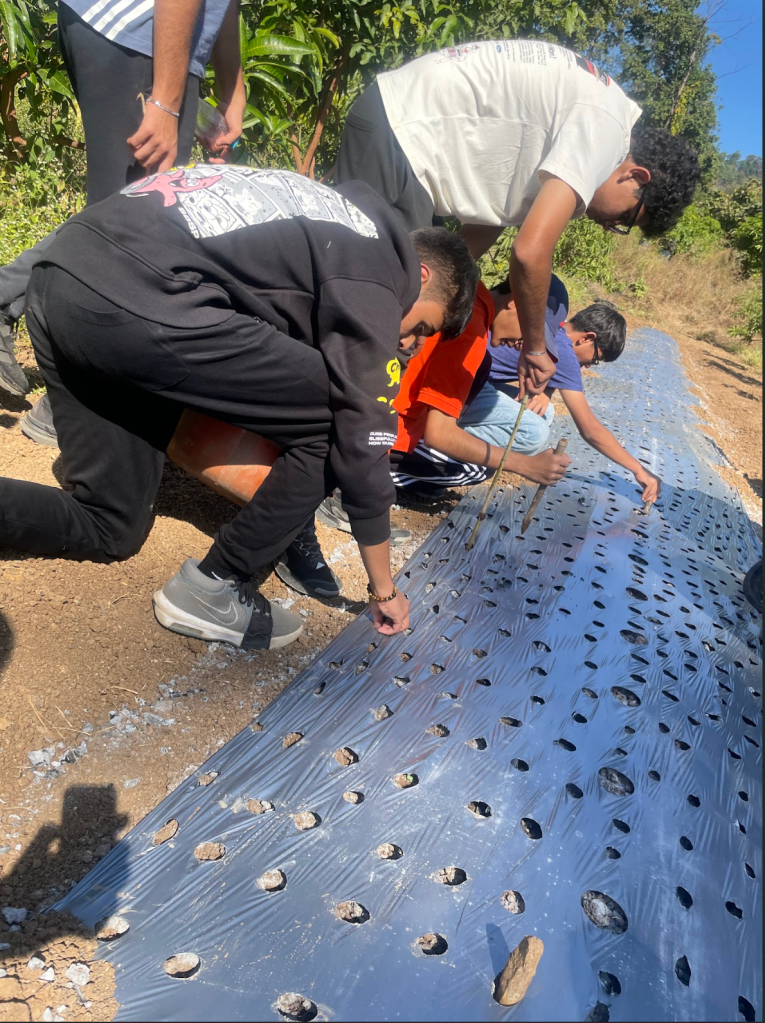
We also spent time farming, which was an entirely different kind of challenge. Bending over in the fields, working the soil, and understanding the physical toll that goes into growing food gave me a profound new level of respect for the agricultural community.
CAS Connections: Activity and Service
Through the lens of CAS, this trip was deeply impactful:
- Activity: The sheer physical exertion required for farming, hauling materials, and plastering walls was intense. It tested my stamina and proved that manual labor requires a specific kind of endurance that you can’t build in a gym.
- Service: By working alongside the villagers, we were contributing to their daily tasks and easing their workload, even if just for a few days. More importantly, it was an exchange of respect and a way to honor their way of life.
The Learner Profile: Open-minded and Caring
This experience required me to be fundamentally Open-minded. I had to unlearn my urban biases and embrace traditional methods that have sustained this community for generations. It also required a Caring approach—working harmoniously with my peers and the locals, ensuring we were helping rather than hindering their processes.
- LO 6: Demonstrate engagement with issues of global significance.
- Explanation: This trip provided a microscopic view of a massive global issue: sustainable agriculture and rural living. Engaging in manual farming and learning traditional, eco-friendly building techniques—like applying cow dung for insulation—highlighted the stark contrast between modern urban consumption and sustainable, indigenous practices.
- LO 7: Recognize and consider the ethics of choices and actions.
- Explanation: Immersing myself in the village required a highly ethical and respectful approach. I had to unlearn my urban biases, act with cultural sensitivity, and ensure that our manual labor genuinely assisted the locals rather than disrupting their community ecosystem.
Leaving the woods of Padamdungri, I brought back more than just tired muscles. I gained a grounded perspective on hard work, sustainability, and the quiet strength of rural communities.