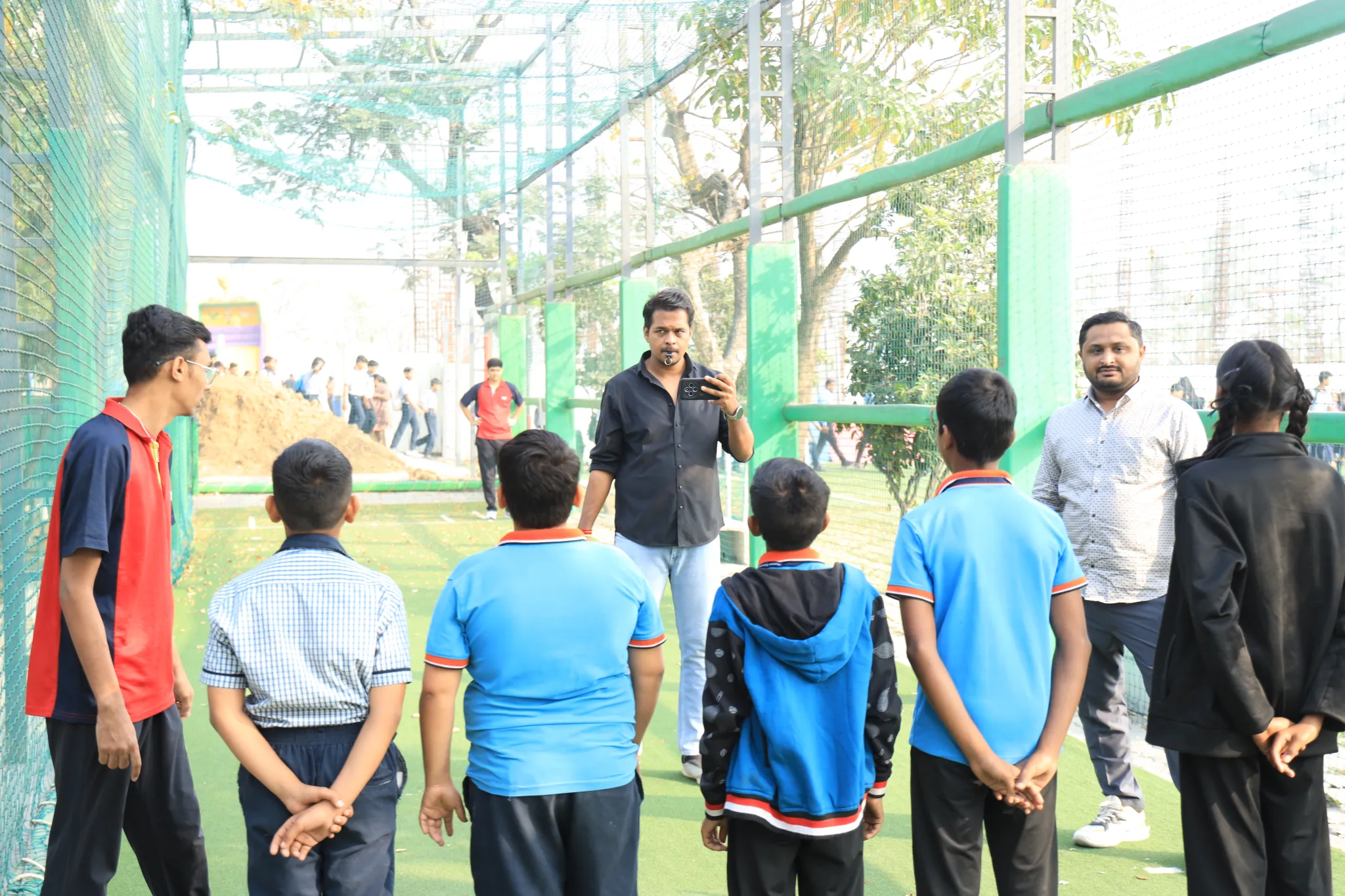
On 7th February 2026, I participated in Bal Mela, an event organized to create a joyful and inclusive environment for children from underprivileged backgrounds. Along with my friend, I was responsible for conducting the spoon and lemon race. Although it appeared to be a simple activity, it required careful planning, coordination, patience, and responsibility. The enthusiasm and excitement of the children made the experience deeply rewarding and meaningful.
I chose to volunteer for this activity because I wanted to take on an active role rather than simply observing. I aimed to challenge myself by managing a group activity and interacting directly with children. This experience pushed me out of my comfort zone and helped me develop both leadership and service-oriented skills.
LO1: Identify Own Strengths and Develop Areas for Growth
Through this experience, I recognized communication as one of my strengths. I was able to clearly explain rules and guide participants confidently. However, I also identified an area for growth in managing large and energetic groups. At times, maintaining order and ensuring that all participants followed instructions was challenging. This highlighted the need for me to further develop my leadership and crowd-management abilities.
LO2: Undertaking Challenges and Developing New Skills
Organizing the spoon and lemon race presented a new challenge. Managing multiple rounds, ensuring fairness, and handling competition required quick thinking and adaptability. I developed skills such as organizing participants efficiently, resolving minor conflicts, and responding to unexpected situations, such as disputes or mistakes during the race.
LO3: Initiating and Planning a CAS Experience
Prior to the event, my friend and I planned how to conduct the race effectively. We discussed participant arrangement, clear rule explanation, and time management to ensure maximum participation. We also considered safety by ensuring sufficient space for movement. This preparation played a key role in the smooth execution of the activity and emphasized the importance of planning.
LO4: Commitment and Perseverance
We conducted several rounds of the race to ensure every child had an opportunity to participate. The process was physically demanding and sometimes chaotic due to the children’s excitement. Despite feeling tired, I remained committed to my role by continuing to motivate participants and maintain order. This experience strengthened my perseverance and sense of responsibility.
LO5: Working Collaboratively
Teamwork was crucial to the success of the activity. My friend and I divided responsibilities effectively—one managed the participants and explained rules, while the other supervised the race and announced winners. We also worked with other volunteers to distribute prizes and manage the crowd. This experience enhanced my collaboration, communication, and teamwork skills.
LO6: Engagement with Global Issues
Bal Mela helped me reflect on the issue of inequality in access to recreational opportunities. Many children lack exposure to structured games and joyful community events. Observing their excitement over a simple activity made me realize the importance of creating inclusive environments that support children’s happiness and development. This deepened my awareness of social inequality.
LO7: Ethics of Choices and Actions
While conducting the race, I ensured fairness, transparency, and respect for all participants. We explained rules clearly, judged honestly, and encouraged children who felt disappointed. We also prioritized safety and inclusion. This experience reinforced the importance of ethical responsibility, including fairness, empathy, and respect.
Overall, participating in the spoon and lemon race at Bal Mela was a meaningful CAS Service experience. It enabled me to identify strengths and areas for growth, develop new skills, plan effectively, demonstrate perseverance, collaborate with others, and reflect on global issues and ethical responsibilities. Most importantly, it allowed me to contribute to the happiness of children while gaining valuable life lessons that will guide my future service experiences.