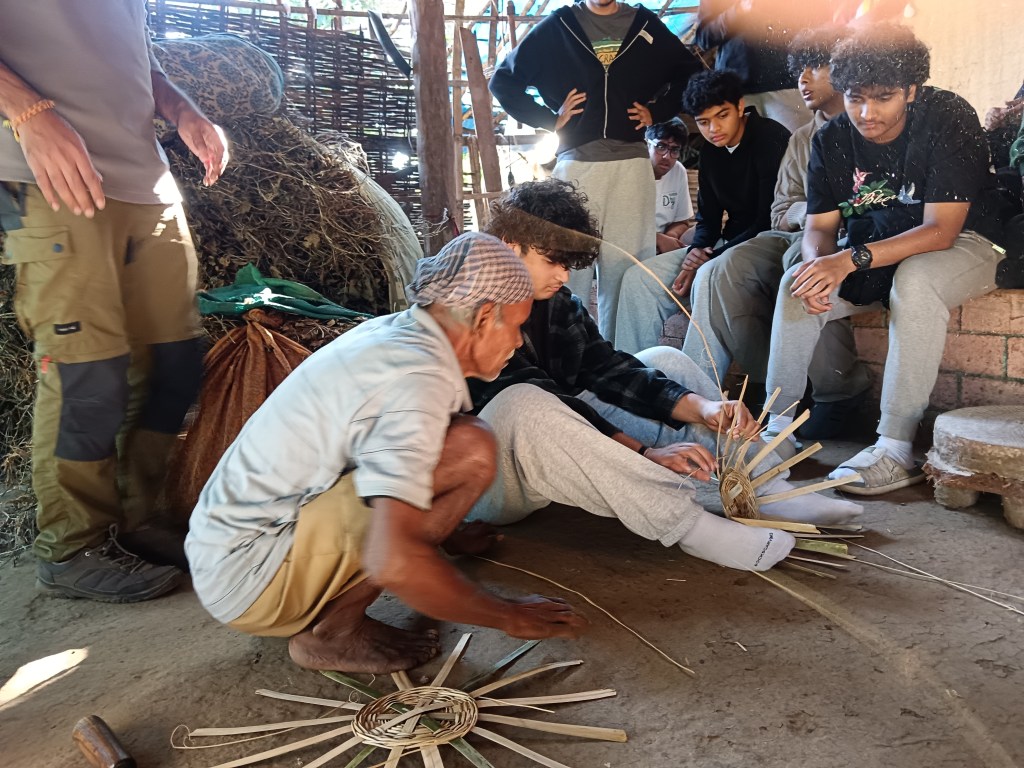
My seven-day rural immersion trip to Mokhamal was one of the most significant and impactful CAS experiences of my IBDP journey because it combined all three strands of CAS: Creativity, Activity, and Service. It pushed me outside my comfort zone and gave me the opportunity to experience a completely different way of life. Living in the village, working alongside the locals, and contributing to their community made me understand the importance of empathy, resilience, and collaboration.
This experience was not simply about helping others; it was also about learning from them and understanding realities that were very different from my own.
Creativity
Creativity played an important role during this trip as we organized interactive teaching sessions, games, and cultural exchange activities for the village children. I had to think of creative ways to make lessons engaging despite having limited resources. We used storytelling, drawing, music, and team-building activities to make learning more enjoyable. These experiences taught me that creativity can be a powerful way to build connections and support education.
Activity
The trip involved a lot of physical activity every day. From walking long distances around the village to participating in farming activities, cleaning drives, and helping build and maintain community spaces, I was constantly physically engaged. This challenged my stamina and discipline. Adjusting to early mornings, physically demanding work, and unfamiliar routines tested my endurance and showed me the importance of persistence.
Service
Service was at the heart of this experience. We contributed to the local community through education, cleanliness initiatives, and helping with daily village tasks. More importantly, service taught me humility. I realized that service is not about “giving” from a position of superiority, but about mutual respect, learning, and supporting one another.
CAS Learning Outcomes
LO1: Identify own strengths and develop areas for growth
Through this trip, I discovered that one of my biggest strengths is adaptability. I was able to adjust quickly to rural living conditions, unfamiliar food, and physically demanding tasks. However, I also recognized weaknesses such as my limited patience and difficulty communicating effectively with younger children. This experience helped me understand the areas where I need to improve.
LO2: Demonstrate that challenges have been undertaken, developing new skills in the process
The entire experience was filled with challenges. Living without the usual comforts, participating in manual work, and connecting with people from a different background required effort and courage. I developed practical skills such as teamwork, leadership, teaching, and basic farming techniques. Most importantly, I developed greater resilience.
LO3: Demonstrate how to initiate and plan a CAS experience
Before the trip, our group spent time planning activities, organizing teaching materials, and discussing how we could best contribute to the community. I actively participated in brainstorming creative teaching methods and ways to make our service more meaningful. This planning process taught me the importance of preparation while also being flexible when situations change.
LO4: Show commitment to and perseverance in CAS experiences
For seven days, I remained committed to every activity despite feeling exhausted and uncomfortable at times. Waking up early, maintaining my energy throughout the day, and participating fully in every task required perseverance. There were moments when I felt physically drained, but I continued because I understood the purpose behind our work.
LO5: Demonstrate the skills and recognize the benefits of working collaboratively
Collaboration was essential throughout the immersion. Working with my peers and the villagers taught me the importance of trust, communication, and shared responsibility. Whether we were teaching children, farming, or organizing community activities, teamwork made our efforts more effective and meaningful.
LO6: Demonstrate engagement with issues of global significance
The trip exposed me to issues such as poverty, limited educational resources, sanitation challenges, and rural inequality. These are not only local issues but also global concerns connected to sustainable development and social justice. Seeing these issues firsthand made me more aware of the privileges that I often take for granted.
LO7: Recognize and consider the ethics of choices and actions
One of my biggest reflections from this experience was understanding the ethics of service. It was important to approach the community with respect and humility rather than pity. I learned that ethical service means listening, understanding, and respecting people’s dignity. This experience reminded me that meaningful impact comes through collaboration rather than simply charity.
Conclusion
The rural immersion trip to Mokhamal was my most meaningful CAS experience because it brought together creativity, activity, and service in an authentic way. It challenged me mentally, physically, and emotionally while giving me valuable lessons about gratitude, teamwork, and social responsibility. This experience has changed the way I view community, privilege, and service, and it will remain one of the defining experiences of my IB journey.