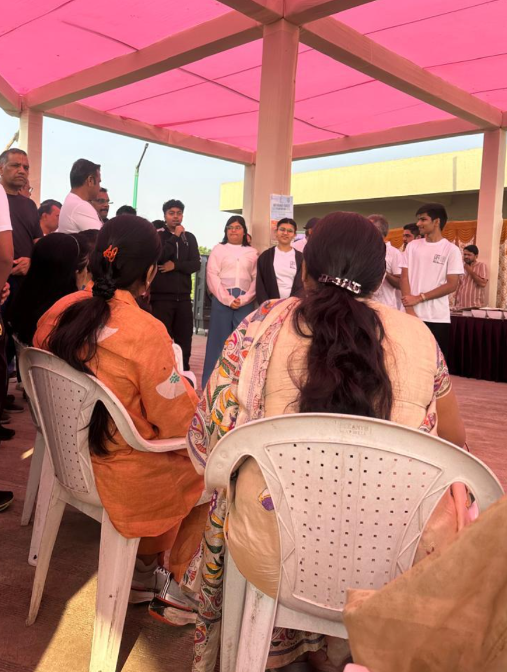
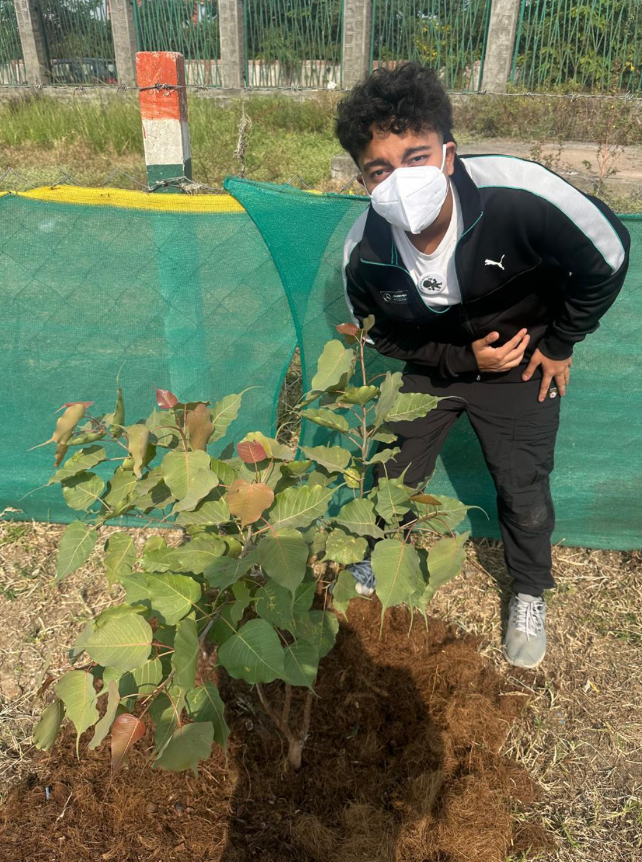
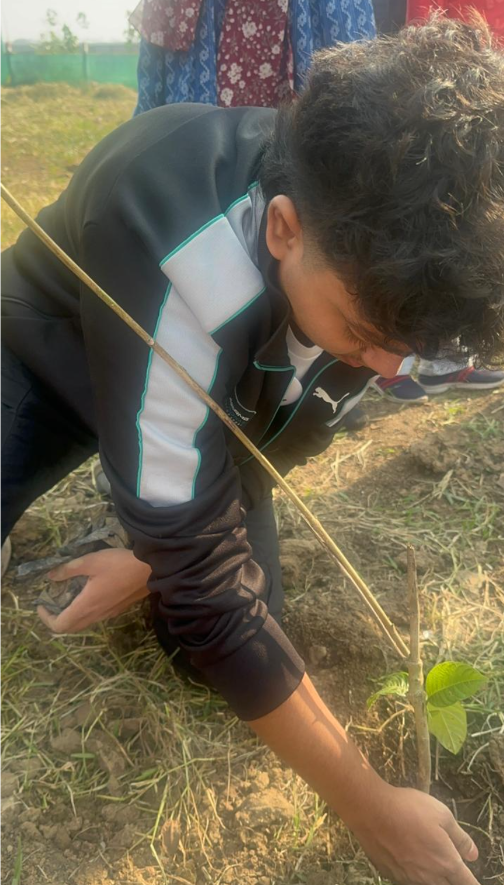
As part of my CAS journey, I participated in the Life2See – Surat’s Youth Green Movement, a community service initiative focused on environmental conservation and sustainability. During this experience, I worked alongside students, families, and community volunteers to plant trees using the Miyawaki afforestation method and spread awareness about the importance of protecting the environment. Through this initiative, I contributed to increasing green cover while learning how collective action can positively impact both local communities and the planet.
This experience gave me a greater appreciation for environmental stewardship and demonstrated how individual efforts, when combined with those of others, can contribute to addressing global environmental challenges such as climate change, deforestation, and biodiversity loss. It also encouraged me to become more responsible towards nature and motivated me to continue participating in sustainability initiatives.
Learning Outcome 1 – Identify own strengths and develop areas for growth
Through this experience, I recognized teamwork and responsibility as two of my strengths. I was able to work effectively with other volunteers while carrying out plantation activities and completing assigned tasks. At the same time, I realized that I could further develop my leadership and environmental knowledge by taking a more active role in organizing similar initiatives and learning more about sustainable conservation practices.
Learning Outcome 2 – Demonstrate that challenges have been undertaken, developing new skills
One of the challenges I faced was carrying out physical activities outdoors for an extended period while ensuring that each sapling was planted carefully and correctly. The work required patience, attention to detail, and cooperation with others. Through this experience, I developed practical skills related to tree plantation and learned the importance of perseverance when contributing to long-term environmental projects.
Learning Outcome 3 – Initiate and plan a CAS experience
Although the event was organized by Life2See, I demonstrated initiative by actively participating in every aspect of the activity and making the most of the opportunity to contribute. I willingly supported the plantation efforts, interacted with other volunteers, and reflected on how environmental service projects can benefit society. My proactive involvement allowed me to gain valuable knowledge and experience throughout the event.
Learning Outcome 4 – Show perseverance and commitment in CAS experience
I remained committed throughout the plantation drive by completing every assigned task with dedication despite the physical effort involved. I understood that environmental conservation requires consistent effort rather than immediate results. Participating wholeheartedly reinforced my commitment to protecting the environment and inspired me to continue supporting similar initiatives in the future.
Learning Outcome 5 – Demonstrate skills and benefits of working collaboratively
This experience highlighted the importance of teamwork in achieving meaningful environmental outcomes. Volunteers worked together to prepare planting areas, plant saplings, and ensure that every task was completed efficiently. By cooperating with my peers and community members, I improved my communication, coordination, and collaboration skills while understanding that large-scale environmental initiatives depend on collective effort.
Learning Outcome 6 – Engagement with issues of global significance
The plantation drive addressed several global environmental issues, including climate change, deforestation, biodiversity loss, and declining green spaces. I learned that increasing forest cover through sustainable methods such as Miyawaki forests can improve air quality, support biodiversity, and help reduce the effects of global warming. This experience strengthened my understanding that environmental conservation is a shared global responsibility requiring participation from individuals and communities alike.
Learning Outcome 7 – Recognise and consider the ethics of choices and actions
This CAS experience encouraged me to reflect on the environmental impact of my everyday actions. I realized that protecting the environment is an ethical responsibility and that even small actions, such as planting trees and reducing waste, can contribute to long-term sustainability. Observing the dedication of volunteers inspired me to adopt more environmentally responsible habits and make choices that positively impact both society and future generations.
SDGs Connection
This experience strongly connected with several United Nations Sustainable Development Goals (SDGs), particularly SDG 13 – Climate Action, SDG 15 – Life on Land, SDG 11 – Sustainable Cities and Communities, and SDG 17 – Partnerships for the Goals. By participating in the plantation of Miyawaki forests and promoting environmental awareness, I contributed to increasing green cover, protecting biodiversity, and encouraging sustainable community action. The experience demonstrated that environmental challenges can only be addressed effectively when individuals, organizations, and communities work together towards a common goal, reinforcing the importance of collective responsibility in achieving sustainable development.