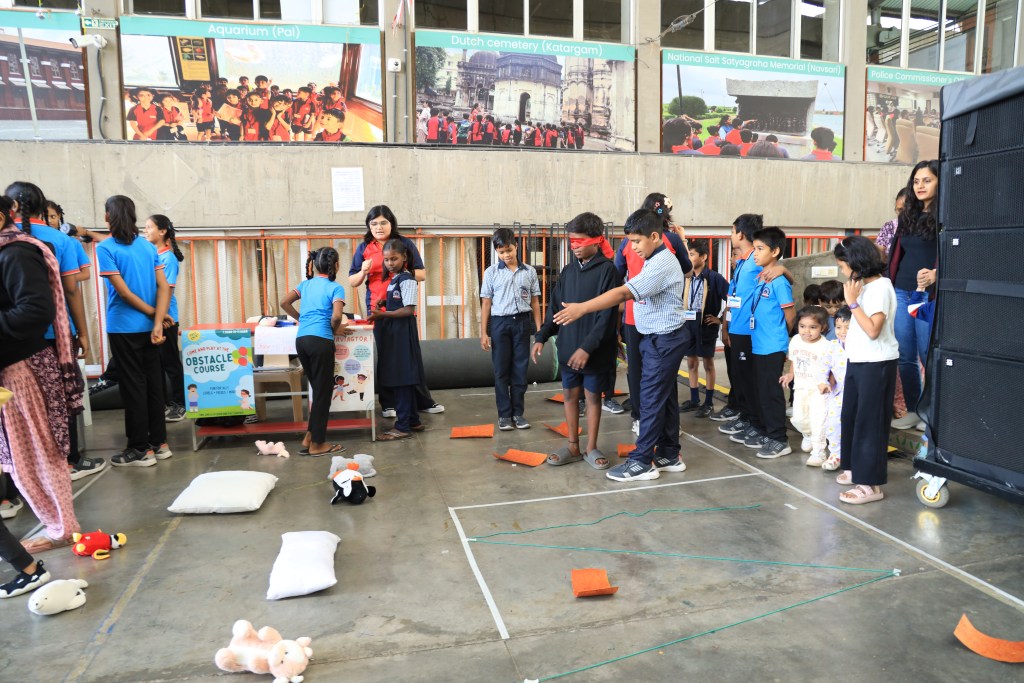
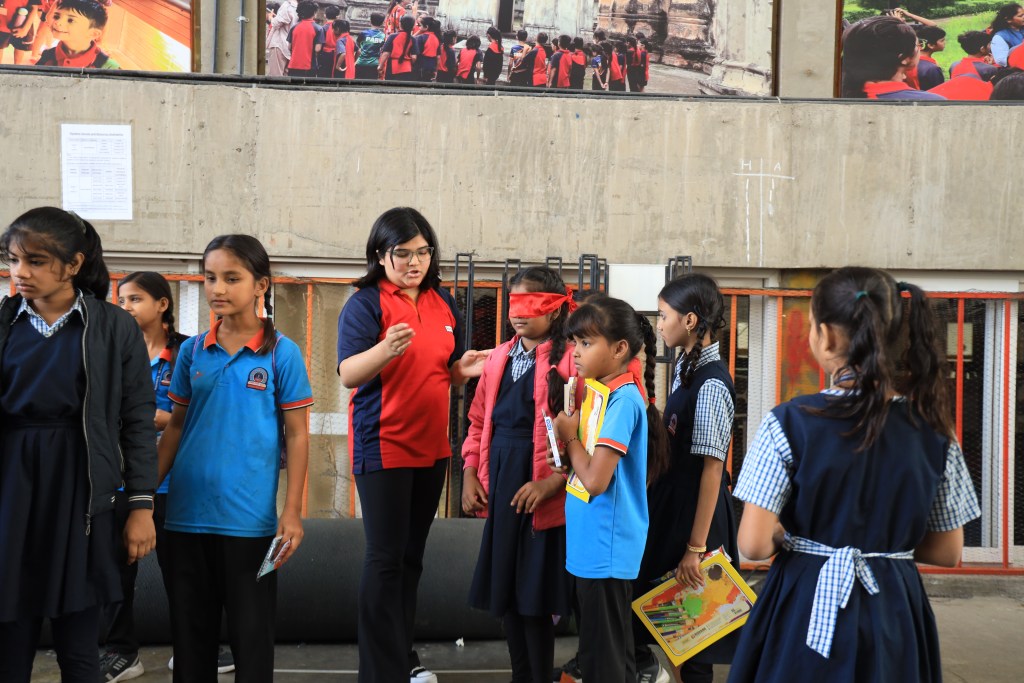
For the children’s carnival we had a stall that had a small adventure course and the children played the games in pairs where one is blindfolded and the other guided their friend through the course without touching.
Our stall in the carnival was focusing on partnership and it was an adventure course we named ‘blind navigator’
LO1 – Identify own strengths and develop areas for growth
During the planning and implementation of the adventure course, I recognized my strength in designing engaging activity concepts and explaining them clearly. However, I also became aware of the need to improve my ability to give concise and structured instructions to large, energetic groups of children, a skill that requires confidence, clarity, and effective classroom management.
LO2 – Demonstrate that challenges have been undertaken, developing new skills
Managing a lively group of young participants during the adventure course required constant attention to safety, structure, and quick decision-making. Navigating unexpected situations while keeping the activity engaging pushed me to develop skills in activity coordination, flexible problem-solving, and clear leadership. This experience strengthened my ability to guide participants confidently while ensuring the course remained safe, organised, and enjoyable for everyone involved.
LO3 – Initiate and plan a CAS experience
Me and partner took complete ownership of planning and executing the adventure course, beginning with the design of the activities and extending to sourcing materials, organising the space, and establishing clear rules and flow. This end-to-end process required initiative, thoughtful planning, and forward thinking to ensure the course was well-structured and aligned with our sustainability-focused goals.
LO5 – Demonstrate skills and benefits of working collaboratively
This endeavor was grounded in close collaboration. My partner and I divided responsibilities, with one of us explaining the rules and guiding participants through the course, while the other focused on safety supervision and tracking time and laps. Through effective coordination, we ensured the activity ran smoothly, and the children were able to experience firsthand how teamwork and cooperation contribute to better performance and enjoyment.
LO6 – Engagement with issues of global significance
Our initiative was dedicated to fostering an understanding of partnership and collaboration—a skill of vital importance in both personal and community contexts. By turning this concept into an interactive, hands-on adventure course, we allowed the children to experience firsthand how working together, supporting one another, and communicating effectively are essential for achieving shared goals.
LO7 – Recognise and consider the ethics of choices and actions.
While planning and managing the stall, we ensured that all our actions were guided by fairness and respect. We welcomed every child equally, regardless of their performance or participation level. We encouraged teamwork and celebrated effort, not just results. Safety was a top priority, so we carefully checked all materials and instructions before use. Our scoring system was transparent, and we clearly explained the rules so everyone understood them. We also made sure no one felt rushed or pressured, and we offered help to those who needed it. By promoting honesty, kindness, and inclusivity, we created a friendly and supportive environment where every child could learn and enjoy themselves.
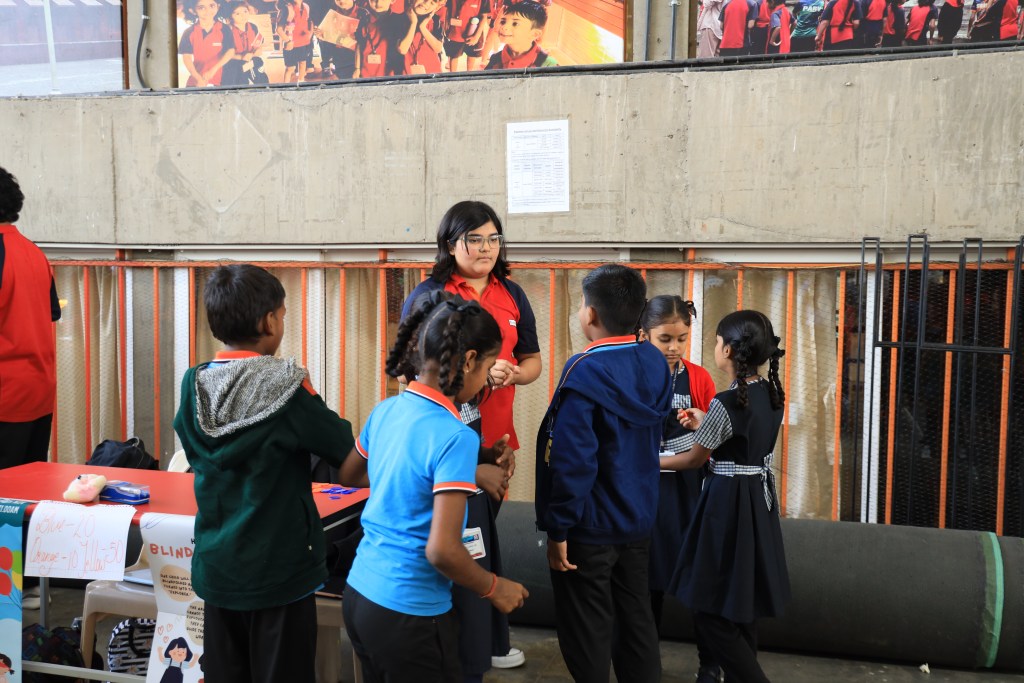
Conclusion:In conclusion, our “Blind Navigator” stall successfully encouraged teamwork, trust, and communication among the children. By guiding their partners through the adventure course without touching, the participants learned the importance of listening, clear instructions, and cooperation. The activity not only provided fun and excitement but also helped the children develop empathy and patience. Overall, our stall achieved its goal of promoting partnership while creating a safe, enjoyable, and educational experience for everyone.