Type of CAS: Service in school
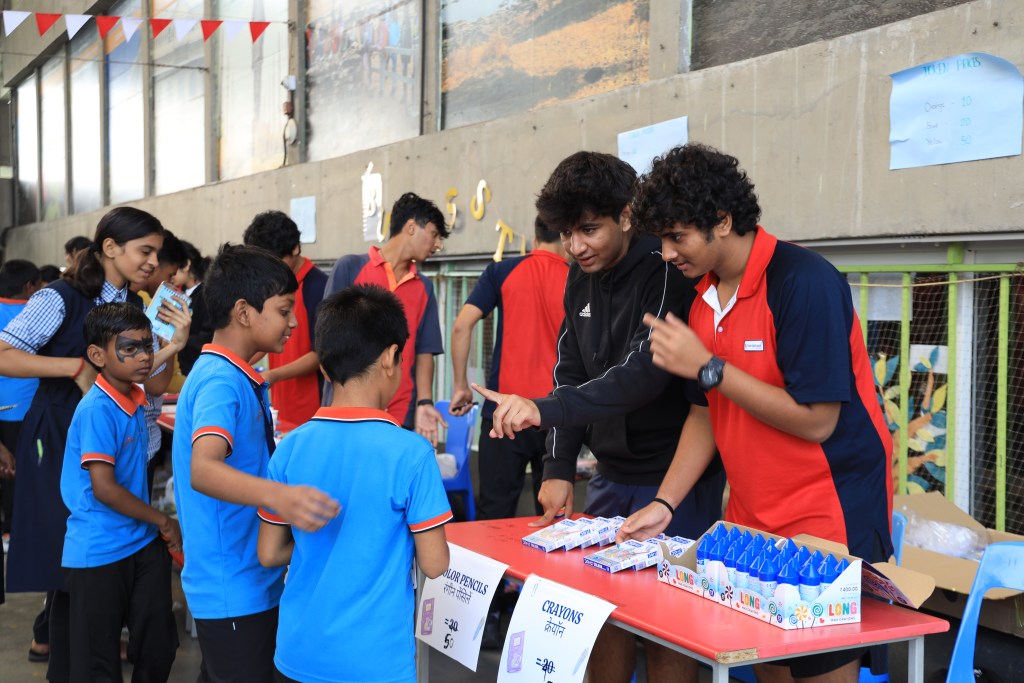
On 15 November 2025, I had the opportunity to contribute to a Children’s Day celebration organized for students from several government schools. As part of the volunteering team, I was responsible for managing the gift-distribution stall. The children visited our stall after participating in various games across the carnival, and they brought tokens based on their performance. My role was to collect their tokens and distribute appropriate gifts—such as pencils, pens, erasers, and small stationery sets—ensuring each child received a reward that matched their earned points.
This experience may seem simple on the surface, but it gave me meaningful insights into responsibility, efficiency, communication, and ethical decision-making while working in a fast-paced school environment. Below, I have explained how this CAS activity connects to the relevant Learning Outcomes.
LO1: Identify own strengths and develop areas for growth
Handling the gift stall helped me identify several personal strengths. I noticed that I naturally communicated well with the children, especially when they were excited or confused about which gift matched their token. I remained patient and approachable throughout the event, ensuring that every child felt acknowledged.However, I also recognized areas for improvement. Managing a long queue became challenging at times, especially when several children arrived at once. I realized that I could improve my organizational speed and develop better strategies for crowd management—such as sorting gifts more systematically or arranging them by token type in advance. This experience guided me toward understanding how I can grow in terms of efficiency and multitasking.
LO2: Demonstrate that challenges have been undertaken, developing new skills in the process
Although the task seemed straightforward initially, I faced several on-ground challenges that required quick learning. Some students brought incorrect tokens, some were unsure about what they earned, and occasionally a rush of children caused confusion at the counter.
To address these issues, I learned how to verify tokens quickly, give clear instructions, and keep the stall running smoothly even during busy periods. I also adapted by reorganizing the gifts mid-event to make the process faster. These moments helped me develop practical skills in problem-solving, maintaining order, and communicating instructions clearly—all of which contributed to a more efficient distribution process.
LO4: Show commitment to and perseverance in CAS experiences
There were moments when the crowd became overwhelming, especially during peak hours when children excitedly ran from one stall to another. Still, I remained committed to ensuring fairness and accuracy in distributing each gift. Even when I grew tired from standing and repeating instructions, I continued with steady focus so the experience remained enjoyable for the students.
This perseverance allowed me to maintain consistency throughout the event. I did not rush through the process or overlook any child. Instead, I ensured every student received the correct reward and a positive interaction. Staying dedicated despite the pressure helped me understand the importance of reliability in service-based roles.
LO5: Demonstrate the skills and recognize the benefits of working collaboratively
The gift stall could not have functioned effectively without teamwork. I worked closely with my peers to restock items, track the remaining gifts, verify tokens, and ensure the line moved smoothly. When the crowd increased, my group and I divided responsibilities—one person handled tokens, one passed the gifts, and another managed the queue.
Our collaboration made the entire process much more efficient and enjoyable. I realized how valuable it is to rely on team members, communicate quickly, and support one another during high-pressure moments. Working together not only reduced the stress but also ensured that all children received their gifts without confusion or delay.
LO7: Recognize and consider the ethics of choices and actions
Since the stall dealt with rewards, fairness was extremely important. I made sure to treat every child equally, regardless of their background, behavior, or communication style. Some children tried to negotiate for different gifts or came with unclear tokens, but I followed the system strictly to maintain fairness for everyone.


I also ensured that no child felt embarrassed or uncomfortable if they couldn’t understand the token system. I patiently explained the rules whenever needed and maintained a respectful and friendly attitude throughout. This experience helped me understand how even small actions—like distributing a pencil—carry ethical weight, especially when working with young students who trust adults to act fairly.
Conclusion
This CAS experience allowed me to contribute to a meaningful celebration while developing essential interpersonal and organizational skills. Managing the gift stall taught me patience, fairness, teamwork, and adaptability in real-time situations. Above all, it reminded me of the joy and responsibility involved in serving younger students and ensuring that their special day felt memorable and inclusive. Through this activity, I strengthened not only my practical abilities but also my sense of empathy and accountability as a volunteer.