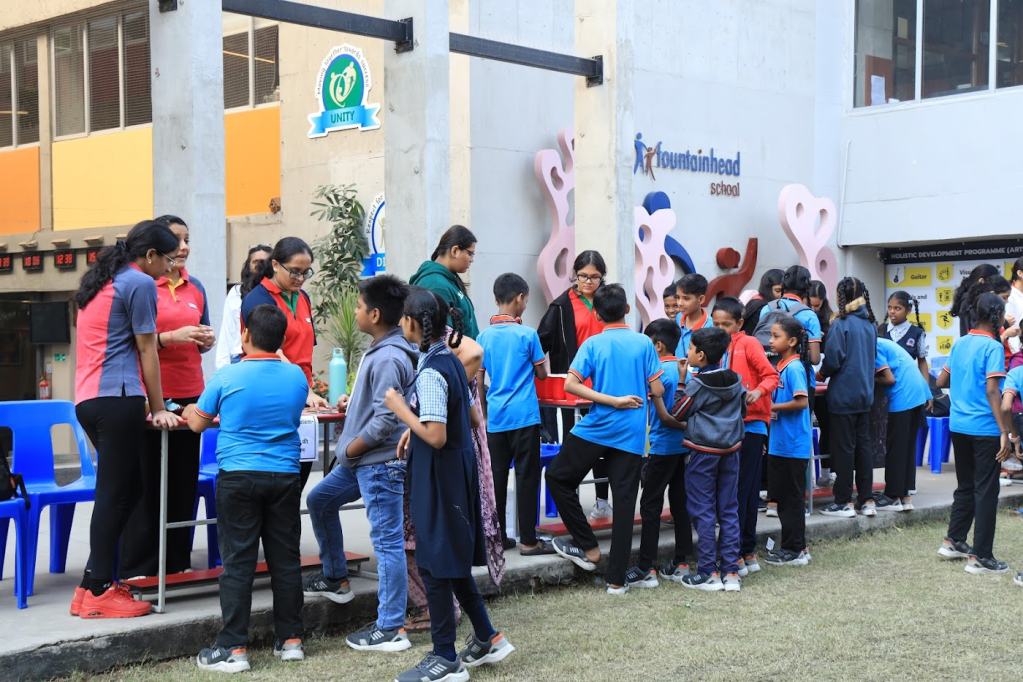
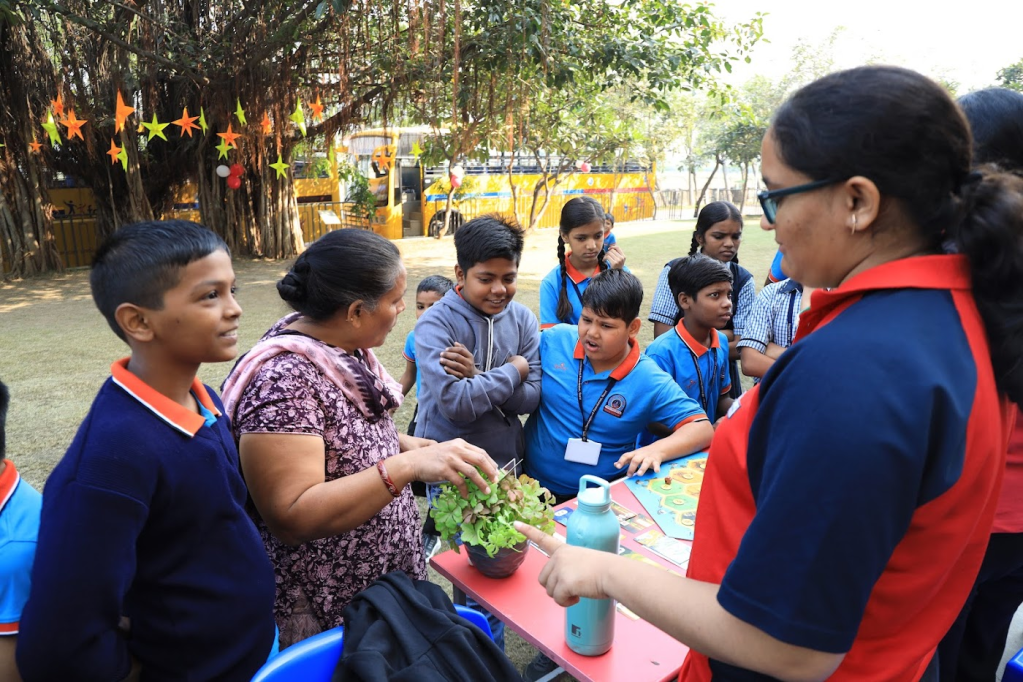
For the Children’s Carnival, our school invited students from nearby government schools to spend the day participating in learning-based games designed by our CAS groups. My team’s goal was to create an environment that was fun and educational while helping the children develop real-life problem-solving skills through interactive board games created by us. These games focused on infrastructure development, corruption, agriculture, biomes, and other issues they might see or come across in daily life. This service experience became meaningful because it allowed us to combine creativity and teamwork while working with children who were excited to learn in a new environment.
LO1 – Identifying my strengths and developing areas for growth
During the Children’s Carnival, I realised that one of my strengths was the ability to connect quickly with younger children by speaking politely, encouraging them, and listening patiently to their ideas. Many of them were shy initially, but my friendly approach helped them open up and participate confidently. I also encouraged them whenever they got an incorrect answer. At the same time, I recognised that I needed to develop better crowd-handling skills, especially when multiple children wanted help and wanted to play at the same time. Balancing attention, giving equal chances, and maintaining order were challenging, and this experience showed me that improving my organisational and leadership skills will help me serve more effectively in the future.
LO2 – Challenges undertaken and new skills developed
This activity challenged me intellectually because teaching critical thinking through games required adaptability, patience, and clear communication. Some children struggled to understand the rules, while others solved problems too quickly and needed more advanced challenges. To keep everyone engaged, I learnt how to simplify language, explain concepts using examples, and modify the difficulty level of board games on the spot. By facing these challenges, I gained confidence in teaching, problem-solving, and supporting children with different learning needs.
LO3 – Demonstrating how to initiate and plan a CAS experience
Our team spent several days planning for the carnival—we designed the board games, we made sure to brainstorm the basic ideas, and drafted out basic rules so that the execution of the game could be easier, and assigned responsibilities among the team about who would bring which materials, like dice, tokens, charts, and markers. I personally contributed to preparing the instructions, bringing printouts and dice, etc. We also planned a system so that every member of our team could take a break when needed, and that the students could continue playing as well.
LO4 – Showing commitment and perseverance
We dedicated time after school to make the board games, rehearse explanations, test the flow of activities, and ensure all materials were ready. During the event itself, even when I felt tired or overwhelmed, I kept my focus on helping every child feel included and supported. Some groups needed repeated instructions, and I patiently guided them until they understood. Sticking through the entire process showed me that perseverance is essential when working on meaningful service projects that impact real people.
LO5 – Demonstrating collaborative skills and the benefits of working together
This event would not have been successful without strong teamwork. Each member of our CAS group contributed by designing games, setting up stations, greeting the children, and managing activities. We constantly communicated to ensure that no child felt left out and that every station ran smoothly. I collaborated closely with my team to rotate responsibilities, share explanations, and handle unexpected situations—like when a game piece went missing or a child struggled emotionally. Working together made the experience more efficient, enjoyable, and impactful, teaching me the value of cooperation in service.
LO6 – Engagement with issues of global significance
Critical thinking is a skill that affects children’s lifelong learning, decision-making, and ability to face modern challenges such as misinformation, financial responsibility, health choices, and environmental awareness. By teaching these skills through real-life board games, we contributed to a global educational goal: improving quality education and creating equal learning opportunities. Many government-school children do not have regular access to such resources, and our event helped reduce that gap, even if on a small scale. This experience reminded me that education is a global issue and that small initiatives can support long-term development.
LO7 – Recognising and considering the ethics of choices and actions
Throughout this service activity, I remained conscious of treating all children with respect, fairness, and empathy. We ensured that no child felt ignored or judged for answering slowly or making mistakes during the game. I also made sure not to dominate the activities but instead gave the children space to think, express ideas, and solve problems independently. We followed ethical practices such as prioritising safety, using age-appropriate language, and making sure every interaction was encouraging and positive. This experience helped me understand the importance of ethical responsibility when working with young learners from different backgrounds.
Conclusion
The Children’s Carnival became one of my most meaningful CAS service experiences because it allowed me to combine creativity, education, and compassion while working with children from government schools. By guiding them through real-life problem-solving games, I not only helped develop their critical-thinking skills but also grew as a communicator, leader, and collaborator. The day was full of learning, teamwork, joyful interactions, and personal reflection. It reminded me that service is not just about helping—it is about empowering others, understanding diverse perspectives, and creating bridges of learning between different communities.