Introduction
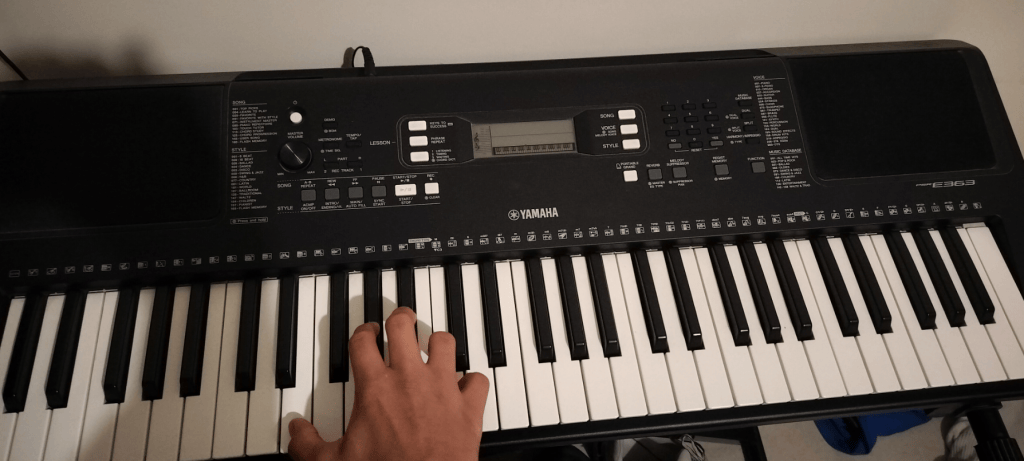
Welcome to my CAS Creativity blog! For this strand, I decided to embark on a short but highly intensive personal challenge: learning the fundamentals of playing the piano. This experience took place over a concentrated four-week period, running from 4th September to 28th September 2026. Going into this, I was a complete beginner with zero formal keyboard training or experience in reading music. My goal was to push past my creative boundaries, build daily practicing discipline, and transition from an absolute novice to someone who can confidently play a basic musical piece using both hands.
LO1: Identify Own Strengths and Develop Areas for Growth
Embarking on this piano journey forced me to take a very honest look at my musical capabilities. While I have always had a good ear for rhythm and a strong appreciation for music, my manual dexterity and spatial awareness on a keyboard were completely undeveloped. Recognizing that hand-to-eye coordination and reading sheet music were my primary areas for growth, I deliberately structured my initial practice sessions around these weaknesses. By identifying exactly where my fingers stumbled and where my note-reading lagged, I was able to transform a daunting artistic blind spot into a structured path of personal growth.
LO2: Demonstrate That Challenges Have Been Undertaken, Developing New Skills
Learning a brand-new instrument in less than a month is a significant challenge that requires moving completely outside your comfort zone. The physical disconnect of getting my left and right hands to play entirely different rhythms simultaneously felt nearly impossible during the first week. I had to undertake this steep learning curve by breaking down complex movements into slow, repetitive isolation drills. Through this deliberate process, I successfully developed new physical and cognitive skills, transforming stiff, uncoordinated hand movements into fluid muscle memory.
LO3: Initiate and Plan a CAS Experience
Because this was an independent creative project, the responsibility to initiate and plan the entire experience fell entirely on me. I couldn’t just sit down and play randomly; I had to establish a highly structured, progressive four-week curriculum. I mapped out specific weekly milestones, starting with basic music theory and single-hand scales in week one, progressing to dual-hand coordination in week two, and dedicating the final weeks to rehearsing a beginner-level piece. Initiating this plan taught me how to self-regulate and design a functional learning strategy without external supervision.
LO4: Show Perseverance and Commitment in CAS Experience
The timeline between September 4th and September 28th was incredibly tight, and maintaining a commitment to daily practice required immense perseverance. There were days when my fingers refused to cooperate, and the frustration of hitting wrong notes made me want to close the keyboard. Balancing this intense physical practice alongside my heavy workload during a busy academic month tested my discipline. Choosing to show up every single day for my scheduled practice hours, regardless of how tired or frustrated I felt, built my resilience and taught me that creative breakthroughs only happen through sustained commitment.
LO5: Demonstrate Skills and Benefits of Working Collaboratively
Note: As this was a solo, independent skill-building experience designed strictly for personal creative growth, working collaboratively was not a core component of this specific timeline. My focus remained entirely on individual technical development and self-reflection.
LO6: Engagement with Issues of Global Significance
While learning an instrument is a deeply personal endeavor, this experience allowed me to engage with the globally recognized significance of the arts in cognitive development and mental well-being. In a fast-paced world heavily focused on digital consumption, the global community frequently emphasizes the therapeutic importance of active, tactile creative expression. By engaging deeply in learning a classical art form, I experienced firsthand how musical education fosters focus, patience, and stress relief—qualities that are universally valued in maintaining balanced human health.
LO7: Recognise and Consider the Ethics of Choices and Actions
Even in an individual practice-based experience, ethical considerations played a role in my choices. I had to remain mindful of my immediate environment, ensuring that my practice hours did not disrupt the peace, study time, or comfort of my family or neighbors. Making the ethical choice to practice at respectful volumes or use headphones demonstrated a conscious awareness of how my personal goals impact those around me. Additionally, choosing to respect the integrity of the copyright of the sheet music and learning resources I utilized reinforced the importance of ethical engagement within the creative arts.