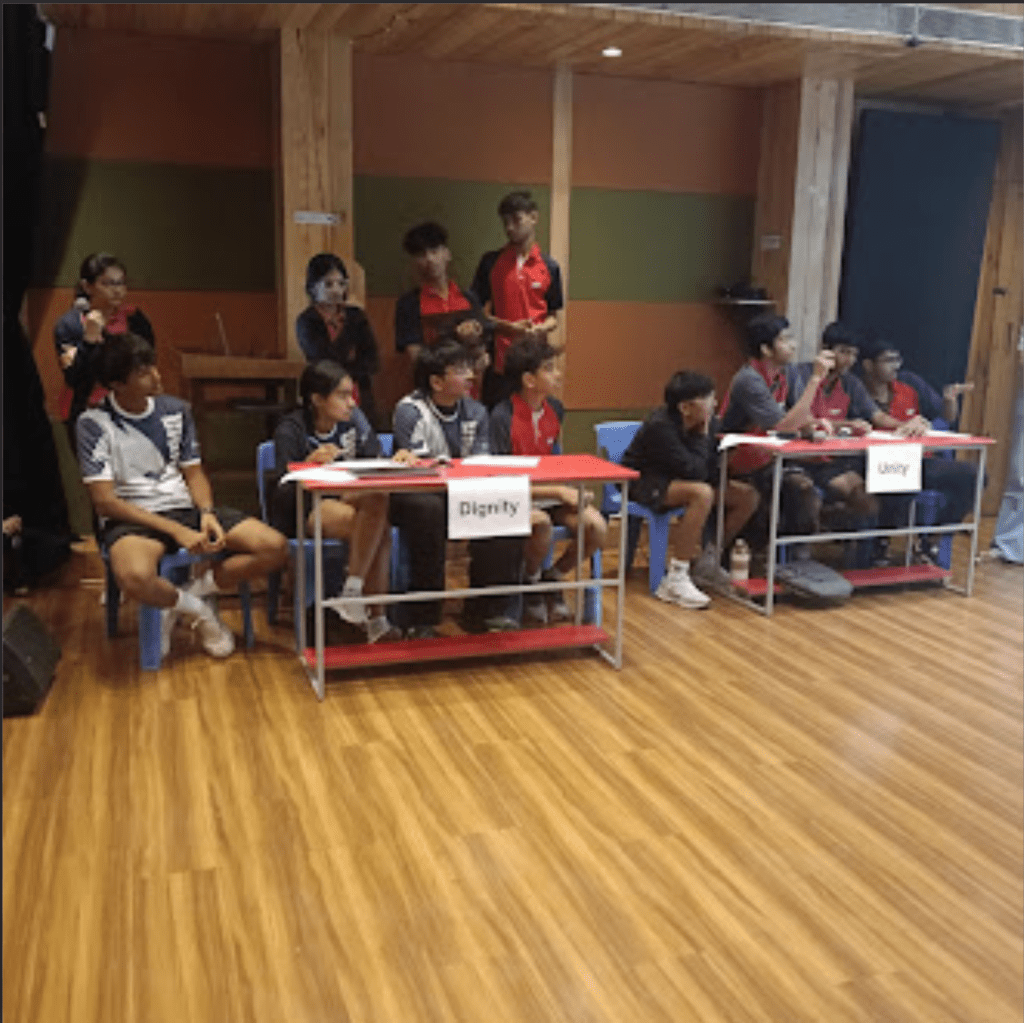
As part of my CAS journey, I initiated and organized a Math Trivia competition for Grade 10 students in my school. This project aimed to make mathematics more engaging and interactive for younger students while encouraging them to think critically and enjoy problem-solving outside the traditional classroom environment.
The idea for the competition came from my interest in mathematics and my desire to create an activity that combined learning with excitement. Instead of focusing only on routine academic exercises, I wanted to design a competition where students could apply mathematical thinking in a fun and stimulating way. I therefore planned Math Trivia, a quiz-style event where teams competed by answering a variety of math-related questions, including logical reasoning, quick calculations, and problem-solving challenges.
Since this was my project, I took responsibility for planning and organizing the entire activity. I designed the format of the competition, prepared the question sets, and structured the rounds so that the event remained both challenging and enjoyable. I also coordinated with teachers to receive approval and ensure the event ran smoothly. Managing the logistics required careful preparation, including organizing teams, setting rules for the competition, and ensuring the questions were appropriate for the participants’ level.
One of the key learning outcomes I experienced during this project was identifying my strengths and areas for growth (LO1). I realized that I am good at organizing ideas and creating engaging activities for others. At the same time, I learned that planning events requires patience and attention to detail, especially when ensuring that all participants remain involved and motivated.
This project also helped me undertake new challenges and develop new skills (LO2). Designing questions that were both challenging and fair required creativity and critical thinking. I had to consider different difficulty levels and ensure the competition encouraged learning rather than simply testing memorization.
The process of organizing Math Trivia demonstrated how to initiate and plan a CAS experience (LO3). From conceptualizing the idea to executing the competition, the project required structured planning and clear communication with both students and teachers. Breaking the event into stages—planning, preparation, and execution—helped me manage the project effectively.
Another important learning outcome was commitment and perseverance (LO4). Organizing an event while balancing academic responsibilities was challenging, but staying committed ensured the competition was successfully conducted.
Even though this was my project, collaboration played a major role. Working with teachers and interacting with the participants highlighted the importance of collaboration and teamwork (LO5). The enthusiasm of the students and their willingness to participate made the event more dynamic and enjoyable.
The activity also connected to a broader educational goal. Encouraging students to enjoy mathematics contributes to improving analytical and problem-solving skills, which are essential in many areas of life. This links to issues of global significance (LO6), as developing strong mathematical and critical thinking abilities is important for innovation and progress in many fields.
Additionally, while organizing the competition, I ensured that the rules were fair and that all participants had equal opportunities to contribute. This allowed me to reflect on the ethical responsibility of making fair decisions as a leader (LO7).
Overall, organizing the Math Trivia competition was a rewarding experience. It allowed me to combine my interest in mathematics with leadership and organizational skills. Seeing students actively participate, think critically, and enjoy solving mathematical challenges was the most fulfilling part of the project.
This experience strengthened my confidence in initiating projects and leading activities that positively impact others. In the future, I would like to expand this competition by introducing more interactive rounds or including students from additional grades to make the event even more engaging.