1. Description of the Activity and Goals
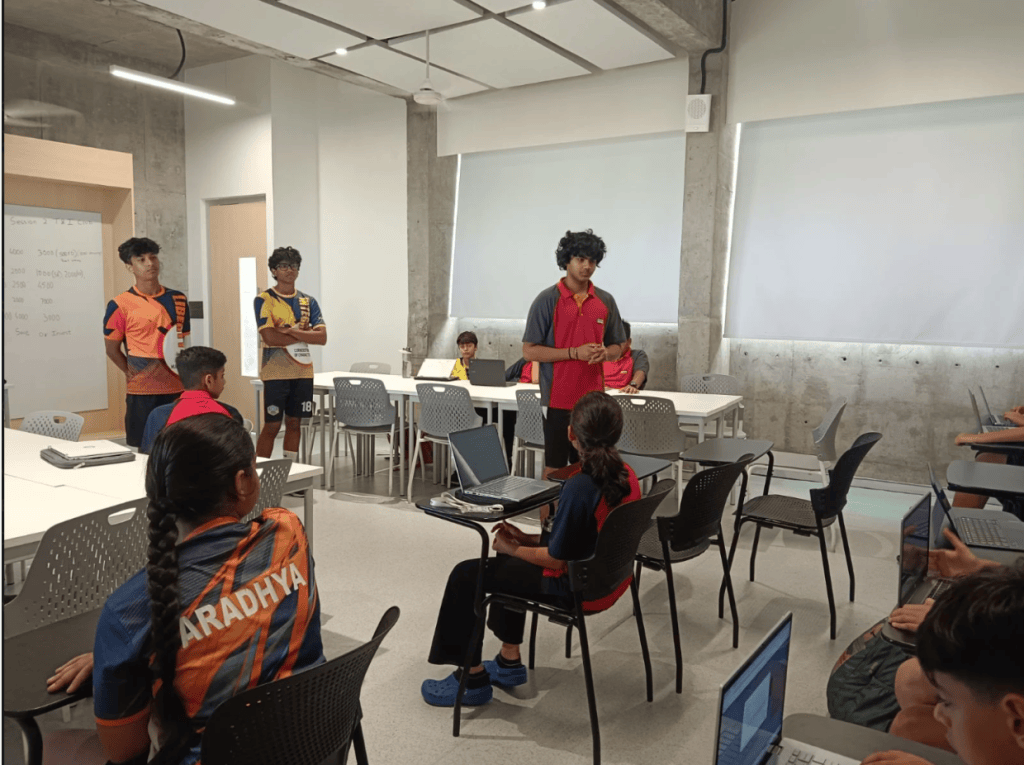
Along with two of my friends, I established a Trading and Investment Club at my school aimed at introducing students in grades 7–9 to the basics of finance, trading, and long-term investing. The purpose of the club was to make financial concepts easier to understand and to encourage younger students to start thinking about money management and financial decision-making early in life.
To achieve this, we organized interactive sessions that included discussions, simple explanations of financial concepts, and mock trading simulations. Our goal was to create an environment where learning about finance felt engaging rather than intimidating. Personally, I hoped to develop my leadership, communication, and organizational abilities by helping lead the club, planning the structure of each session, and ensuring that all students felt comfortable participating.
2. Reflection on Learning Outcomes
LO1: Identify own strengths and develop areas for growth
Through this experience, I discovered that one of my strengths is the ability to simplify complex ideas. Many students understood financial concepts more easily when I related them to everyday situations or used familiar examples. At the same time, I realized that I sometimes felt impatient when similar questions were asked multiple times. Recognizing this helped me understand that effective leadership requires patience and empathy. Everyone learns at a different pace, and supporting that process is an important part of teaching.
LO2: Undertake challenges and develop new skills
One of the biggest challenges was adapting financial content so that it remained meaningful but was still understandable for younger students. Since I had never taught financial concepts before, I had to find creative ways to explain ideas through activities, examples, and simulations. This experience helped me improve my communication and teaching skills, which are valuable abilities for leadership and public speaking.
LO3: Demonstrate how to initiate and plan a CAS experience
Launching the club required careful planning and organization. Together with my friends, we designed the structure of the sessions, gained approval from teachers, and coordinated schedules. Initially, it was difficult to predict what activities would truly interest the students, but over time we improved the sessions through experimentation and feedback. This experience taught me the importance of breaking large goals into smaller, manageable tasks and adapting plans when necessary.
LO4: Show commitment and perseverance
Balancing the club with academic responsibilities was sometimes challenging. However, maintaining consistency was important because the younger students relied on us to conduct the sessions regularly. Continuing the activity despite these difficulties strengthened my sense of responsibility and perseverance.
LO5: Work collaboratively
Although I frequently led explanations during sessions, the club was built on teamwork. Working with my two friends allowed us to share responsibilities and support each other in both planning and presenting. Collaboration also included the younger students, whose questions and ideas often made discussions more dynamic. This experience helped me appreciate the importance of listening to different perspectives and working together toward a shared goal.
LO6: Engagement with issues of global significance
Financial literacy is an issue that affects people worldwide. Many individuals reach adulthood without understanding how to manage money responsibly, which can lead to serious financial difficulties later in life. By introducing these concepts at an early age, our club aimed to contribute, even in a small way, to addressing this broader global challenge.
LO7: Ethics of choices and actions
Leading this club also required us to teach responsibly. We made it clear to students that investing should not be viewed as a quick way to make money or involve unnecessary risk. Instead, we focused on responsible financial decision-making, ethical investing practices, and the importance of long-term planning. This reminded me that as a leader and educator, it is important to set a positive example and encourage responsible thinking.
3. Final Takeaway
Overall, this CAS experience helped me grow as a leader, communicator, and organizer. It also allowed me to apply knowledge from my Business and Economics classes in a practical setting. One of the most rewarding aspects was seeing younger students become genuinely curious about financial topics and ask thoughtful questions.
If I were to repeat this experience, I would incorporate more collaborative activities so that students could work together on financial challenges or simulations. This would encourage greater interaction and deeper learning.
In conclusion, this activity was both challenging and fulfilling. It improved my patience, strengthened my leadership and planning abilities, and increased my awareness of the importance of financial education. I hope to continue developing the club and inspiring more students to think critically about their financial future.