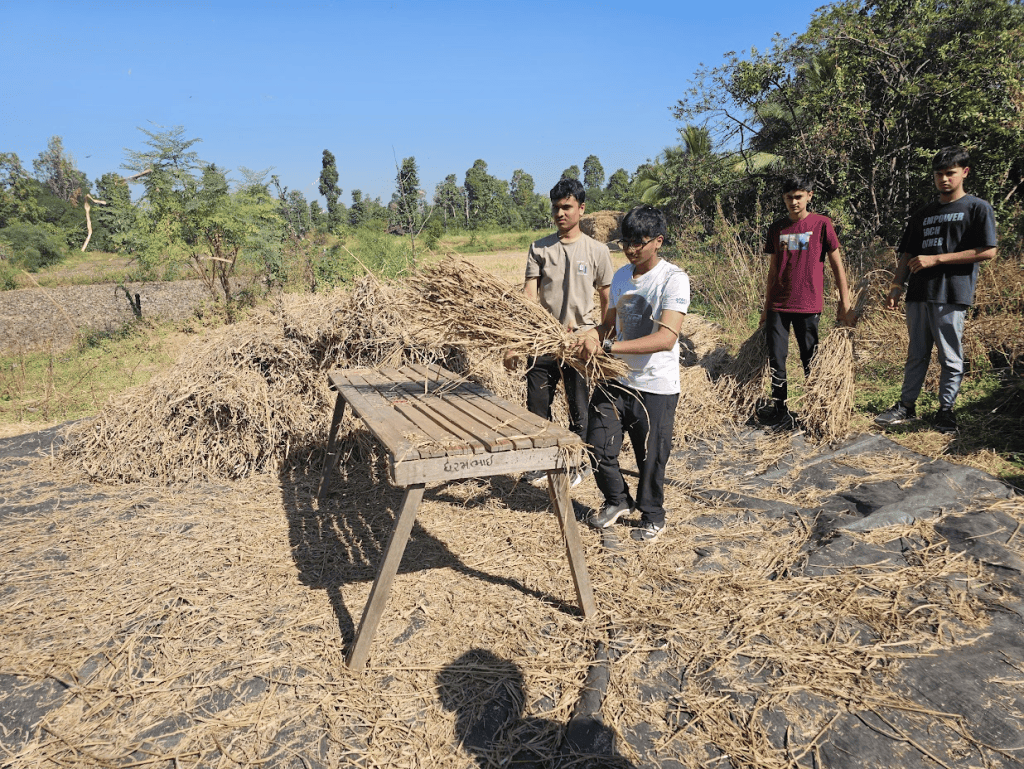
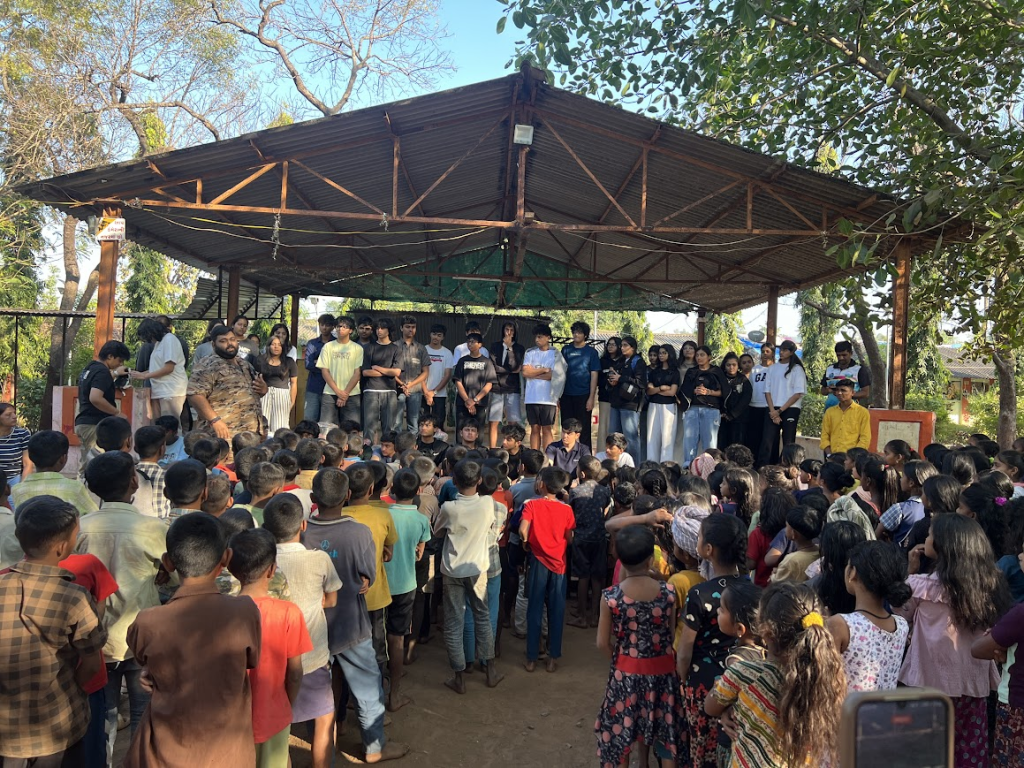
My participation in the rural immersion trip to Ambapani provided a profound, immersive look into rural life, forest-dependent ecosystems, and sustainable community practices. Throughout the trip, I engaged in a wide spectrum of experiential learning activities, including high-altitude trekking, village waste management (plastic collection), traditional farming, adventure challenges, native bird-watching, and cultural craft workshops such as Lippan art, Warli painting, and bamboo basket weaving. Additionally, interacting directly with local villagers and visiting an Ashramshala (residential tribal school) challenged my perspective on resource accessibility, community resilience, and cultural heritage. This experience directly challenged my assumptions, cultivated key Approaches to Learning (ATL) skills, and allowed me to demonstrate all 7 IB CAS Learning Outcomes.
Learning Outcomes (LOs) Demonstrated
- LO1: Identify own strengths and develop areas for growthThis immersion highlighted my core strengths in adaptability, open-mindedness, and interpersonal collaboration, particularly when adjusting to unfamiliar living conditions and coordinating group efforts during farming and waste collection. Conversely, working on technical, hands-on tasks—such as manipulating raw natural materials for basket weaving—initially pushed me out of my comfort zone, exposing a need to develop physical precision, spatial dexterity, and patience.
- LO2: Demonstrate that challenges have been undertaken, developing new skillsParticipating in physical trekking and adventure activities required overcoming personal physical limits. Culturally, working with unfamiliar media like mud and cow dung for Lippan art presented an initial sensory challenge. Under the guidance of local artisans, I learned traditional Warli storytelling techniques, Lippan surface design, and the intricate weaving patterns of bamboo craft, developing practical artistic skills while sharpening my problem-solving and self-management capabilities.
- LO3: Demonstrate how to initiate and plan a CAS experienceWhile the broader trip framework was structured, student initiative was essential for specific ground-level activities. During our visit to the Ashramshala, my peers and I independently planned and facilitated a Frisbee sports workshop for the local children. This required structuring adaptive lesson steps, allocating equipment, managing safety, and overcoming language barriers to ensure an engaging, inclusive session.
- LO4: Show perseverance and commitment in CAS experienceMaintaining active participation, high energy, and focus over a continuous six-day residential trip in the Dang region demanded significant commitment. Navigating early morning schedules, sustained physical exertion, and time away from urban comforts required emotional resilience and steady dedication to complete every scheduled community project thoroughly.
- LO5: Demonstrate skills and benefits of working collaborativelyCollaboration was vital across several group-based initiatives. During the plastic cleanup drive, our team designated specific search zones and collection roles, which maximized our coverage area and efficiency. Similarly, during the agricultural service activity, we formed an organized human chain to transport large haystacks across the farm fields. Division of labor and real-time communication significantly reduced physical strain and demonstrated the power of collective effort.
- LO6: Demonstrate engagement with issues of global significanceThe trip directly intersected with several UN Sustainable Development Goals (SDGs), including Responsible Consumption and Production (SDG 12), Climate Action (SDG 13), and Reduced Inequalities (SDG 10). Observing environmental degradation firsthand during the plastic drive, learning about sustainable forest co-existence from villagers, and witnessing educational disparities at the Ashramshala grounded abstract global crises into tangible, local realities.
- LO7: Recognise and consider the ethics of choices and actionsEngaging with rural communities highlighted the stark contrast between urban privilege and rural resourcefulness. It forced me to critically re-evaluate my daily consumption habits, waste generation, and socio-economic footprint. Observing how indigenous communities live sustainably without overexploiting natural resources emphasized the ethical responsibility urban consumers carry toward environmental stewardship and equitable social development.
Reflection
The Ambapani rural immersion was an eye-opening and transformative milestone in my IB DP journey. Living alongside communities deeply connected to the forest shifted my understanding of sustainability from a theoretical concept into a lived practice. Whether it was learning the patient rhythm of bamboo weaving from an artisan or sharing a sport with children at the Ashramshala, every interaction required humility, active listening, and empathy.
Navigating physical challenges like trekking and farming alongside my peers strengthened my team dynamics and leadership flexibility. More importantly, examining the stark differences between urban consumerism and rural self-reliance prompted deep reflection on my personal choices, ethics, and lifestyle. I returned from Ambapani not only with newfound artisan skills and stronger interpersonal relationships, but with a broader global perspective and a renewed sense of responsibility toward social equity and environmental conservation.