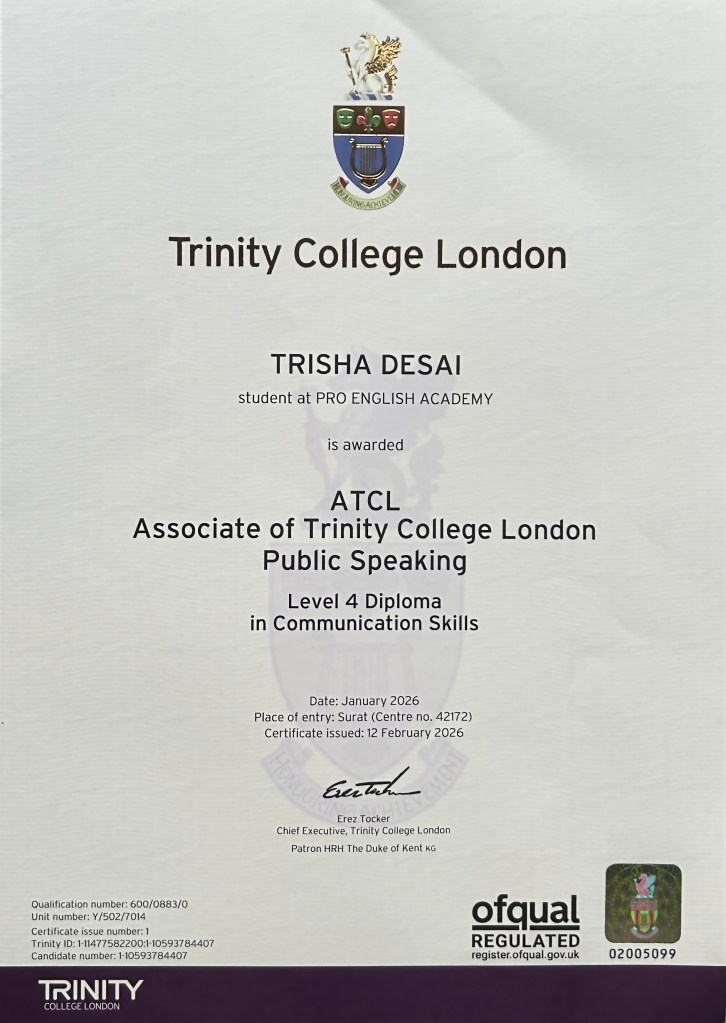
I undertook the Trinity ATCL Communication Skills (Public Speaking) Unit 1: Performance as a Creativity-based CAS experience. I began structured preparation in August 2025, focusing on vocal delivery, speech structure, audience engagement, and performance confidence. The process culminated in my practical examination on 31st January 2026. My primary goals were to strengthen my public speaking skills, overcome performance anxiety, and communicate ideas with clarity, conviction, and authenticity. I also aimed to push myself beyond academic presentations and treat communication as a creative, expressive performance rather than a memorised task.
Learning Outcome 1: Identify Own Strengths & Develop Areas for Growth
Through this experience, I became acutely aware of both my strengths and weaknesses as a speaker. I recognised that my strength lies in content organisation and emotional expression, especially when I feel connected to the message. However, I also identified weaknesses such as nervous pacing, overthinking audience reactions, and occasional vocal strain under pressure. Becoming aware of these gaps was initially uncomfortable, but it helped me feel more in control rather than self-critical. Knowing one’s strengths is essential because it builds confidence and direction, while recognising weaknesses allows for intentional growth. I actively worked on managing nervous energy through breathing techniques and structured pauses, skills that would have significantly benefited me in earlier academic presentations.
Learning Outcome 2: Demonstrate Challenges That Have Been Undertaken, Developing New Skills in the Process
The most challenging aspect of this activity was performing under formal assessment conditions, where every gesture, pause, and inflection mattered. Unlike casual speaking, this required sustained focus, self-awareness, and emotional regulation. While I had spoken publicly before, I had never treated communication as a performance discipline. I overcame these challenges through repeated practice, self-recordings, and critical self-evaluation. I also learned new skills such as vocal modulation, audience-centred delivery, and purposeful body language. Developing these skills has made me feel more self-assured and adaptable, and they will be invaluable in future leadership roles, interviews, and public-facing opportunities. Learning new skills is essential because it expands not just competence, but also self-belief.
Learning Outcome 3: Demonstrate How to Initiate & Plan a CAS Experience
Preparing for ATCL required long-term planning and self-initiation. I structured my preparation timeline across several months, breaking it down into speech drafting, rehearsal phases, feedback cycles, and mock performances. While I consider myself moderately organised, this experience pushed me to plan with greater consistency and discipline. The most difficult part was sustaining momentum over such a long period rather than initiating the process itself. I discovered that I had to rely on self-motivation, time management, and reflective planning more than I usually do. This experience has made future planning feel less daunting, reinforcing the importance of structure and foresight in achieving meaningful outcomes.
Learning Outcome 4: Show Commitment & Perseverance in CAS Experiences
This activity demanded sustained commitment, particularly during periods of self-doubt and fatigue. Balancing ATCL preparation with academic responsibilities required perseverance and emotional resilience. There were moments when progress felt slow, and improvement was not immediately visible, which tested my patience. However, committing to regular practice and trusting the process helped me push through these phases. Perseverance is important because meaningful growth is rarely instant, and this experience taught me to value consistency over perfection.
Final Takeaway
This CAS experience helped me develop several IB Learner Profile attributes, particularly Communicator, Risk-taker, and Reflective. It is closely linked to my academic life, as strong communication skills enhance presentations, discussions, and leadership roles across subjects. While the activity primarily benefited my personal growth, it also equips me to communicate more effectively with others, whether in school, community initiatives, or future professional settings. The highlight of this journey was realising how much confidence can be built through disciplined practice. Regardless of the final result, completing this performance gave me a strong sense of accomplishment and enjoyment. If I were to repeat this experience, I would seek more live audience exposure earlier in the process. I intend to apply these skills in future debates, leadership opportunities, and community engagement, using communication as a tool for positive impact.