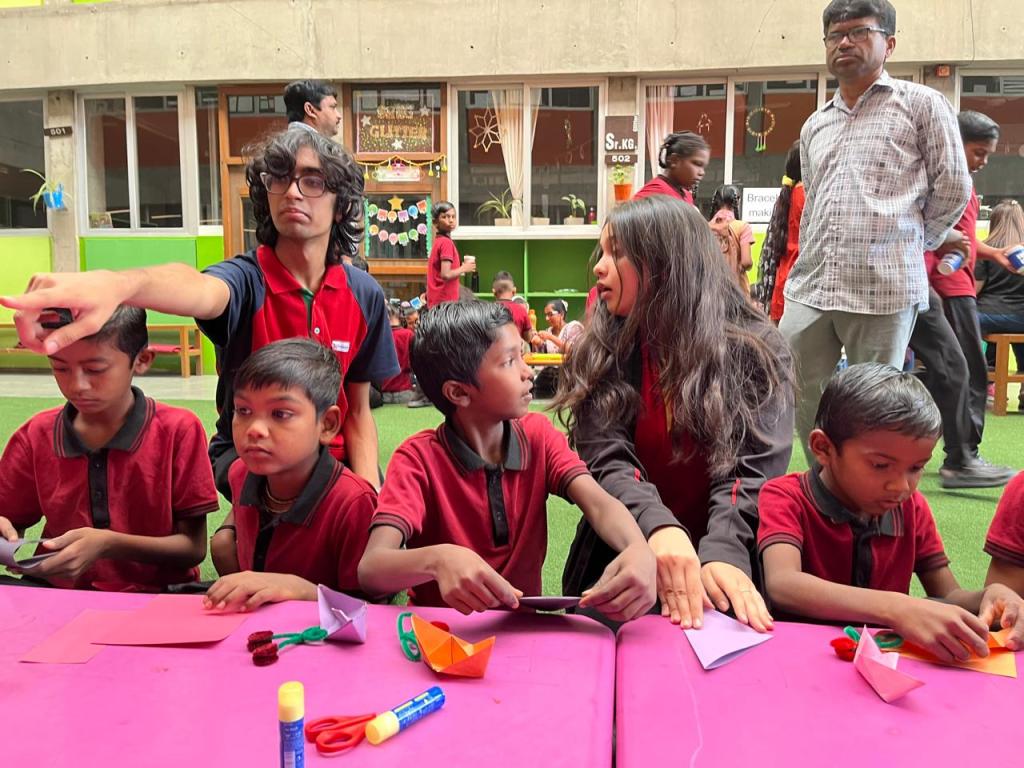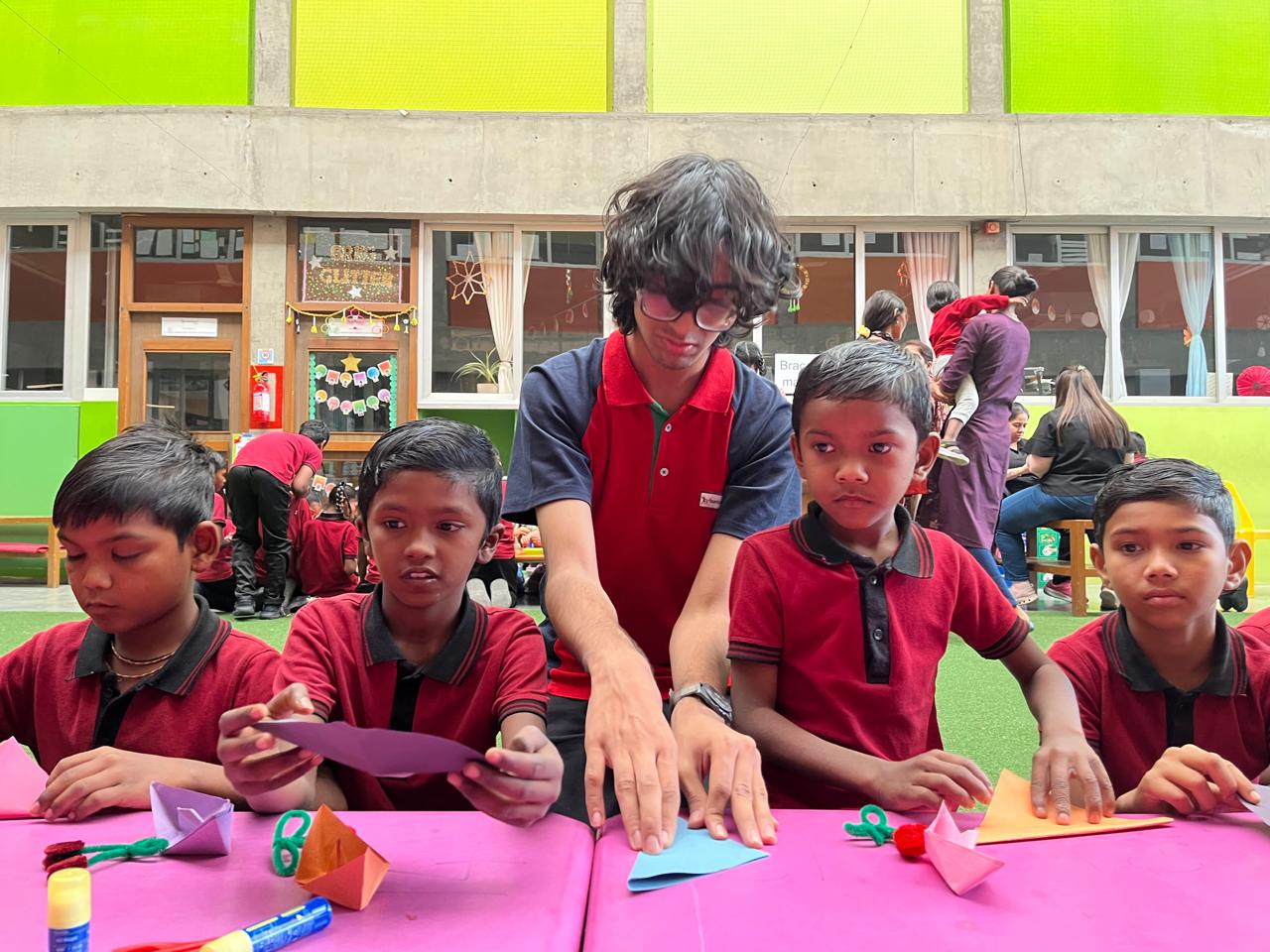
The Bal Mela was a meaningful CAS service experience where I volunteered at an origami stall for children from different schools. My role involved teaching children how to make different origami models and helping them when they found particular steps difficult. Since the children had different ages, abilities, and levels of familiarity with origami, I had to adjust the way I explained instructions and demonstrate each step patiently. The experience allowed me to contribute to an enjoyable learning environment while developing my communication, creativity, patience, and teaching skills.
LO1 – Identify own strengths and develop areas for growth
Teaching origami helped me recognise that I am comfortable demonstrating creative activities and explaining processes to others. However, I realised that children do not all learn in the same way or at the same pace. I therefore had to become more patient and adaptable, changing my explanations or demonstrating steps repeatedly when necessary. This helped me identify adaptability and patience as areas where I could continue to grow.
LO2 – Demonstrate that challenges have been undertaken, developing new skills
Teaching origami to groups of unfamiliar children was different from simply making the models myself. I had to break each process into simple steps and make sure the children understood before moving forward. When children struggled with particular folds, I had to find alternative ways of explaining or demonstrating them. This challenged me to develop my communication, teaching, patience, and problem-solving skills.
LO3 – Demonstrate how to initiate and plan a CAS experience
Before the Bal Mela, the origami stall required preparation so that the activity could run smoothly. I helped prepare for the activity and familiarised myself with the origami models that would be taught. During the event, I had to organise my approach depending on the number of children at the stall and ensure that everyone received sufficient guidance. This showed me the importance of preparation and organisation when conducting an activity for a large and changing group of participants.
LO5 – Demonstrate the skills and benefits of working collaboratively
The origami stall involved working alongside other volunteers to teach the children and manage the activity. We had to communicate with one another, divide our attention between different children, and help each other when the stall became busy. Working collaboratively allowed us to provide more individual attention to the children and made the activity more organised. I learned that cooperation and clear communication are particularly important when working with large groups.
LO6 – Engagement with issues of global significance
The Bal Mela connected with SDG 4: Quality Education, particularly through informal and creative learning opportunities. Children from different schools were given the opportunity to learn a new skill in an interactive environment outside their regular classrooms. By helping children develop creativity, patience, and practical skills through origami, I contributed in a small way to creating an engaging learning experience and reinforcing the value of accessible, inclusive education.
Overall, the Bal Mela helped me become more patient and adaptable when teaching others. It also showed me that even a simple creative activity such as origami can provide children with an opportunity to learn, interact, and develop new skills.