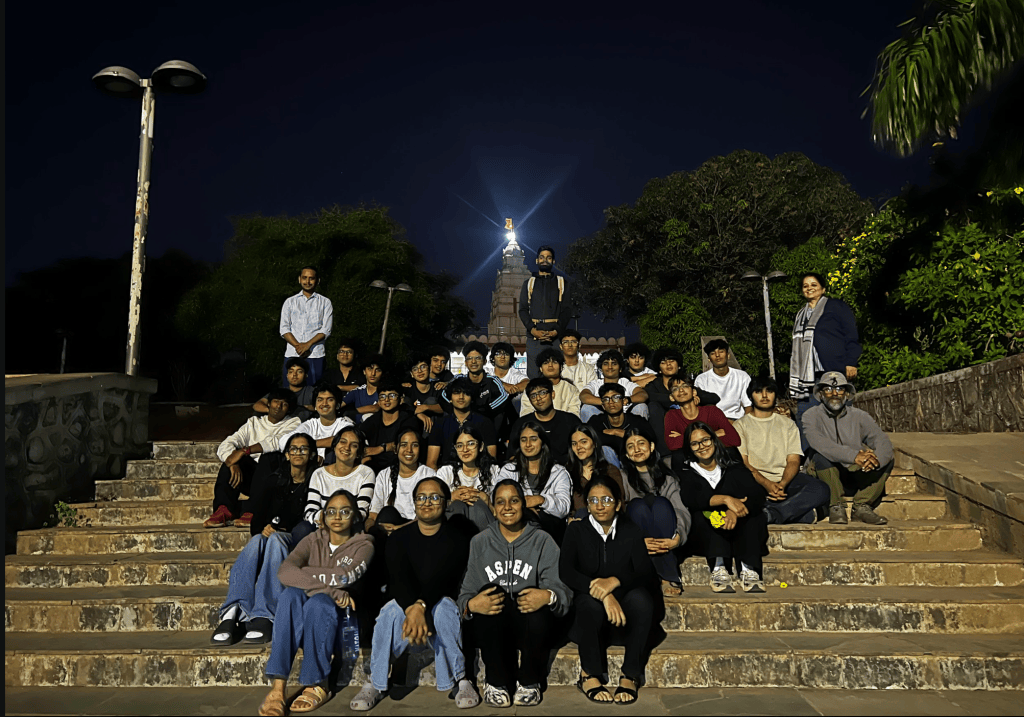
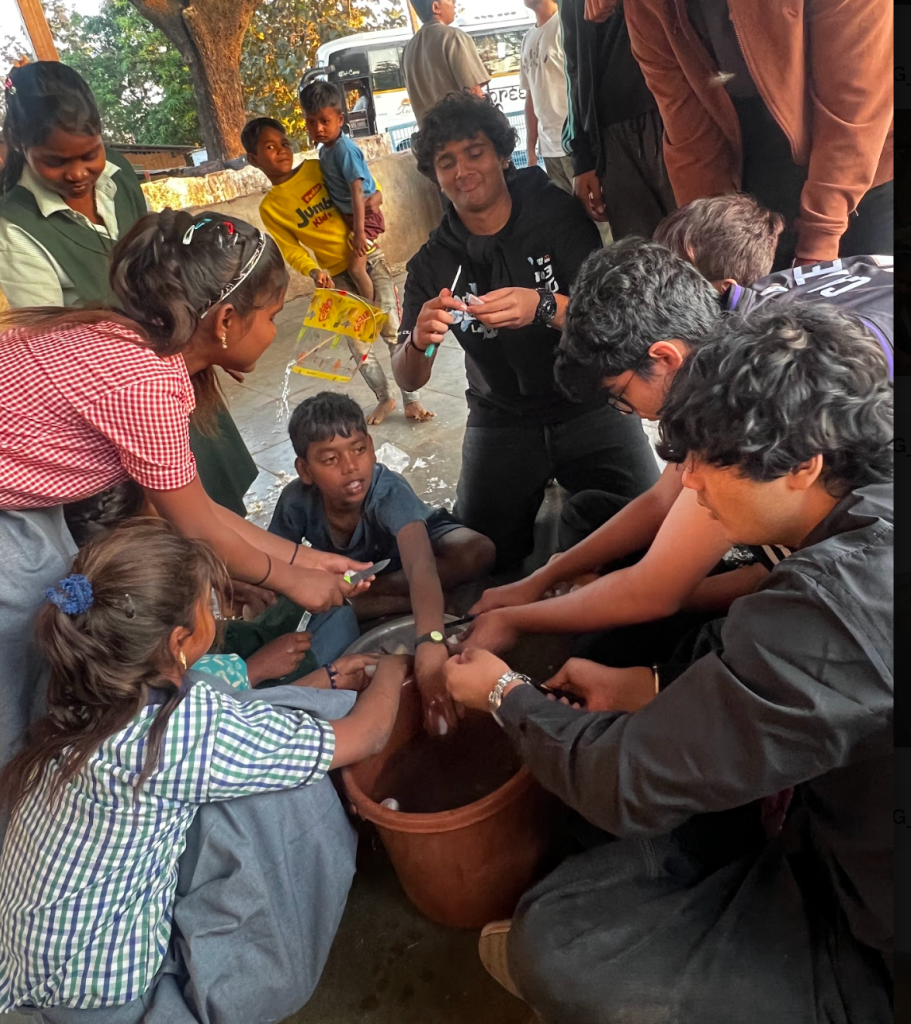
My seven-day rural immersion trip to Mokhamal was the most significant and impactful CAS experience of my IBDP journey because it combined all three strands of CAS: Creativity, Activity, and Service. It pushed me beyond my comfort zone and gave me the opportunity to immerse myself in a completely different way of life. Living in the village, working alongside the locals, and contributing to their community made me realize the value of empathy, resilience, and collaboration.
This experience was not just about helping others; it was about learning from them and understanding realities far different from my own.
Creativity
Creativity was an important part of this trip as we organized interactive teaching sessions, games, and cultural exchange activities for the village children. I had to think creatively to make lessons engaging despite limited resources. We used storytelling, drawing, music, and team-building activities to make learning enjoyable. These moments taught me how creativity can be a powerful tool for connection and education.
Activity
The trip involved intense physical activity every day. From walking long distances across the village, participating in farming activities, cleaning drives, and helping build and maintain community spaces, I was constantly physically engaged. This challenged my stamina and discipline. Adjusting to early mornings, physically demanding work, and unfamiliar routines tested my endurance and showed me the importance of persistence.
Service
Service was the heart of this experience. We contributed to the local community through education, cleanliness initiatives, and support in daily village tasks. More importantly, service taught me humility. I understood that service is not about “giving” from a place of superiority, but about mutual respect, learning, and solidarity.
CAS Learning Outcomes
LO1: Identify own strengths and develop areas for growth
Through this trip, I discovered that one of my biggest strengths is adaptability. I was able to quickly adjust to rural living conditions, unfamiliar food, and physically demanding tasks. However, I also identified weaknesses such as my limited patience and my difficulty in communicating effectively with younger children. This showed me where I need to grow.
LO2: Demonstrate that challenges have been undertaken, developing new skills in the process
This entire experience was filled with challenges. Living without comfort, participating in manual labor, and connecting with people from a different background required effort and courage. I developed practical skills like teamwork, leadership, teaching, and basic farming techniques. Most importantly, I built resilience.
LO3: Demonstrate how to initiate and plan a CAS experience
Before the trip, our group spent time planning activities, organizing teaching materials, and discussing how we could best contribute to the community. I actively participated in brainstorming creative educational methods and ways to make our service meaningful. This planning process taught me the importance of preparation and flexibility.
LO4: Show commitment to and perseverance in CAS experiences
For seven days, I remained committed to every activity despite exhaustion and discomfort. Waking up early, maintaining energy throughout the day, and participating fully in every task required perseverance. There were moments when I felt physically drained, but I pushed through because I understood the purpose behind the work.
LO5: Demonstrate the skills and recognize the benefits of working collaboratively
Collaboration was essential throughout the immersion. Working with my peers and villagers taught me the value of trust, communication, and shared responsibility. Whether teaching children, farming, or organizing community activities, teamwork made our efforts effective and meaningful.
LO6: Demonstrate engagement with issues of global significance
The trip exposed me to issues such as poverty, lack of educational resources, sanitation challenges, and rural inequality. These are not just local issues but global concerns connected to sustainable development and social justice. Seeing them firsthand made me more aware of the privileges I often take for granted.
LO7: Recognize and consider the ethics of choices and actions
One of my biggest reflections was understanding the ethics of service. It was important to approach the community with respect and humility rather than pity. I learned that ethical service means listening, understanding, and valuing people’s dignity. This experience reminded me that true impact comes from collaboration, not charity.
Conclusion
The rural immersion trip to Mokhamal was my most meaningful CAS experience because it brought together creativity, activity, and service in the most authentic way. It challenged me mentally, physically, and emotionally while giving me invaluable lessons about gratitude, teamwork, and social responsibility. This experience has shaped my perspective on community, privilege, and service, and it will remain one of the defining experiences of my IB journey.