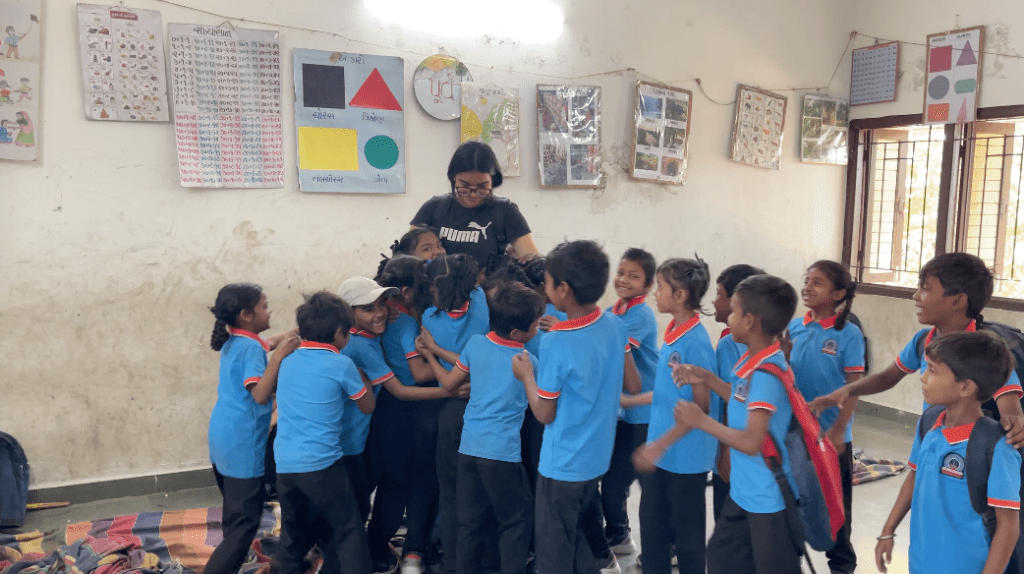
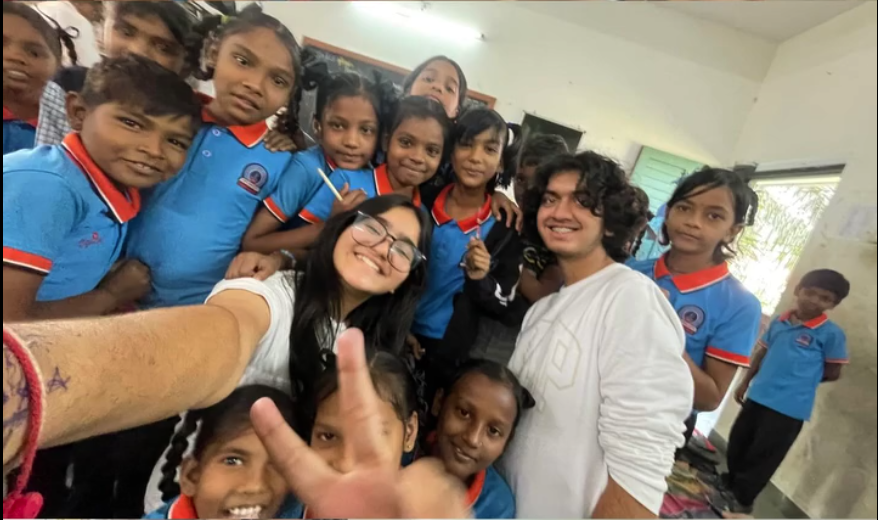
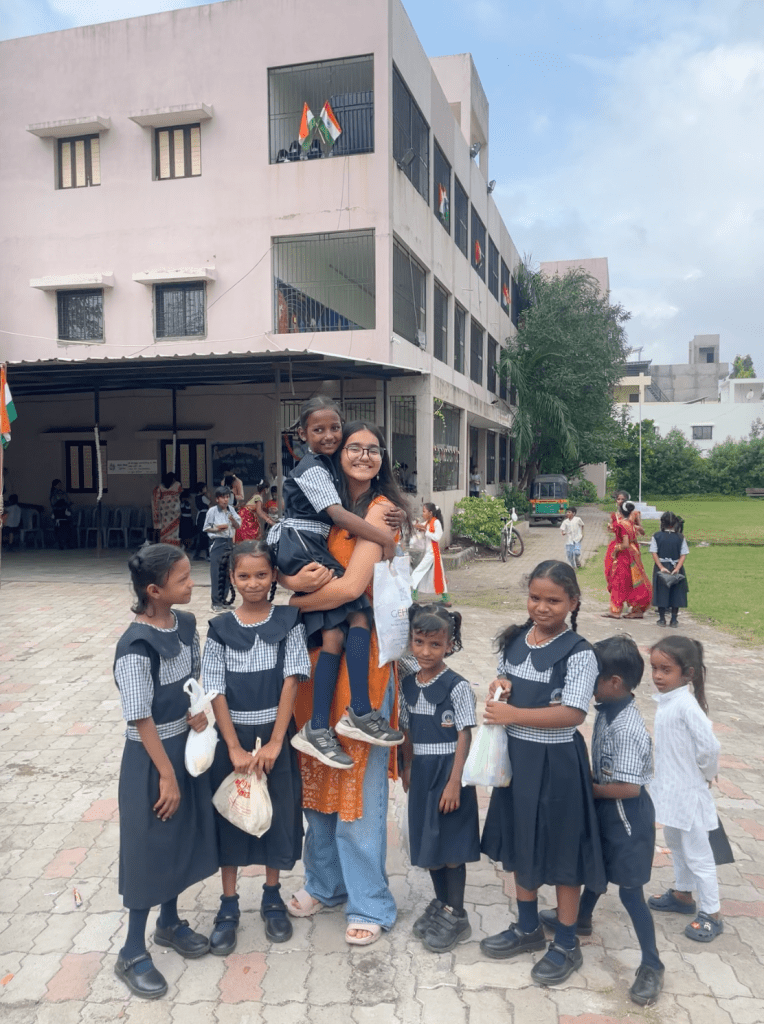
For my CAS Enrichment experience, I worked with students from financially disadvantaged backgrounds who had limited access to tuition and structured academic support. Many relied only on what they learned in school, often without fully understanding key concepts. My goal was to help them build clarity in subjects like English and Mathematics while making learning more engaging and accessible. I supported them by explaining concepts, solving doubts, and guiding them through their daily schoolwork rather than simply completing tasks for them.
Since most students were more comfortable in Gujarati, I mainly communicated in Gujarati while gradually connecting it to English concepts. Even though Gujarati is my mother tongue, I am not very fluent at the level they are, so I had to consciously improve the way I spoke and explained ideas. This reduced hesitation and made the learning environment more approachable. I also used small games, discussions, and real-life examples to keep students engaged and reduce fear around difficult topics. Over time, I realized this experience was not just about teaching content. It was about building confidence, creating a safe space, and understanding how differently each student learns.
Learning Outcome 1: Identifying strengths and areas for growth.
This experience helped me recognize communication as one of my main strengths. I was able to explain concepts clearly, simplify difficult ideas, and adjust my teaching style based on each student’s level of understanding. Teaching in Gujarati while linking it to English improved my ability to communicate across languages, even though I initially struggled to match their level of fluency. I also became more observant. I learned to notice when students were confused even if they did not say it directly, which allowed me to support them more effectively and create a comfortable learning environment where they felt safe asking questions.
At the same time, I identified areas where I needed to improve. Managing students with different learning speeds was difficult at first. I sometimes spent too much time with one student, which caused others to lose focus. This showed me the importance of structuring sessions and managing time better. I worked on becoming more patient and flexible so that I could balance attention across the group. Over time, I became more aware of how to include everyone and ensure that each student remained engaged, which improved both my teaching and my confidence.
Learning Outcome 2: Demonstrating challenges undertaken and developing new skills
One major challenge was teaching students who had gaps in their foundational understanding and low academic confidence. Many struggled with basic concepts such as basic arithmetic or sentence formation, which made it difficult to move forward with their school syllabus. I realized that simply following their textbooks was not effective because they did not fully understand what was being taught in class. This forced me to constantly rethink my teaching approach and focus more on strengthening their basics before introducing new topics. In addition, the difference in language created another barrier, as most students were only comfortable in Gujarati while their academic material often included English. Their attention spans were also limited, especially when they felt confused or overwhelmed, which made it difficult to keep them engaged for long periods.
To address these challenges, I began using more interactive and flexible teaching methods. I included games, simple activities, and real-life examples that related to their daily experiences so that concepts felt more relevant and easier to understand. I broke down complex ideas into smaller, manageable steps and repeated them in different ways until students felt confident. I also adjusted my pace depending on each student’s level rather than following a fixed structure. Through this process, I developed important skills such as classroom management, adaptability, and creative teaching. I learned how to handle different learning speeds, maintain student interest, and create an environment where students felt comfortable making mistakes. This experience made me more confident in my ability to teach and better prepared to work with diverse groups in the future.
Learning Outcome 3: Demonstrating how to initiate and plan a CAS experience.
I took responsibility for planning each session by deciding what topics to cover, preparing clear explanations, and designing simple activities that matched the students’ level of understanding. Before each session, I reviewed what the students had previously learned and identified areas where they were struggling so I could address those gaps first. Initiating this experience required me to step out of my comfort zone because I was not just assisting but taking full responsibility for how effectively the students learned. I had to think ahead, structure each session with a clear objective, and ensure that time was used productively. Planning also meant considering different learning speeds, so I prepared extra practice for faster learners while keeping simpler reinforcement tasks for those who needed more time. This process helped me develop stronger time management and organizational skills.
Each week, I refined my approach based on what worked and what did not during the previous sessions. I paid attention to student responses, engagement levels, and areas where they struggled. When I noticed that students lost focus during long explanations, I introduced short breaks, games, and interactive discussions to maintain their attention. When concepts felt too difficult, I simplified them further, used visual methods, and connected them to real-life situations they could relate to. I also adjusted the pace of teaching instead of following a fixed plan, which made sessions more effective. This constant cycle of planning, observing, and improving helped me become more adaptable and responsive. It showed me that effective planning is not fixed but requires ongoing reflection, flexibility, and the ability to respond to real-time challenges.
Learning Outcome 4: Showing commitment and perseverance.
Teaching consistently throughout the term required strong commitment and a clear sense of responsibility. There were many days when I felt tired due to my own academic workload and extracurricular commitments, but I still chose to attend each session because the students depended on that support. Preparing lessons after completing my own work required careful time management and discipline, especially when balancing multiple priorities. I had to plan ahead, stay organized, and ensure that I was mentally prepared to teach effectively. Showing up regularly helped build trust with the students, as they began to rely on the consistency of the sessions. This continuity made a difference in their learning, as regular exposure and practice helped reinforce concepts over time.
Progress was often slow, particularly for students who struggled with basic concepts and lacked confidence in their abilities. This required patience and perseverance, as results were not immediately visible. There were moments when it felt challenging to stay motivated, especially when students continued to make the same mistakes or needed repeated explanations. However, I remained consistent in my efforts and focused on small improvements rather than immediate results. Over time, I began to notice gradual changes, such as increased participation, better understanding of concepts, and more willingness to ask questions. These small signs of progress made the effort worthwhile and showed me that consistent dedication can lead to meaningful impact, even if the outcomes take time to become visible.
Learning Outcome 5: Demonstrating skills and recognizing the benefits of working collaboratively.
While I worked with other volunteers, my role as branch manager involved taking full responsibility for planning lessons, organizing activities, and leading teaching sessions. I had to ensure that each session was structured, purposeful, and suited to the students’ needs. This meant assigning tasks to volunteers based on their strengths, clearly explaining what needed to be done, and making sure everyone was aligned with the goals of the session. I also monitored how each activity was carried out and stepped in when adjustments were needed. Balancing leadership with collaboration was important, as I had to guide the team while still being open to their ideas and suggestions. This role strengthened my ability to communicate clearly, manage a group, and maintain accountability within the team.
Working collaboratively improved the overall effectiveness of the sessions. Different volunteers brought different perspectives and teaching styles, which helped make learning more engaging for the students. I learned to adapt my approach based on both student responses and team input. When students were hesitant or shy, I worked with the team to create a more supportive environment by encouraging participation and using interactive methods. I also learned how to handle small challenges within the team, such as differences in teaching pace or approach, by maintaining clear communication and focusing on shared goals. This experience showed me that collaboration works best when there is mutual respect, clear roles, and strong leadership. It also increased my confidence in leading a team and making decisions that benefit both the group and the students.
Learning Outcome 6: Engagement with issues of global significance
This experience made me more aware of educational inequality as a global issue and how it affects students on a daily basis. Many of the students I worked with lacked access to basic academic support such as tuition, learning materials, and individual guidance, which are often easily available in more privileged settings. I noticed that their struggles were not due to a lack of ability or interest, but because they did not have the same opportunities to strengthen their understanding outside the classroom. This gap made it harder for them to keep up with their school syllabus, which in turn affected their confidence and willingness to participate. Observing this firsthand helped me understand how access to education directly influences long term opportunities, personal growth, and overall development.
By contributing my time and skills, I was able to support these students in a small but meaningful way. Even simple actions such as explaining a concept clearly or encouraging a student to ask questions had a noticeable impact on their confidence. This made the experience more meaningful and gave me a stronger sense of responsibility toward addressing such issues. It also encouraged me to think beyond this activity and consider how I can continue contributing to education in the future, whether through similar initiatives or other forms of support. Understanding the scale and impact of educational inequality changed my perspective and made me more aware of the role I can play in creating positive and lasting change.
Learning Outcome 7: Recognizing and considering the ethics of choices and actions
This experience required me to think carefully about fairness, responsibility, and the impact of my actions on others. I had to ensure that every student received equal attention and support, even when their abilities and confidence levels were very different. It was easy to focus more on students who responded quickly, but I made a conscious effort to include those who were quieter or needed more time. I also had to respect their language and cultural background by teaching in Gujarati while gradually introducing English, so that learning remained accessible rather than intimidating. Every decision I made, from how I explained a concept to how I distributed my time, directly affected how comfortable, included, and motivated the students felt during the sessions.
This experience changed how I understand education and my role within it. I began to see education as a basic right that should be accessible to everyone, rather than just a measure of academic success. I also became more aware of how small actions, such as showing patience or encouraging a student, can have a lasting impact on someone’s confidence. It made me more conscious of acting with fairness, respect, and accountability in all situations. This awareness will influence how I approach future experiences, as I now understand the importance of making thoughtful and ethical choices when working with others.
Conclusion:
This CAS experience helped me grow in both practical skills and personal awareness. I developed stronger communication by explaining concepts in a way students could understand, improved my planning through structured and flexible sessions, and built patience by working with different learning speeds. Taking on a leadership role strengthened my ability to manage responsibilities, guide a team, and stay consistent even when balancing my own academic workload. These experiences made me more confident in handling challenges and adapting to unfamiliar situations.
The experience also changed how I view education and my role in society. I became more aware of educational inequality and the importance of making learning accessible to everyone. Working closely with the students showed me the value of consistency, empathy, and effort in creating real impact. While the students improved in confidence and understanding, I gained a deeper sense of responsibility and purpose. This experience has influenced how I approach future opportunities, and I hope to continue contributing to education and supporting others in meaningful ways.