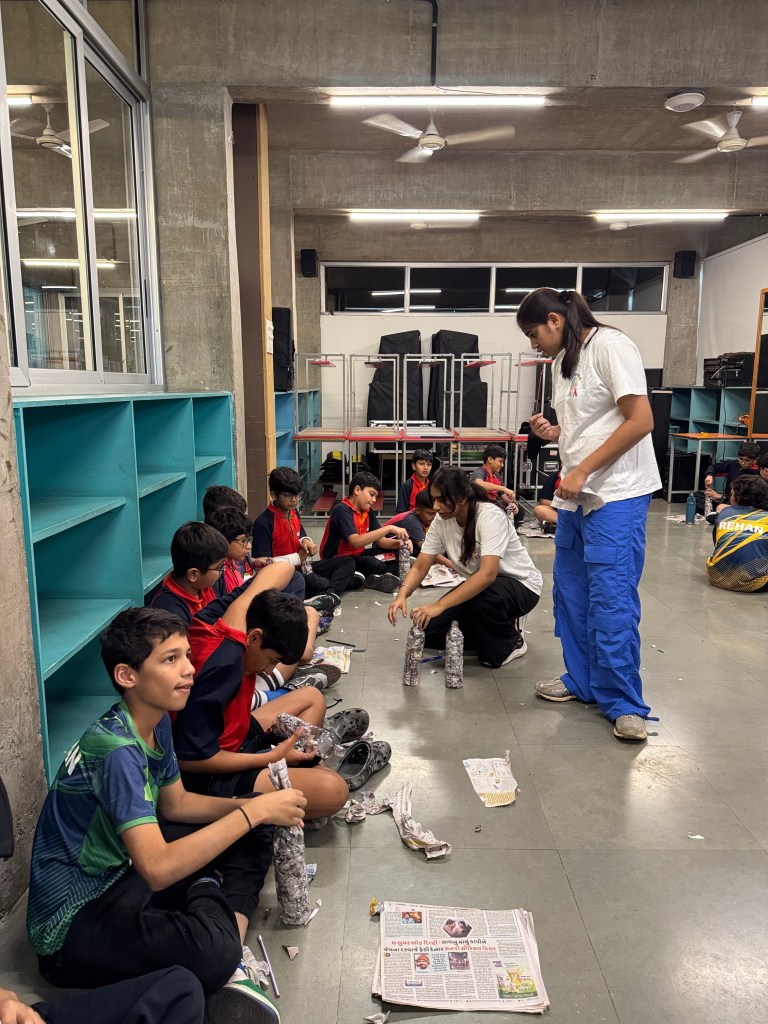
As a part of CAS I participated in volunteering for the event Groove for Good 3.0. This workshop was hosted for the students of grade 6 and focused on engaging them with the SDGs (Sustainable Cities and Communities,Responsible Consumption and Production). The workshop highlighted the pressing concern of plastic pollution and focused on the solution to it- ECO-Bricks.
LO1: Identify own strengths and develop areas for growth
During this experience I was able to recognize my own strenghts being the ability to connect with younger students and create a comfortable environment for them to participate in. I was able to communicate instructions clearly and maintain their engagement during the activity. Although, I also was able to identify some areas for growth. Particularly mentioning, it was harder to manage larger group of children and managing decoram. I found it a bit challenging in being authorities and approachable at the same time. But this session has highlighted the need to develop stronger classroom communication skills and management skills.
LO2:Demonstrate that challenges have been undertaken, developing new skills.
For this CAS activity there were many challenges that required me to step outside and think out of the box. One of the significant challenges was the time constraint since the children took their time to make the eco bricks while we waited and then we also had to make an eco brick stool but that plan didn’t go the way we wanted it to. Since glue gun were required and the electric ports at the venue weren’t functioning so we had to wait and act quickly changing to a celo tap to make the stool and surprisingly it held on a good amount of wait. Along with that the children had higher levels of energy which made it difficult for me and my partner to manage since they required constant attention and flexibility. Through this was able to improve my ability to give clear instructions, do better time management and these contribute to my growth as a confident and responsive leader in dynamic environments.
LO4:Show perseverance and commitment in CAS experience.
From the start of this workshop, I demonstrated perseverance by remaining actively engaged even though there were challenges such as fatigue noise and lack of cooperation from students. Instead of becoming disengaged I remained consistent with my efforts for maintaining that level of energy and ensuring the students understand the main purpose of the workshop. My commitment to this event also reflected in the willingness to take the responsibility as a co-volunteer to lead this workshop. This experience reinforced the importance of resilience and dedication for me.
LO5:Demonstrate skills and benefits of working collaboratively.
Collaboration was the central aspect for this workshop. During the workshop since the things had gone a bit towards the south we had to consistently collaborate with each other to ensure that the session is completed under the time bound as well as the main message is delivered. This experience highlighted that collaboration is not simply about dividing tasks but also about actively supporting one another, being flexible and working in unity towards a shared goal.
LO6:Engagement with issues of global significance.
This workshop deepened my understanding of plastic pollution as a global environmental challenge that affects ecosystems, wildlife, and human health across the world. Through discussions on the Sustainable Development Goals (SDGs) and the introduction of Eco-Bricks as an alternative to managing plastic waste, I realized that even small community-based initiatives can contribute to addressing larger environmental problems. Assisting with the workshop allowed me to spread awareness among younger students and encouraged me to reflect on my own consumption habits. This experience strengthened my belief that meaningful local action can collectively create a positive global impact while promoting environmental sustainability.
LO7: Recognise and consider the ethics of choices and actions.
Throughout the workshop, I recognized the ethical responsibility involved in promoting environmental sustainability and educating others accurately. I ensured that I communicated respectfully with the participants, encouraged everyone equally, and emphasized practical solutions instead of simply highlighting the problem of plastic pollution. I also reflected on how my own everyday choices, such as reducing single-use plastics and supporting sustainable practices, influence the environment. This experience helped me understand that ethical decisions are not limited to large actions but are also reflected in the small, responsible choices we make and encourage others to adopt for the benefit of the wider community.