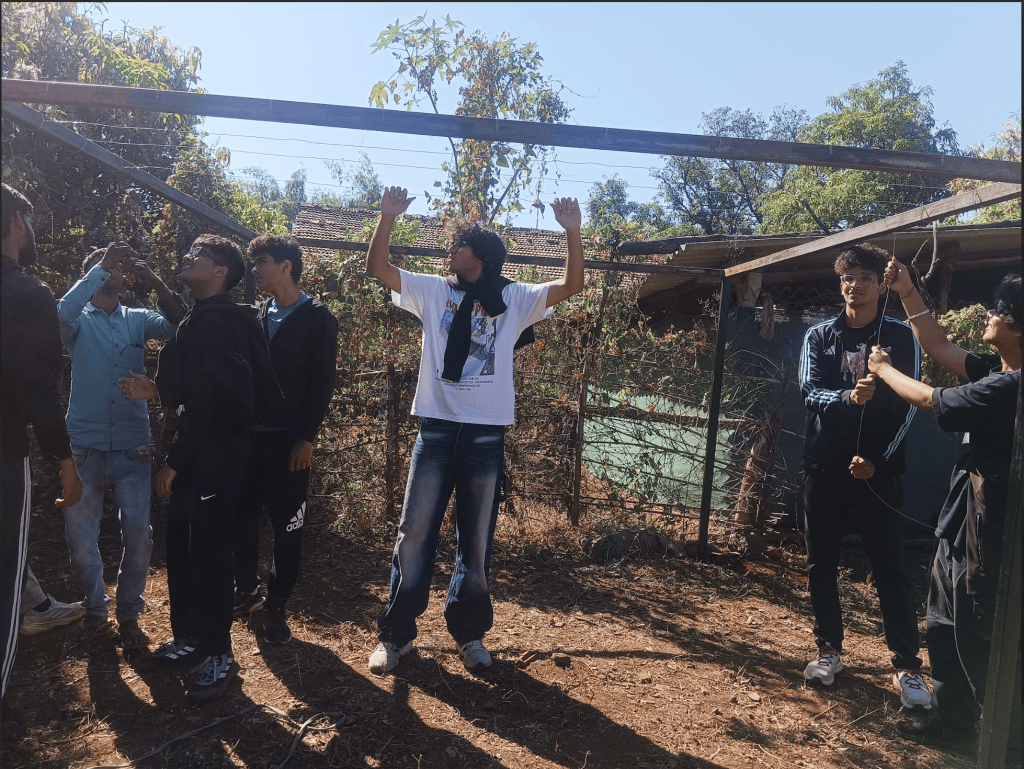
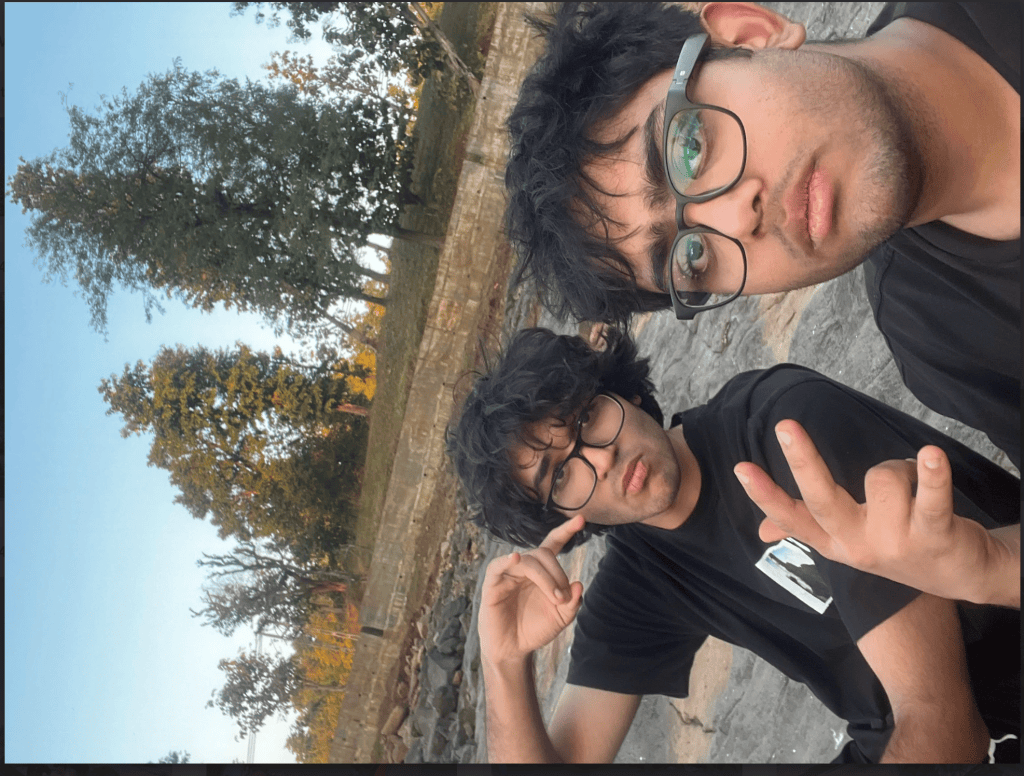
As a part of my CAS experience, I went on a six-day rural immersion trip to Mokhamal, Dang. The purpose of this trip was to experience rural life firsthand. During this trip, I got to interact with the tribal people, worked with children in a government school, engaged in group work, visited the local haat (market), and went trekking in the mountains.
Experiencing life in the rural area made me understand that rural life is not like living in the city. I saw firsthand the lack of access to healthcare, education, and employment opportunities. This experience has made me more aware of the challenges faced by people living in rural areas and has helped me appreciate the things that I often take for granted.
Learning Outcome 1 – Identify own strengths and develop areas for growth
In this journey, I was able to identify adaptability as one of my personal strengths. I was able to adapt to early mornings, simple food, and a different routine with ease. But I was also able to identify some weaknesses. At first, I found it difficult to cope with basic facilities and dehydration, which had some effect on my health. But once I identified this, I made sure to take extra care of myself.
Learning Outcome 2 – Demonstrate that challenges have been undertaken, developing new skills
The most difficult experience in the journey was trekking in the mountains. The process of climbing the mountains was physically tiring and paining. Through observation and interaction with the locals, I realized the significance of breathing control and maintaining a steady pace. By applying these principles, I was able to increase my endurance levels.
LO3 – Demonstrate how to initiate and plan a CAS experience
Prior to the rural immersion, I studied what the goals of the trip were, what materials I needed to bring and mentally prepared myself for living in a very different environment. For the experience, I did my best to be a part of each activity, interacting with the villagers, doing some of the community’s work and hiking and learning traditional skills. By being organised and well prepared, I was able to take advantage of all the opportunities and make a valuable contribution to the experience.
LO4 – Show perseverance and commitment in CAS experience
During the bamboo basket-making activity, I encountered the challenge of repeated errors, where the bamboo would break or lose its shape. However, instead of quitting, I persevered until I was able to complete the task successfully. This activity helped me develop perseverance and dedication when acquiring a new skill.
LO5 – Demonstrate skills and benefits of working collaboratively
Teamwork was important in activities like constructing a shed fence. We shared the responsibilities and cooperated to ensure that the tasks were completed effectively. This activity has helped me in learning how to communicate, coordinate, and comprehend the value of collaboration in achieving enhanced results.
LO6 – Engagement with issues of global significance
The experience opened my eyes to global problems like inequality in the distribution of healthcare, education, clean water, and job opportunities. Engaging with the villagers and students made me aware of the scarcity of opportunities available to rural areas. I understood that the problem is not just in Dang but a global issue associated with sustainable development and equity.
LO7 – Recognise and consider the ethics of choices and actions
This experience has made me think about my own lifestyle and consumption patterns. Observing how the villagers make the most of what they have access to made me think about my own behavior. I have become more conscious about the overconsumption of resources in urban areas and how it leads to inequality. This has further reinforced my feelings of responsibility to make more ethical choices.
SDGs Connected to This Experience
This immersion connects to several United Nations Sustainable Development Goals:
- United Nations Sustainable Development Goal 2 – Zero Hunger
- United Nations Sustainable Development Goal 3 – Good Health and Well-being
- United Nations Sustainable Development Goal 4 – Quality Education
- United Nations Sustainable Development Goal 6 – Clean Water and Sanitation
- United Nations Sustainable Development Goal 8 – Decent Work and Economic Growth
These goals relate directly to the challenges I observed in Mokhamal, including malnutrition, limited healthcare access, lack of educational resources, water scarcity, and unstable employment.
In conclusion, the rural immersion experience in Mokhamal, Dang was a very significant CAS experience for me. It challenged me to move out of my comfort zone, increased my resilience, and opened my eyes to the realities of social inequalities and global issues. More importantly, it helped me develop as a person and as someone with a sense of responsibility towards society and the planet.