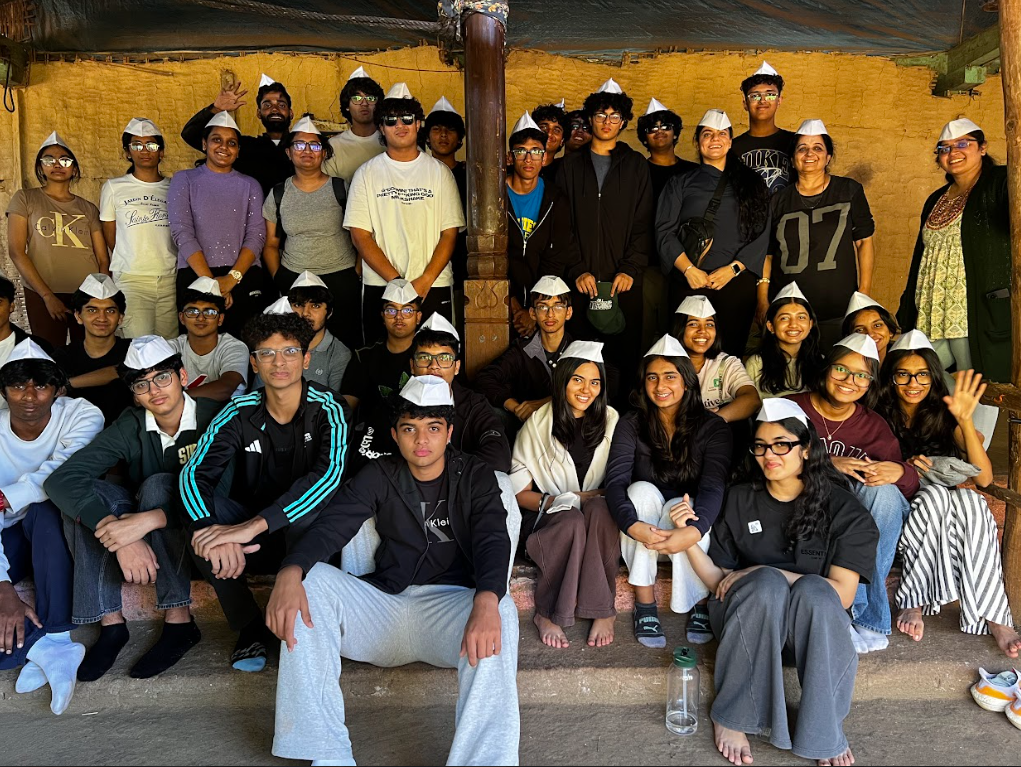
For my CAS journey, I participated in a six-day rural immersion trip to Mokhamal, Dang, with the aim of understanding rural life through first-hand experience. During the trip, I engaged in various activities such as interacting and communicating with the local tribal communities, working in a government school with children, and participating in games and group activities with them and trecking in the mountains. We also visited the local Haat (market), where I observed how people in Dang purchase products and resources and sustain their daily lives. This experience challenged me in several ways, including adapting to a different sleep schedule, food habits, and communication styles. Through this immersion, I gained a deeper understanding of how rural life differs from urban life and the challenges faced by people living in these areas. I became aware of limitations such as restricted access to quality healthcare, education, and employment opportunities, and how these factors significantly affect the lives of people in Dang.
Learning outcome 1 – Identify own strengths and develop areas for growth
During the rural immersion trip, I was able to identify my personal strengths and areas for growth as I adapted to a completely new way of living. One of my strengths was adaptability. I adjusted well to changes in my sleep cycle, food habits, and daily routine. Sleeping late at night and waking up early in the morning was easy for me as I was well adjusted to such timing so I was able to change my sleep pattern and maintain my health and energy levels throughout the trip. This helped me stay focused during daily activities, unlike some of my friends who struggled with fatigue. Another strength I identified was my ability to adapt to changes in food habits. At home, I was used to eating three meals a day and often skipping breakfast, along with consuming fast food and oily meals. During the trip, I adjusted to fixed meal timings and simple, naturally prepared food provided by the villagers. This change helped me stay energized and allowed me to participate actively in all activities. However, I also identified weaknesses and areas for growth. One challenge was adapting to basic living conditions, particularly bathing facilities. Due to less hot water availability and bad conditions, I initially avoided bathing on the first day. I realised this was an issue I needed to overcome, and by pushing myself, I adapted and maintained proper hygiene for the rest of the trip. This experience helped me become more comfortable outside my comfort zone. Another weakness was managing hydration. Due to dehydration, I experienced headaches and fell ill, which affected my focus during some activities. After recognising this issue, I made a conscious effort to drink sufficient water regularly, which helped improve my health and participation. Overall, the rural immersion trip helped me clearly identify my strengths and weaknesses. By acknowledging and addressing these areas for growth, I developed better adaptability, self-awareness, and responsibility. This experience also taught me the importance of preparing mentally and physically for unfamiliar environments.
Learning outcome 2 – Demonstrate that challenges have been undertaken, developing new skills
The most challenging part of the rural immersion trip was the physical exhaustion I experienced during the first three days. Due to constant exposure to the sun and continuous movement, I often felt fatigued and lacked energy. One of the hardest challenges was mountain trekking to reach rivers. While going down the mountain was easy, climbing back up was very difficult, and I felt severe pain in my feet and legs. I observed that the local people were able to move up and down the mountains with ease and without physical pain. By speaking to them I learned that controlled breathing and maintaining a steady, continuous pace was the soultion to my problems as after using these techniques I was able to climb the mountain more efficiently and reach the campsite without feeling any more pain. This challenge was significant for me, as I had never experienced such physical fatigue before. Through this experience, I developed new skills such as endurance, controlled breathing, pacing my movements, and mental resilience. Learning directly from the locals also taught me the importance of patience and calmness when facing physically demanding situations. Overall, overcoming this challenge helped me improve my physical stamina and problem-solving skills in unfamiliar and demanding environments.
LO4 – Show perseverance and commitment in CAS experience
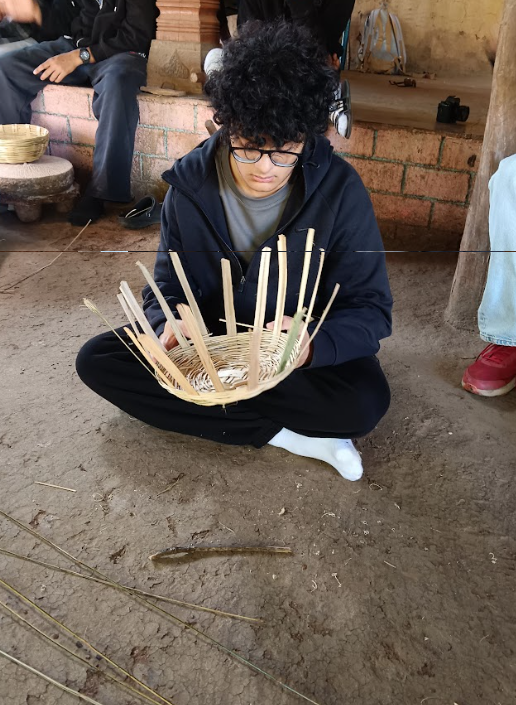
I demonstrated perseverance and commitment throughout the rural immersion trip by consistently engaging in activities despite difficulties and repeated issues. One key example was during the basket making activity using bamboo. While creating the baskets, the bamboo would often break or the shape would not form correctly requiring me to restart the process or make continuous adjustments.
This task required a high level of patience, focus, and persistence, as the process was time consuming and physically demanding. Instead of giving up when mistakes occurred, I remained calm and continued working until I was able to successfully complete the basket. I stayed committed to the activity even when progress was slow, which helped me understand the importance of perseverance in learning traditional skills.
By continuing the task despite repeated challenges, I developed greater resilience and commitment. This experience taught me that consistent effort and patience are essential when learning new skills, especially those that require precision and practice.
LO5 – Demonstrate skills and benefits of working collaboratively.
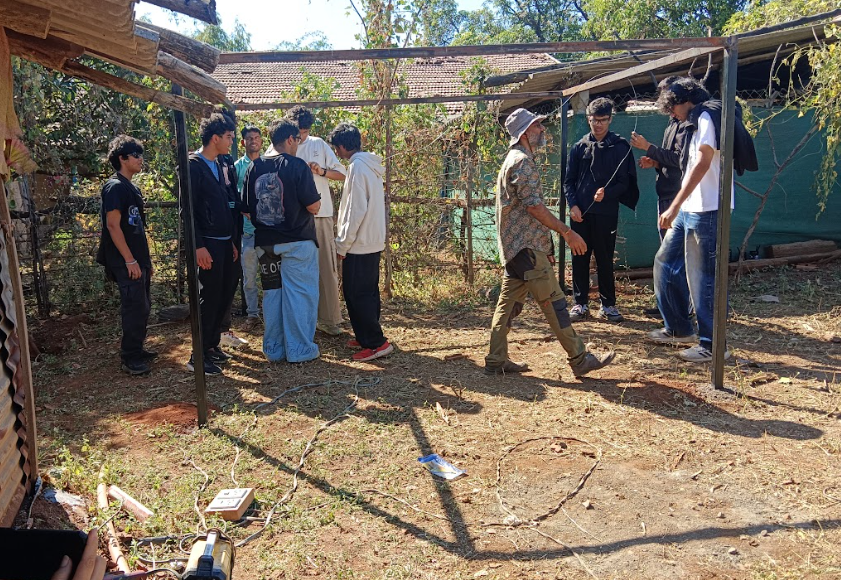
Collaboration played a significant role throughout the rural immersion trip, as many tasks required teamwork to be completed effectively. One clear example was when we worked together to create a shed fence for growing plants. To complete the task efficiently we divided responsibilities such as rust removal, painting, and welding among group members. and after assigning specific roles to each person they were able to focus on one task and perform it more accurately and efficiently. This division of work together with collaboration allowed us to complete the fence within the given time while maintaining quality. Through this experience, I developed important collaborative skills such as teamwork, coordination, responsibility, and communication.
Working collaboratively not only reduced individual workload but also increased overall efficiency and productivity. It also helped me understand the importance of cooperation and mutual support when working towards a common goal. This experience reinforced how effective teamwork leads to better outcomes than working individually.
LO6 – Engagement with issues of global significance
During the rural immersion trip to mokhamal, Dang, I engaged with issues of global significance such as inequality to access basic resources, healthcare and education opportunities. during interaction with local members of mokhamal, I learned how people are living here with unsufficient infrastructure which was creating a negative impact on their lives. The access to hospitals and schools were restricted which hilighted the global issue of unequal development between urban and rural regions. Working with children in government school further depiced challenges in relation to education in rural areas. As there were lack of resources and materials such as books, pens and education resources. I also learned that these issues were not specific to dang but are faced by rural areas worldwide making them global concerns. This experience helped me understand how local challenges are connected to wider global issues such as sustainable development and social equity. Engaging with these realities increased my awareness of global responsibility and reinforced the importance of community-based action in addressing such challenges.
LO7 – Recognise and consider the ethics of choices and actions
During the rural immersion trip I became more aware to the ethics of my choices and actions in my daily life. After learning about the resurce insufficiency the rural areas faced such as insufficiency of water, food, clothing and materials I thought about the actions and choices that urban people make which lead to overuse of such resources. Thus, I recognizsed and though on the ethics of choices and actions. While particpating in activities in the school, I learned how children take care of their resources such as educational resources and materials because they know that those resources are not unlimited. Reflecting on this action of theirs I reconsidered how my choices and actions affect others.
SDGs
The SDGs I could connect this rural immersion trip with are zero Hunger,Good Health and Well-being,Quality Education,Clean Water and Sanitation,Decent Work and Economic Growth. Zero hunger and Good health and wellbeing applies here as the children and adults there did not get quality nutritional food and many of the children in Dang were malnutrition and said by a hospital that takes care of malnutrition children. Clean water and sanitation is connected as was availablity was very less and clean water was not available in some places which made this a very severe issue. Quality education was connected as when i was in the goverment school I learned about the limited infrastructure and educational resources due to which the children there were not getting quality education. Lastly, Decent work and Economic growth is also highly relevant as many people there depended on daily labor, farming and small scale work will no income stability. This depicted how restriction to job opportunities also restrict economic growth and access to decent work.