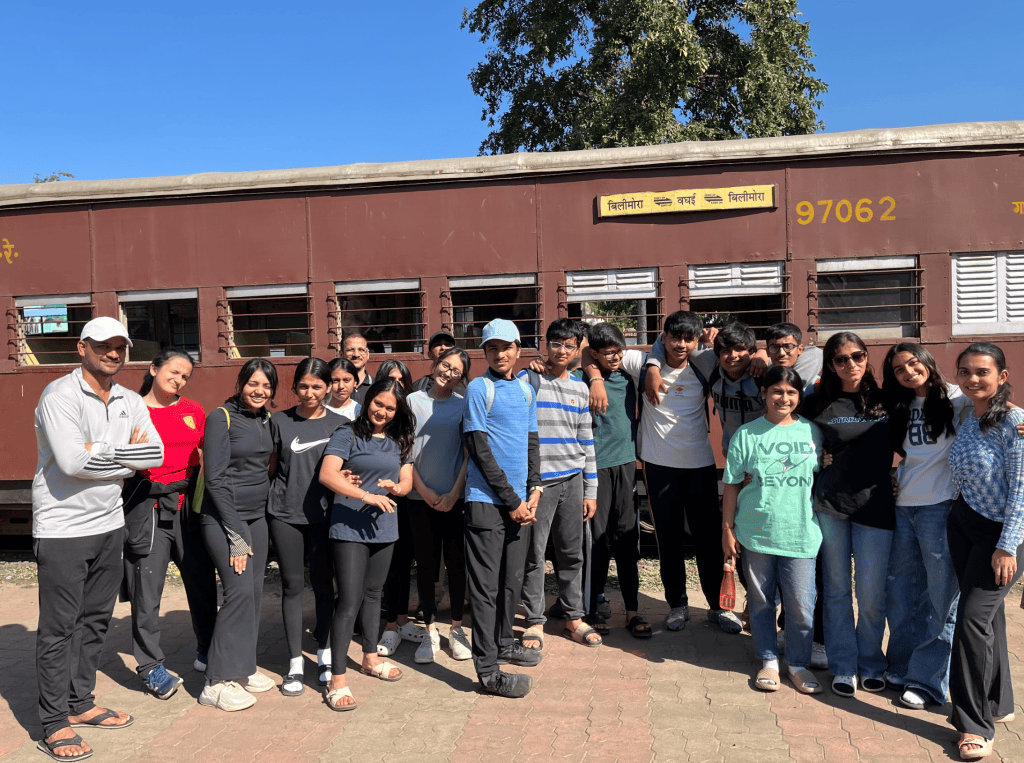
My six-day rural immersion in Vansda, Dang, was a transformative CAS experience that challenged me physically, intellectually, and ethically. Living within a tribal community, working in a government school, trekking mountainous terrain, contributing to wall art, helping in farmland and nurseries, and observing the local haat economy allowed me to move beyond observation into participation.
This immersion was not about temporary service; it was about understanding systems — lifestyle systems, economic systems, educational systems, and environmental systems — and locating myself within them. Each dimension of the experience contributed to my growth across the IB CAS learning outcomes.
Learning Outcome 1: Identify Own Strengths and Develop Areas for Growth
The immersion immediately tested my adaptability. Transitioning from urban comfort to rural simplicity required adjustments in sleep schedules, hygiene conditions, meal patterns, and daily physical exertion.
I discovered that one of my strengths is adaptability. I was able to regulate my energy levels despite early mornings and long activity hours. However, I also identified areas for improvement. During the first two days, dehydration caused headaches and reduced my concentration. This highlighted a lack of physical self-management in unfamiliar climates. Recognising this weakness, I consciously increased water intake and paced my exertion.
Similarly, adjusting to minimal bathing facilities initially caused discomfort. By actively choosing to step beyond that discomfort, I strengthened my mental resilience.
Through these experiences, I gained deeper self-awareness — not just about what I can handle, but about how I respond under stress and how I must prepare better for physically demanding environments.
Learning Outcome 2: Demonstrate That Challenges Have Been Undertaken, Developing New Skills
The most significant challenge was trekking through Vansda’s mountainous terrain. While descending to the river was manageable, the return climb under heat exposure demanded stamina and breath control. My initial approach — rushing upward — resulted in fatigue and muscle strain.
Observing local villagers climb with a steady rhythm, I learned the importance of controlled breathing and consistent pacing. Implementing these techniques allowed me to complete subsequent treks more efficiently.
Additionally, bamboo basket-making required precision and patience. Repeated structural failures forced me to restart multiple times. Through trial and error, I developed better hand coordination, pressure control, and structural alignment awareness.
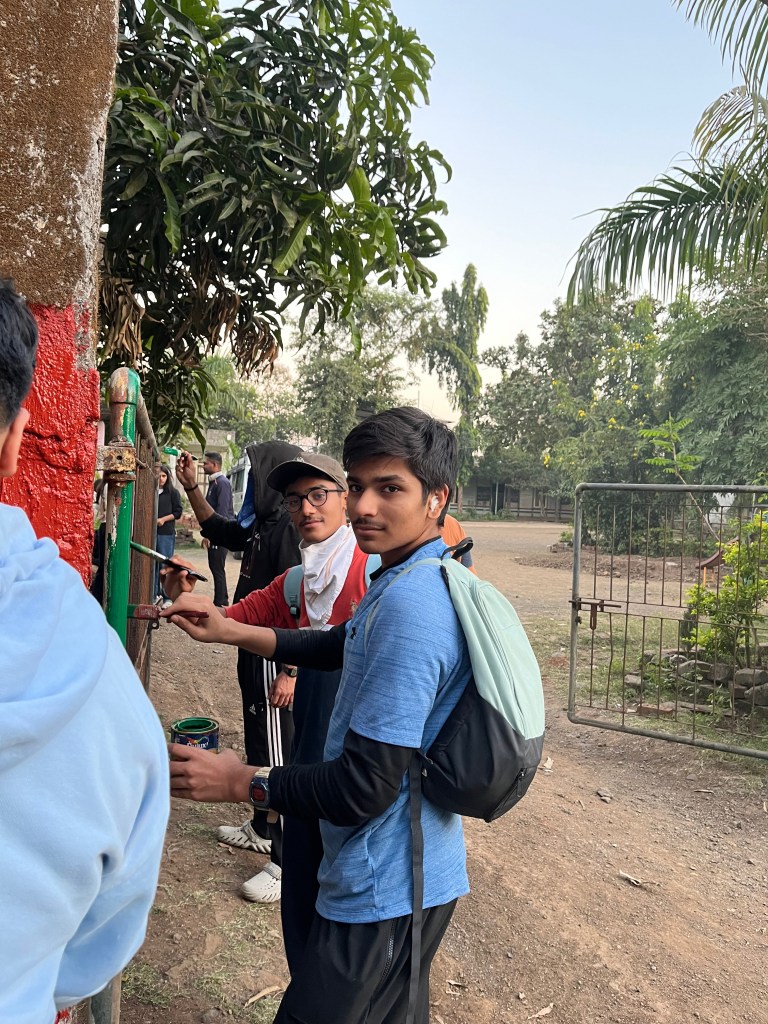
Wall painting also required learning surface preparation, proportion planning, and steady brush techniques.
Across physical, technical, and creative domains, I developed endurance, breath regulation, patience, craftsmanship discipline, and adaptive problem-solving.

Learning Outcome 3: Demonstrate How to Initiate and Plan a CAS Experience
Although the immersion was organised, active engagement required initiative. While working in the government school, I contributed to planning interactive activities that would maintain student engagement. This required thinking about attention span, language simplicity, and visual communication.
During the wall painting activity, layout planning and colour selection had to be structured before execution. We ensured educational visuals were proportionate and visible to younger students.
In the shed-fence construction activity, planning involved dividing tasks such as rust removal, painting, and assembly to optimise efficiency.
Through these processes, I learned the importance of preparation, risk consideration (especially during trekking and tool use), and role distribution in achieving effective outcomes.
Learning Outcome 4: Show Perseverance and Commitment in CAS Experiences
Perseverance was central throughout the immersion.
Trekking tests physical perseverance, particularly when climbing steep slopes under fatigue. Instead of pausing indefinitely, I regulated my pace and completed the ascent.
Similarly, during wall painting under sunlight, maintaining consistency in design required continued effort despite physical discomfort.
These experiences reinforced that commitment is not demonstrated by ease, but by sustained engagement when tasks become demanding.
Learning Outcome 5: Demonstrate the Skills and Recognize the Benefits of Working Collaboratively
Collaboration was fundamental to nearly every activity.
During cutting the small grass near plantation areas, or cutting non-required weeds near mango trees, responsibilities were distributed among team members. By assigning specific roles, we improved efficiency and minimised errors.
Wall painting required coordination to maintain uniformity in design. Any inconsistency in proportion or colour balance affected the final outcome.
Even trekking involved collaborative awareness — ensuring no team member lagged significantly behind.
Through these experiences, I strengthened communication skills, accountability, and mutual reliance. The immersion highlighted that collective effort produces more sustainable and efficient outcomes than isolated work.
Learning Outcome 6: Engagement with Issues of Global Significance
Living in Vansda exposed me to systemic inequalities linked to global development concerns.
Limited healthcare access, water scarcity, malnutrition cases, and restricted educational infrastructure reflect broader global disparities between rural and urban regions.
Visiting the local haat revealed how economic activity largely depends on agriculture and small-scale trade, with minimal income stability. This is connected directly to global discussions on decent work and economic growth.
Observing water conservation practices and minimal resource wastage also highlighted sustainability challenges.
The immersion is connected directly to several Sustainable Development Goals:
- SDG 1 – No Poverty
- SDG 2 – Zero Hunger
- SDG 3 – Good Health and Well-being
- SDG 4 – Quality Education
- SDG 6 – Clean Water and Sanitation
- SDG 8 – Decent Work and Economic Growth
- SDG 10 – Reduced Inequalities
These were no longer theoretical frameworks — they became lived realities.
Learning Outcome 7: Recognize and Consider the Ethics of Choices and Actions
The experience significantly influenced my ethical perspective.
In Vansda, water was conserved carefully, food wastage was minimal, and educational materials were valued deeply. In contrast, urban environments often normalise overconsumption.
Witnessing this contrast prompted me to reflect critically on my own consumption patterns — water usage, food waste, and material excess.
Ethical awareness emerged not from instruction, but from observation. I realised that individual lifestyle choices are interconnected with broader sustainability challenges.
The immersion strengthened my sense of personal responsibility toward mindful consumption and social equity.

Overall Reflection
The Vansda–Dang rural immersion integrated creativity, activity, and service in a balanced and meaningful way. It developed my physical endurance, collaborative skills, adaptability, ethical awareness, and global consciousness.
More importantly, it shifted my perspective from viewing rural communities through abstraction to understanding them through lived interaction. The experience reinforced that growth occurs most profoundly when comfort is replaced by engagement, and observation is replaced by participation.