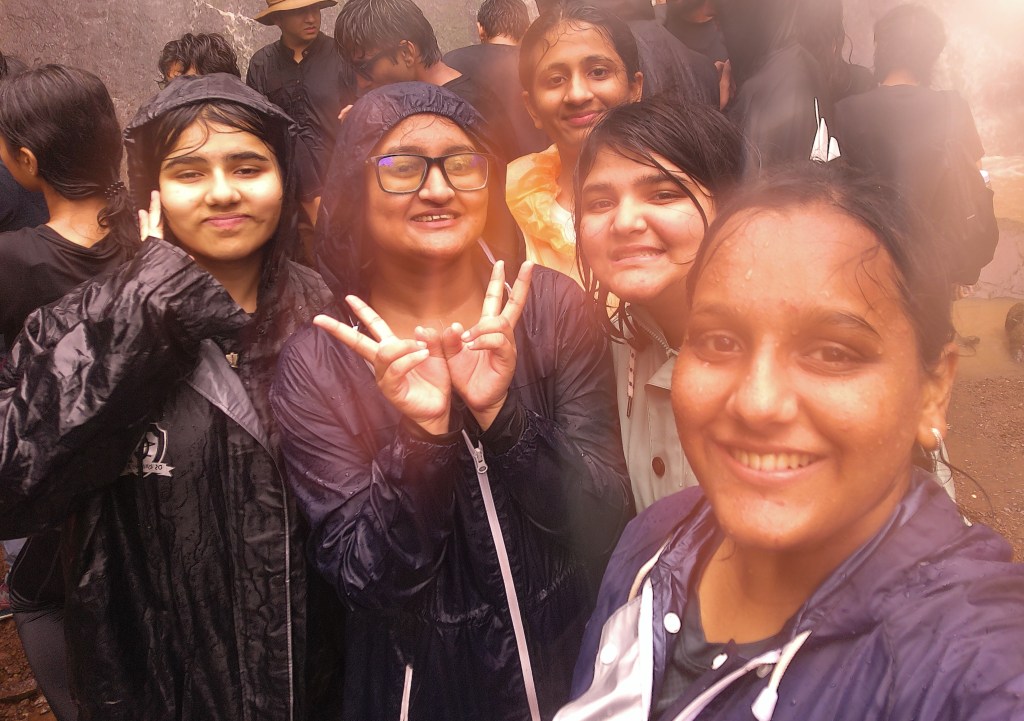
The Bhavarkhada Waterfall Trek, organised by our school as part of the Anubhav program, turned out to be an unforgettable experience. Trekking during the rainy season meant slippery paths, muddy slopes, and unpredictable weather, which made it physically and mentally demanding. My goal was not just to finish the trek but also to test my resilience, learn how to plan and adapt to challenges, and work with my peers in a difficult environment. I also wanted to reflect on my responsibility towards nature and understand how such experiences can build personal growth.
LO 1 – Strengths & Growth
One strength I discovered was my resilience—I kept going even when I was exhausted or nervous about the slippery rocks. But I also realised a weakness: my stamina. I got tired faster than I wanted to, which made some parts of the trek harder. Knowing both my strengths and weaknesses helps me improve. If I had built better endurance earlier, I would have enjoyed the trek more instead of focusing only on keeping up. This experience motivates me to work on my fitness so I can perform better in future activities.
LO 2 – Challenges & Skills
The main challenge was walking on the steep and muddy terrain while it was raining. I had never trekked in such conditions before, and it was intimidating. To overcome this, I stayed calm, paced myself, and observed how others managed their steps. I learned patience and balance, which are skills I hadn’t valued much before. This challenge made me more confident because now I know I can handle difficult, unfamiliar situations. Trying new challenges is important because it pushes us out of our comfort zones and teaches us things we wouldn’t learn otherwise.
LO 4 – Perseverance & Commitment
The trek required strong perseverance because there were moments when I felt like stopping. The rain, mud, and physical strain tested my patience. But staying committed helped me reach the end. Completing it gave me a sense of discipline and achievement. This made me realise that commitment is not always easy, but it’s essential if we want to achieve long-term goals.
LO 5 – Collaboration & Teamwork
Teamwork played a big role in the trek. Some of us supported others while climbing steep parts, shared snacks, or just encouraged each other when we were tired. Working with others made the whole experience safer and more enjoyable. Leadership and collaboration were both important, and I realised how much easier it is to succeed as a group than alone.
LO 6 – Global Issue
The trek made me think about environmental conservation. Forests and waterfalls are not just local treasures—they’re part of global ecosystems that are under threat. Simple actions like not littering or damaging the plants around us are crucial. Being there in nature made me more aware of my responsibility to protect such spaces. It also reminded me how global issues like climate change and deforestation connect to our everyday actions.
LO 7 – Ethics of Choices
The ethical side of this activity involved respecting the natural environment and ensuring safety in a group. We made sure not to leave waste behind and to look out for each other during the trek. These ethical actions may seem small but they have a larger impact on nature and people. Before the trek, I thought of such things as basic rules, but now I see them as personal responsibilities.
Final Takeaway
The trek helped me grow as a more reflective, principled, and balanced learner. It connected to my Biology studies about ecosystems and conservation, as I could see real-life examples during the trek. The experience benefitted not just me but also the group, because we worked together and created a positive atmosphere. The highlight was reaching the waterfall after all the struggles—it gave me a sense of joy and accomplishment. If I repeated this activity, I would prepare my stamina better so I could enjoy it more.
This activity taught me teamwork, perseverance, and environmental responsibility, which I can use in future group projects, leadership roles, and personal challenges. I want to contribute further by promoting eco-friendly habits during school treks and in daily life. Overall, the Bhavarkhada trek was not just a physical activity but a journey of growth, reflection, and learning.