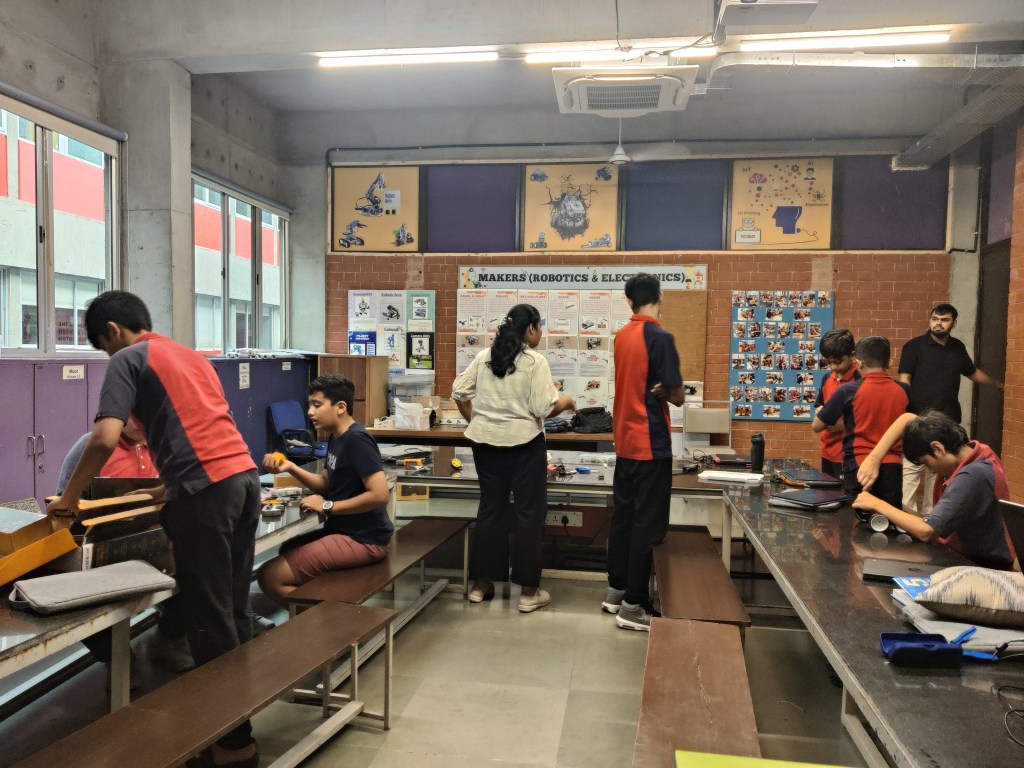
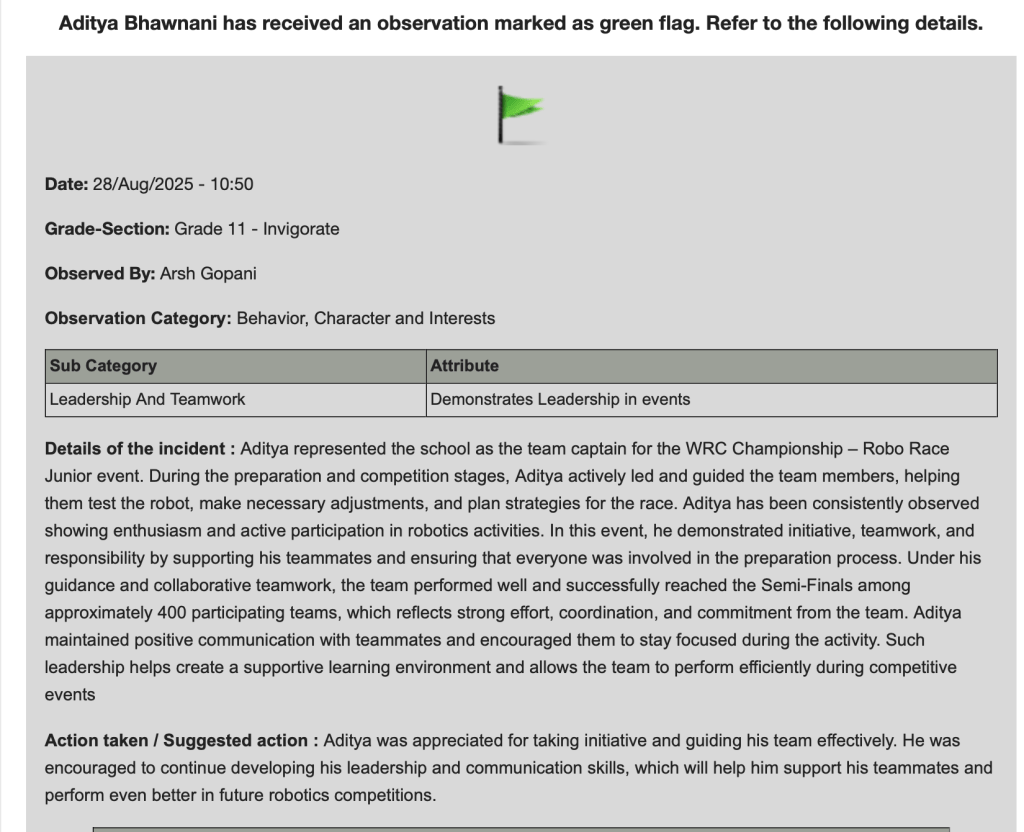
The Toughest Lesson: “Don’t Play with the Screwdriver. In engineering, there is an adage that goes by the name of: do it yourself, or I want it done properly. Being the Captain / Lead Mentor of our Technoxian entry, I had the hardest fight against the temptation to do everything myself, rather than the other 400 teams.
I am familiar with the process of coding the autonomous path. I have had experience in soldering the motor controllers. However, in doing all that, we would have a great robot and an unproductive team. The objective of my CAS experience was to make sure that, upon graduating, the robotics club would not go under.
Closing the Skill Gap (LO1: Strengths and Growth) We were massively outskilled. We were lucky to have some new members who had not even touched an Arduino, not to mention that they were not programmers. I arranged certain workshops on Saturdays in the crash course (LO4 – Commitment). I recall my lesson on H-bridges and motor drivers. It’s a complex concept. I myself was getting frustrated at them not getting it at once.
Growth Moment: I noticed that my explanation as an expert was too technical. I needed to reduce my degree of abstraction. I had an analogy of a water pipe to describe voltage and current. The rush of getting the lightbulb to turn on in the eyes of a Grade 9 student was in a different category than a race. I also came to know that you can be Knowledgeable (IB Learner Profile), but you cannot be a good Communicator.
Strategising & delegating (LO5: Collaboration) In the face of the time limit of the competition in September, the tension was intense. There were 6 weeks to create a world-class machine. I was forced to play the role of a Project Manager. I created a roster:
LO1 – Identify own strengths and develop areas for growth: While I knew I had strong technical skills from competing and making it to the semi-finals previously, I realized that doing robotics is very different from teaching it. I had to focus on growing my patience and instructional skills.
LO2 – Demonstrate that challenges have been undertaken, developing new skills: Breaking down complex robotics mechanics and coding into simple, digestible lessons for the students was a major challenge. It forced me to develop new communication and pedagogical skills.
LO4 – Show perseverance and commitment in CAS experience: Mentoring requires you to show up consistently, even when you are tired or when the students are struggling to grasp a concept. I had to stay committed to their progress over several weeks, guiding them through repeated trial and error.
LO5 – Demonstrate skills and benefits of working collaboratively: I had to work in partnership not just with my fellow mentors, but with the students themselves. We collaborated to troubleshoot their robot designs, showing them that engineering is fundamentally a team-based problem-solving process.
Team A: Chassis & Mechanics
Team B: Power Distribution
Team C: Code & Sensors
The Dilemma: It is a herding of cats. Individuals desired to change activities or became bored. I needed to know how to inspire them. I came to the realisation that I did not merely delegate tasks, but I needed to justify to the team why that was an important task towards the ultimate win. The mechanics crew assumed responsibility for their work when they discovered that a loose screw would cost us the semi-final (which, ironically enough, it ended up doing).
The Conclusion to Mentorship. Now that we had reached the Technoxian World Championship, the point of time came when the robot had to be repaired immediately. Usually, I would dive in. But this time, I stood back. I observed two of the juniors, whom I had trained two months before, take the tools and diagnose the problem and fix it in less than 3 minutes. That was my real victory. Yes, we were in the semi-finals and it was fantastic. But seeing my team work as a well-oiled machine without having to micromanage them? That was an indication that my mentorship service was successful.
Reflective Leadership (LO2: New Skills) I thought that being a leader meant that I had to be the smartest person in the room. This is what taught me that being a leader is, in fact, making the rest of the room smarter. It took patience that I somehow possesse,d but which created a team culture that will last longer than I will be at school.