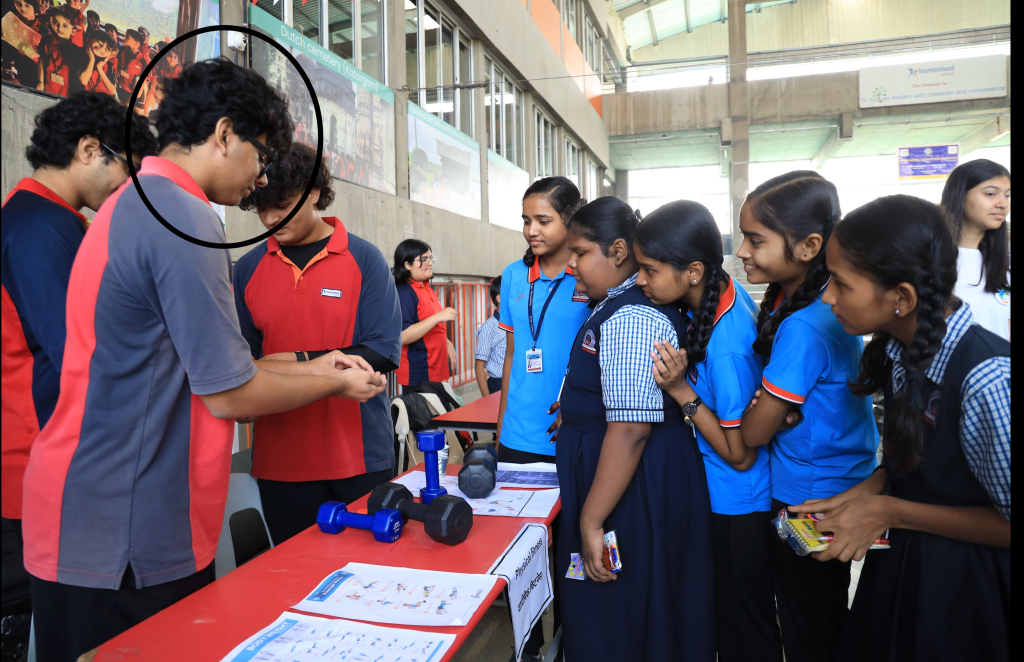
Introduction: A event named Children’s Carnival was hosted by our school, wherein children from government schools came to our campus to enjoy various games and activities while learning about different SDGs. At the event, I set up a stall called the “Fitness for Coupons Challenge.” This activity involved underprivileged children performing simple physical exercises like push-ups, jumping jacks, and short sprints, in exchange for coupons that they could redeem for small treats, snacks, or prizes at the carnival.
LO1 – Identify own strengths and develop areas for growth: While running this stall, I noticed that I was good at motivating kids who were hesitant or shy to try the physical activities. I could encourage them with simple words and cheer them on, which made them more willing to participate. At the same time, I realized I need to work on setting fair and consistent standards, since some kids exaggerated their effort and others gave up quickly without much encouragement to keep going. This taught me a lot about myself as a motivator, but also showed me where I need to grow, particularly in maintaining fairness and consistency when many children were competing for coupons at once.
LO2 – Demonstrate undertaking challenges and developing new skills: Designing an activity that combined physical fitness with a reward system was more difficult than I expected. I had to make the exercises simple enough for children of different ages and physical abilities to complete, while still keeping the coupon system meaningful enough to motivate them. Some kids were full of energy and wanted harder challenges, while others struggled with even the basic movements and needed more encouragement and modified versions of the exercises. Through this, I learned how to adjust activities on the spot depending on each child’s ability, and I became more confident in creating a system that balanced fun, fairness, and physical activity. It pushed me to think on my feet and helped me build new skills in planning, leadership, and adaptability.
LO4 – Show commitment to and perseverance in CAS experiences: The event lasted for hours, and I was constantly demonstrating exercises, counting reps, and managing the flow of children at the stall. Even when I got tired or the line of kids became long and repetitive, I kept my energy up and made sure every child got a fair chance to try the activity. I stayed committed because I wanted each child to leave with a positive experience around physical activity, not just a coupon. This experience taught me that real service means staying consistent and putting in effort throughout, even when the novelty wears off and it starts to feel repetitive.
LO6 – Demonstrate engagement with issues of global significance: Encouraging physical activity among children is a concern that extends far beyond one event or community. Many underprivileged children have limited access to structured sports or fitness opportunities, and instilling the habit of staying active from a young age can have long-term benefits for their health. By turning physical activity into something fun and rewarding, I felt like I was contributing to a broader effort to fight sedentary lifestyles and promote physical wellbeing among children who might not otherwise be exposed to it. Even though our stall was a small part of a bigger event, it reminded me that encouraging healthy movement habits early can have a ripple effect on children’s long-term wellbeing.
Conclusion: The Children’s Carnival turned out to be a meaningful service experience, giving me the opportunity to promote physical fitness in a fun and rewarding way. Throughout the event, I discovered more about my ability to motivate others and learned how to adapt on the spot when things didn’t go as planned. I also realized how important fairness and patience are when managing enthusiastic children competing for rewards. Overall, this experience showed me that even simple, playful activities can encourage healthier habits and leave a lasting impression when approached with genuine care and intention.