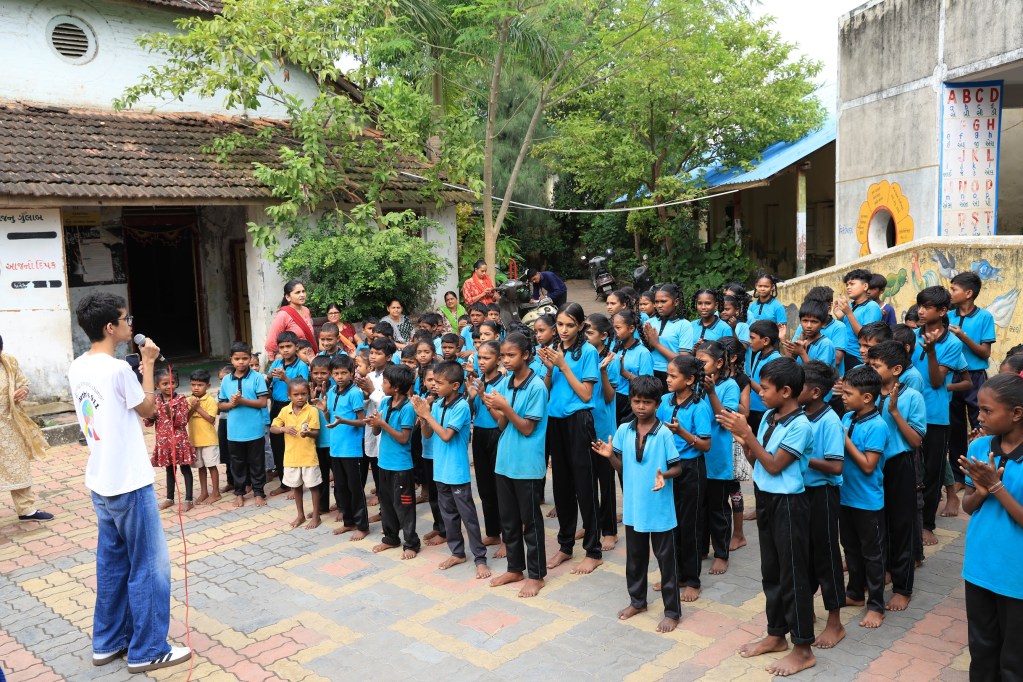
As the Founder and CEO of Earth’s 911, a youth-led not-for-profit organization, I became deeply aware of the stark disparities in access to quality education faced by children in under-resourced communities. To address this issue meaningfully, Earth’s 911, in collaboration with Fountainhead School, launched the Experiential Learning and Transformation Program at Dihen Primary Government School — not just to teach, but to help transform the lives of over a hundred young learners.
What began as a modest initiative to make education more engaging for rural students has evolved into a thriving program where classrooms now inspire curiosity, creativity, and confidence. Through diverse subject-based and co-curricular sessions — spanning science, mathematics, art, music, and storytelling — we aimed to make learning joyful, inclusive, and purposeful.
As the CEO, I oversaw the planning and execution of each session, delegated responsibilities to volunteers, managed coordination with the school, and ensured that every visit ran seamlessly. This experience allowed me to merge leadership, service, and education in a way that meaningfully addressed a global challenge — the unequal access to quality learning opportunities.
Learning Outcome 1 – Identify own strengths and develop areas for growth
Through this experience, I recognized several personal strengths — particularly in organization, communication, and liaison. I was able to effectively coordinate and communicate with a large group of volunteers, ensuring that everyone remained motivated and clear about their responsibilities. My ability to brief and onboard the children about the program — explaining how the volunteers would mentor them on topics they were interested in — also stood out as a key strength and served as a presage of what was to come. However, I realized that I could further improve my delegation skills. Initially, I tried to handle too many responsibilities on my own, which was not sustainable for such a large-scale project, especially considering my involvement in multiple other activities. Over time, I learned to trust my team more, assign specific tasks, and empower others to take ownership — thereby fostering a sense of agency among them. I did this by appointing Project Coordinators and subsequently, Project Leaders who took charge of reviewing lesson plans, listing required resources, and managing communication for their groups. This balance between guidance and autonomy made the project more efficient and taught me valuable lessons about collaborative leadership and distributed responsibility.
Learning Outcome 2 – Demonstrate that challenges have been undertaken, developing new skills
Leading the School Adoption Project came with numerous challenges. Managing logistics for over 50 volunteers and coordinating meaningful activities for nearly 100 students required meticulous time management, adaptability, and quick decision-making. There were instances when volunteers couldn’t attend, resources ran short, or sessions didn’t unfold as planned. I learned to stay calm under pressure, think on my feet, and adjust the day’s schedule without compromising the students’ learning experience. In the process, I developed several new skills — structuring interactive lesson plans, maintaining classroom engagement, and managing large groups with patience and empathy. Each time something went wrong, I created contingency plans, refined my approach, and reflected on ways to improve for future sessions. These moments gave me a sense of fulfillment and actualization, as I realized that my managerial and problem-solving abilities were continuously strengthening. I also employed key IB Approaches to Learning (ATL) skills such as self-management (organizing tasks and maintaining consistency), social skills (collaborating effectively with diverse teams), and thinking skills (evaluating and improving strategies in real time). Each challenge contributed to my growth as a leader capable of critical thinking, adaptability, and effective communication in dynamic environments.
Learning Outcome 3 – Initiate and plan a CAS experience
This project required initiative from the very beginning — from designing the structure of the School Adoption Program to creating a detailed calendar for bimonthly visits. I collaborated with the school administration to understand students’ needs and learning gaps, then curated sessions that balanced academics with creativity. I also planned volunteer briefings, arranged resources, and organized activity rotations to ensure smooth coordination on-site. Anticipating potential issues such as resource shortages or volunteer absences, I prepared backup plans to maintain consistency. Additionally, I invested over two hours each week prior to each visit, coordinating with volunteers, managing logistics, and liaising with in-school teams to ensure everything was ready. This sustained effort reflected my commitment and determination. The entire planning process strengthened my decision-making, organizational, and leadership capabilities, and gave me first-hand experience in executing a long-term, large-scale community initiative with measurable impact and accountability.
Learning Outcome 4 – Show perseverance and commitment in CAS experience
Sustaining a year-long project with regular school visits demanded consistent dedication and perseverance. There were times when balancing schoolwork, personal commitments, and numerous other responsibilities felt overwhelming. Despite these challenges, I remained committed because I understood the importance of continuity for the students and the volunteers alike. Even when faced with logistical hurdles such as limited resources, transport delays, or last-minute cancellations, I ensured that the sessions continued without disruption — often by stepping in personally or mobilizing backup support from the team. This perseverance was made possible through collective motivation and teamwork. Seeing the students’ enthusiasm and curiosity each week reaffirmed my commitment to improving the program. Over time, this consistency not only helped the project thrive but also strengthened my resilience, purpose, and belief in the value of long-term service.
Learning Outcome 5 – Demonstrate skills and benefits of working collaboratively
Collaboration lay at the heart of this initiative. With over 50 volunteers involved, effective teamwork was essential to ensuring that every session was engaging and productive. I learned to coordinate people with different strengths, ideas, and working styles — from creative thinkers designing art-based activities to analytical volunteers leading math sessions. Recognizing these individual strengths, I helped volunteers use the tools and resources that best suited their potential, thereby enabling them to perform at their best. Regular team meetings and huddles provided space for open communication, feedback, and collective problem-solving. By fostering an atmosphere of mutual respect and shared vision, we built a cohesive community of changemakers who supported one another. Through this collaboration, I learned that leadership is not about control but about enabling others to shine and that while one person can create impact, collective effort multiplies it.
Learning Outcome 6 – Engagement with issues of global significance
This project directly addressed the global issue of unequal access to quality education, aligning with UN Sustainable Development Goals — SDG 4: Quality Education and SDG 10: Reduced Inequalities. The students at Dihen Primary School come from underprivileged backgrounds and have limited exposure to interactive or experiential learning methods. By conducting these bimonthly sessions, we aimed to bridge this gap — not only by enhancing their academic understanding but also by nurturing creativity, curiosity, and confidence. Through our sustained engagement, we promoted educational inclusivity and empowerment, reflecting a universal goal: ensuring that every child, regardless of background, has access to opportunities that help them reach their potential. This experience helped me connect local community service to a larger global context and deepened my understanding of how small, consistent efforts can contribute meaningfully to worldwide goals.
Learning Outcome 7 – Recognize and consider the ethics of choices and actions
Ethical decision-making was central to my role as the CEO of the organization and Director of this initiative. Every action — from allocating resources to managing classroom dynamics — required fairness, empathy, and accountability. I ensured that the volunteers interacted with the students respectfully, maintaining sensitivity to their backgrounds and learning levels. We consciously avoided any approach that could make students feel overwhelmed or inferior and focused instead on encouragement and positive reinforcement. Furthermore, transparency was maintained in all aspects — especially in donations, resource use, and credit-sharing among volunteers. I also made ethical choices in managing volunteer workload and recognition, ensuring equal opportunity and appreciation for everyone’s contributions. These considerations helped build trust within the team and respect from the school community. Ultimately, this project taught me that ethical leadership is not limited to moral correctness but involves fairness, responsibility, and compassion in every decision.
Conclusion
Leading the School Adoption Project at Dihen Primary School has been one of the most transformative experiences of my CAS journey. It strengthened my leadership, planning, and interpersonal skills while deepening my understanding of social responsibility and educational equity. Each visit reminded me that meaningful change doesn’t always come from grand gestures — it often begins with consistency, compassion, and collaboration. Watching the students grow in confidence and curiosity, and seeing volunteers evolve into empathetic mentors, made me realize that education is not just about learning facts but about inspiring hope and possibility. This experience reaffirmed my belief that when young people come together with purpose, they can create ripples of change that extend far beyond a classroom.