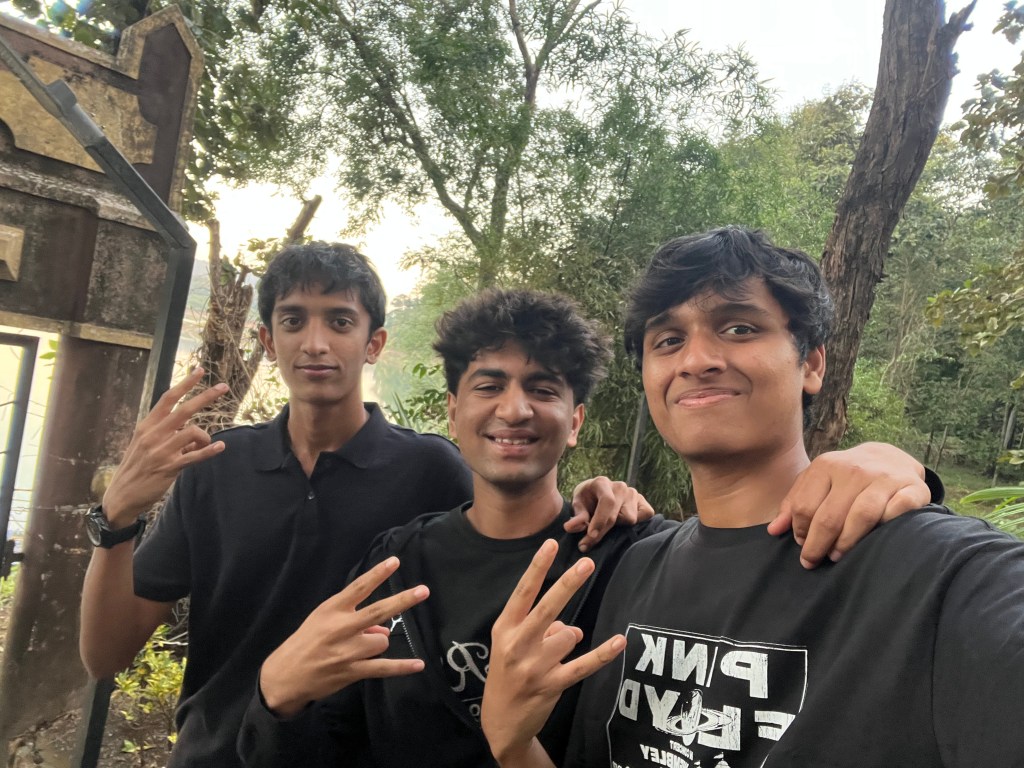

From December 8th to 13th, I participated in a transformative rural immersion program in Ambapani. This wasn’t just a trip; it was a full dive into a completely different way of living. Traveling by tractor to reach our campsite, we spent our days living and working alongside the local villagers. From the physical toll of harvesting crops to the traditional art of ‘Lipan,’ every activity was designed to help us sympathize with the rural community and understand the resilience required to thrive in a non-urban environment.
LO1 – Identify own strengths and develop areas for growth
Living in Ambapani helped me identify that while I am adaptable, my physical endurance for manual labor was an “area for growth.” Tasks that the locals performed with ease, such as harvesting, were initially very tiring for me. By the end of the week, I had developed better stamina and a stronger work ethic, recognizing that my strength lies in my willingness to persist through physical discomfort to complete a task.
LO2 – Demonstrate that challenges have been undertaken, developing new skills
Participating in Lipan—applying a mixture of cow dung and clay to village walls—was a significant challenge that required me to set aside my urban biases and learn a traditional skill. Additionally, learning about the local ecosystem during our jungle trek and attending the session on indigenous snakes allowed me to develop a new skill set in environmental awareness and safety that I had never been exposed to in the city.
LO3 – Initiate and plan a CAS experience
This immersion required extensive planning to ensure we were prepared for the lack of urban amenities. I had to plan for basic necessities, organize my gear for the jungle trek, and mentally prepare for a week of intensive manual labor. This initiation was key to transitioning smoothly from a comfortable school environment to a rigorous rural lifestyle without being overwhelmed.
LO4 – Show perseverance and commitment in CAS experience
The commitment to this experience was tested every day, starting with the bumpy tractor rides and ending with long hours in the fields. Despite the heat and the physical exhaustion from harvesting crops, I showed perseverance by staying focused on the community’s needs. I remained committed to every scheduled activity, ensuring that I didn’t just observe the lifestyle but actually lived it for the full duration of the trip.
LO5 – Demonstrate skills and benefits of working collaboratively
Rural life is built on community, and I experienced the benefits of working collaboratively firsthand. Whether we were working in a line to pass materials for Lipan or supporting each other during the steep jungle treks, the teamwork made the workload manageable. This experience taught me that in a rural setting, collaboration isn’t just a choice—it’s a necessity for survival and progress.
LO6 – Engagement with issues of global significance
This trip allowed me to engage with the global issue of socio-economic inequality and the urban-rural divide. By living in Ambapani, I understood the global importance of sustainable agriculture and traditional building methods that have a low carbon footprint. It highlighted the importance of UN Sustainable Development Goals like “Sustainable Cities and Communities” and “Life on Land.”
LO7 – Recognise and consider the ethics of choices and actions
I had to consider the ethics of our presence in the village, ensuring that our actions were respectful and truly helpful rather than intrusive. Participating in Lipan and harvesting required us to be ethical in our labor—ensuring we were contributing genuine effort to the villagers’ homes and livelihoods. This experience made me realize that “Service” must be done with humility and a deep respect for the existing culture of the community.
Conclusion
The Ambapani immersion was a powerful lesson in empathy and resilience. It challenged my perspectives on what is “necessary” for a good life and showed me the incredible resourcefulness of the rural community. I am walking away with a new way of looking at the world—one that values the hard work of those who provide our food and the traditional wisdom of those who live in harmony with the land.