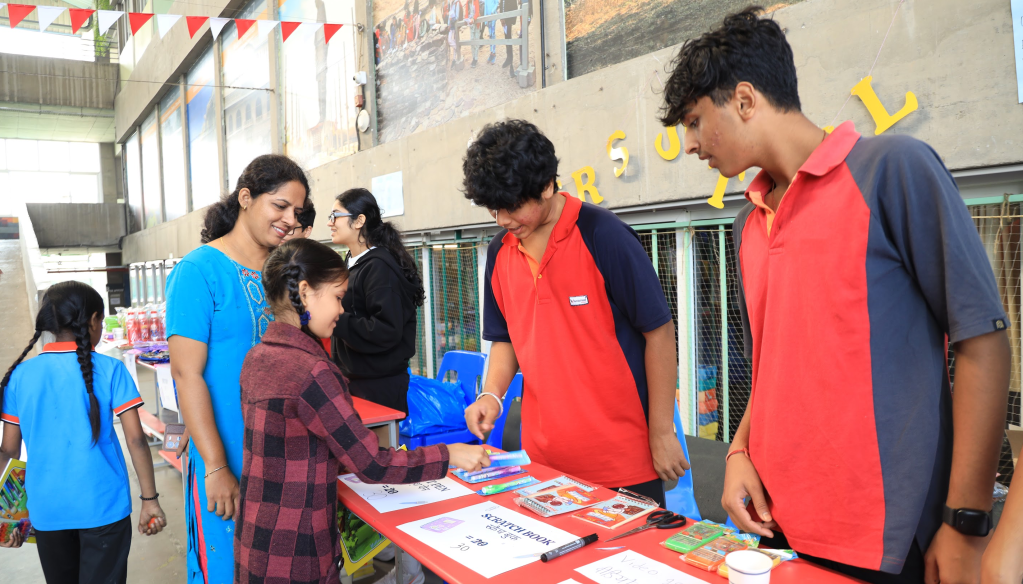
During our school’s Student Day Carnival, my friends and I organized an interactive game stall aimed at promoting healthy food choices among children. We adapted a popular cup-throwing game into an engaging learning activity where each cup represented a different food category. Every successful throw led to a short and simple discussion about nutrition, balanced diets, and healthy habits. This approach allowed children to enjoy the excitement of the game while also gaining small but meaningful insights into healthier eating in a fun and non-pressuring way.
Learning Outcome 1: Identify own strengths and develop areas for growth
Through this experience, I recognized my strength in communicating effectively with children and making educational content enjoyable and relatable. I was able to explain concepts in a simple and engaging manner, which helped keep the participants interested. However, I also realized that I need to improve my organizational and time-management skills, especially when handling materials and managing multiple participants at once.
Learning Outcome 2: Demonstrate that challenges have been undertaken and new skills developed
Designing a game that was both entertaining and educational was challenging, as it required balancing fun with meaningful learning. Through this process, I developed the ability to simplify nutrition-related information so that it was easily understood by younger students. I also learned how to adapt the game structure when needed to ensure the stall ran smoothly during busy periods.
Learning Outcome 3: Demonstrate how to initiate and plan a CAS experience
This activity involved careful planning from the initial idea to its execution. As a team, we brainstormed the game concept, designed the stall, prepared educational content, and gathered all required materials. We assigned clear roles to each member, which helped us stay organized and ensured that the activity was successfully implemented on the day of the carnival.
Learning Outcome 4: Show commitment and perseverance
The carnival required long hours of continuous engagement, starting early in the morning and continuing throughout the event. Despite feeling tired at times and managing long queues of participants, we remained enthusiastic and committed. Our perseverance ensured that every child had a positive experience at the stall, regardless of how busy it became.
Learning Outcome 5: Demonstrate the skills and benefits of working collaboratively
Teamwork played a crucial role in the success of our stall. We divided responsibilities such as explaining the rules, keeping score, managing the flow of participants, and sharing nutrition facts. Effective communication and cooperation helped us maintain a positive atmosphere and allowed the stall to function efficiently even during peak hours.
Learning Outcome 6: Engagement with issues of global significance
By promoting healthy eating habits, our activity addressed the global issue of poor nutrition and lifestyle-related diseases. Encouraging children to think about balanced food choices helped raise awareness at a young age and contributed to fostering healthier habits within our school community.
Learning Outcome 7: Recognize and consider the ethics of choices and actions
We were mindful to ensure that the game was safe, age-appropriate, and inclusive for all participants. Rather than labeling foods as “good” or “bad,” we encouraged balanced choices and respectful discussions. This ethical approach ensured that no child felt judged or excluded based on their food preferences.
Conclusion
Overall, this CAS experience successfully combined creativity, service, and collaboration. It allowed me to contribute positively to my school community while developing important skills such as communication, leadership, planning, and teamwork. The experience was both fulfilling and educational, reinforcing the value of learning through interactive and meaningful engagement.