LO1 – Identify own strengths and develop areas for growth
This activity helped me realise that I am good at staying patient and approachable when working with younger children. Many of them were hesitant or shy at first, and I was able to reassure them and make them feel comfortable participating. However, I also recognised that I need to improve how I handle large groups at once. When several children spoke or moved at the same time, I sometimes struggled to regain full attention quickly. I learned that being louder isn’t enough — I need to develop stronger presence, clearer signals, and more assertive control strategies.


LO2 – Demonstrate that challenges have been undertaken, developing new skills
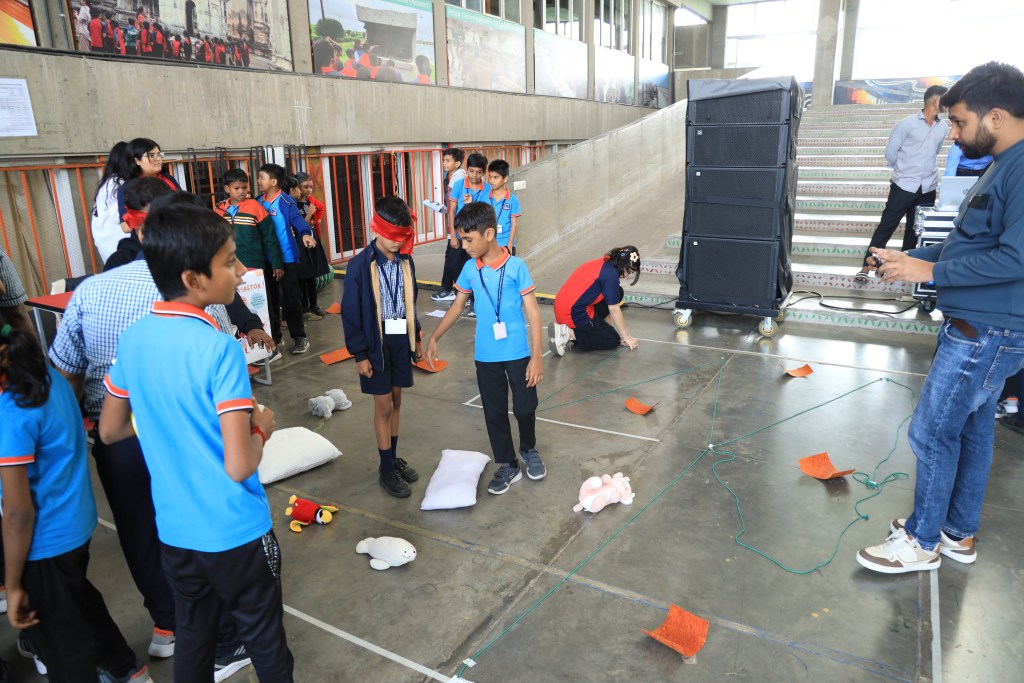
One major challenge was maintaining order while keeping the activity enjoyable. Children have high energy, and balancing excitement with discipline required constant awareness. There were moments when instructions had to be adjusted because participants interpreted them differently than we expected. Handling these situations helped me develop adaptability and faster decision-making. I became more confident in stepping in immediately, clarifying rules, and modifying the flow of the activity without stopping the experience completely.
LO3 – Initiate and plan a CAS experience
I contributed actively to transforming an idea into a structured event. Planning involved more than just deciding what the activity would be — we had to think about movement space, timing, participant rotation, and how to prevent crowding. Preparing in advance made me realise how much unseen organisation is needed for something that looks simple. Being part of the full process showed me the importance of responsibility, preparation, and thinking ahead about possible problems.
LO5 – Demonstrate skills and benefits of working collaboratively
This experience depended heavily on coordination with my partner. We had to trust each other to manage different responsibilities without constant discussion in the moment. Over time, we developed a natural rhythm, understanding when to step in or step back. I learned that effective teamwork is not just dividing tasks, but also observing, supporting, and communicating non-verbally when things become busy. Working together reduced pressure and allowed us to focus more on the participants.
LO6 – Engagement with issues of global significance
The activity highlighted the value of communication and mutual reliance, which are essential beyond school settings. In many real-world situations, people must depend on others’ guidance, whether in teamwork, leadership, or community life. By creating an experience where children had to rely on someone else’s voice and support, we encouraged them to understand responsibility toward others and the importance of clear communication — skills relevant in all societies.
LO7 – Recognise and consider the ethics of choices and actions
We paid close attention to how participants were treated. Some children were more confident than others, and it was important that no one felt embarrassed or left out. We avoided comparisons between participants and focused on encouragement instead of performance. We also ensured instructions were given respectfully and that no one was pressured to continue if uncomfortable. Making these choices helped create an environment based on care, equality, and emotional safety.