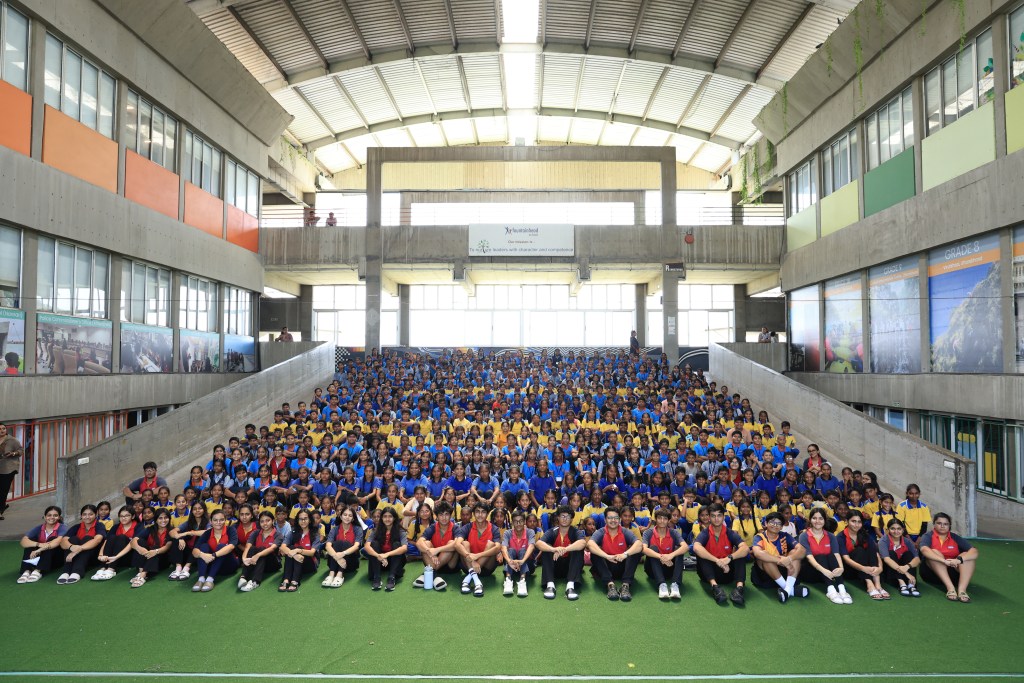

Participating as a co-head in the “Fun with Math” community service program was a transformative journey that enabled me to grow as both a leader and an individual. The experience involved teaching essential and important math concepts to underprivileged children across six sessions, working alongside my team within the school environment. Each day brought new opportunities to challenge my strengths, refine my communication, and deepen my understanding of the broader impacts of the service.
LO1: identifying strengths and areas for growth
Stepping into the role of co-head, I quickly realized that supporting a group of volunteers and engaging a diverse group of students needed both confidence and empathy. One of my emerging strengths was leading collaborative lesson planning where breaking down complex math topics so they became approachable for younger students. However, managing sessions with different student abilities showed me areas where I could grow, especially in adapting my teaching approach for students who were struggling or hesitant to participate. This self awareness not only helped me guide others better but made me more determined to constantly get feedback and improve and grow.
LO2: undertaking challenges and developing new skills
The unpredictability of volunteer based teaching meant many challenges for me. Age gaps between sstudents, mixed levels of foundational understanding, and at times the need to help explain math concepts in simple language pushed me to adapt in the classroom. I learned to make use of visual methods and the internet, interactive games, and shifted lesson structures on the spot to adapt to the changing student environment. These challenges not only developed my problem solving skills but also improved my ability to keep sessions engaging and effective and relevant even when initial plans needed last minute adjustment.
LO3: initiating & planning a CAS Experience
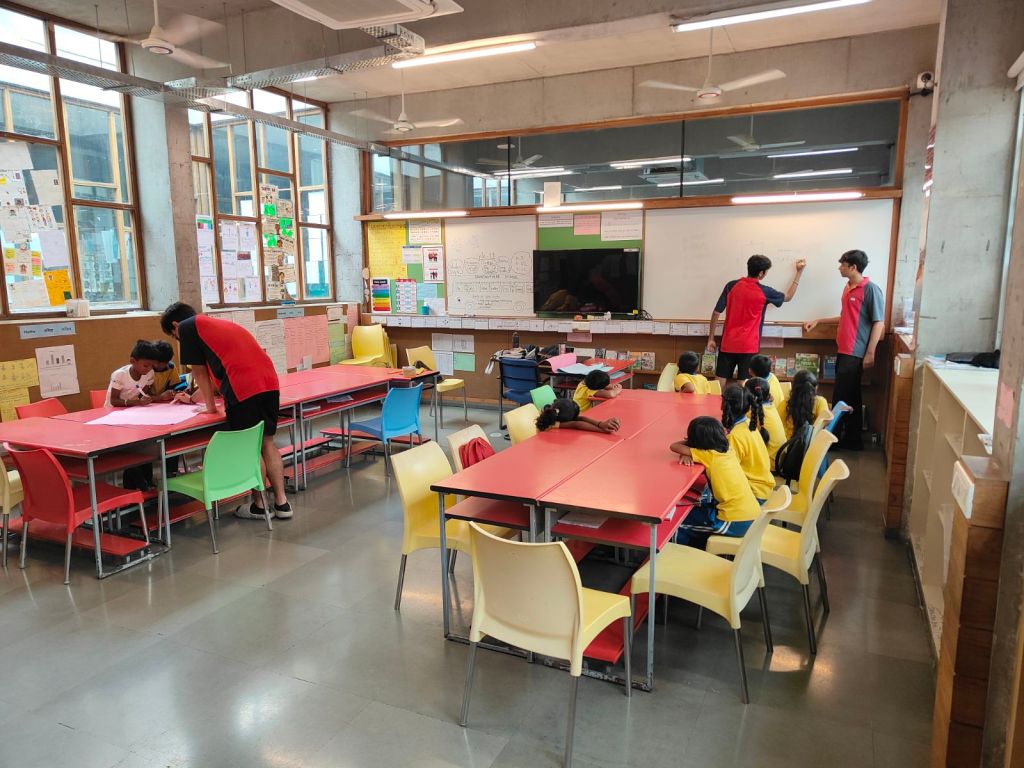
From the beginning itself coordinating lesson content, gathering resources before hand and adjusting to the changing flow of each session forced me to embrace the planning aspect of service. I worked closely with my co-head to distribute responsibilities fairly and re-assess our approach after each session, to make sure that our objectives were being met and that every student was getting individual attention. Reflecting on these efforts, I recognized how crucial structured planning and adaptability are in making an initiative meaningful and impactful.
LO4: Showing commitment and perseverance
The six session commitment spread across weekends demanded dedication and not only in terms of attendance but in terms of ensuring enthusiasm and focus remained high throughout. There were days when energy was less, or some sessions felt less productive, but staying committed to both my team and our goals taught me the true value of perseverance. Noticing gradual progress in the children’s confidence and enjoyment of mathematics re established and provided a constant source of motivation for me. One instance was when a group of 5th graders were so excited to learn new topics that they mastered everything that we put their way productively and enthusiastically. This group of 5th graders, believe it or not, learnt exponents, volume and surface area of 3D shapes and much more within a span of just 3 weekends i.e 6 sessions. Even this kept me motivated.
LO5: Collaborating and recognizing benefits
The journey was a testament to the power of teamwork. Providing tasks, supporting volunteers, and brainstorming creative teaching strategies aided in an environment of mutual respect and learning. Working collaboratively helped us cover more ground and also made the program more enjoyable for both us and students. This method of teamwork was crucial in overcoming challenges and creating a supportive space where everyone felt comfortable sharing ideas
LO6: Demonstrate engagement with issues of global significance

By promoting math literacy among underserved children, I contributed to reducing educational inequality, aligning with the UN Sustainable Development Goal: Quality Education.
Conclusion
All in all, the “Fun with math” community service program helped me grow as a reflective learner and a responsible leader. By tackling real world challenges and engaging with my peers and the community, I gained a deeper appreciation for both the impact and responsibility tied to educational service. The lessons in adaptability, perseverance, and teamwork will continue to guide me in my CAS journey and beyond reminding me why meaningful service work is very important for personal and collective growth.