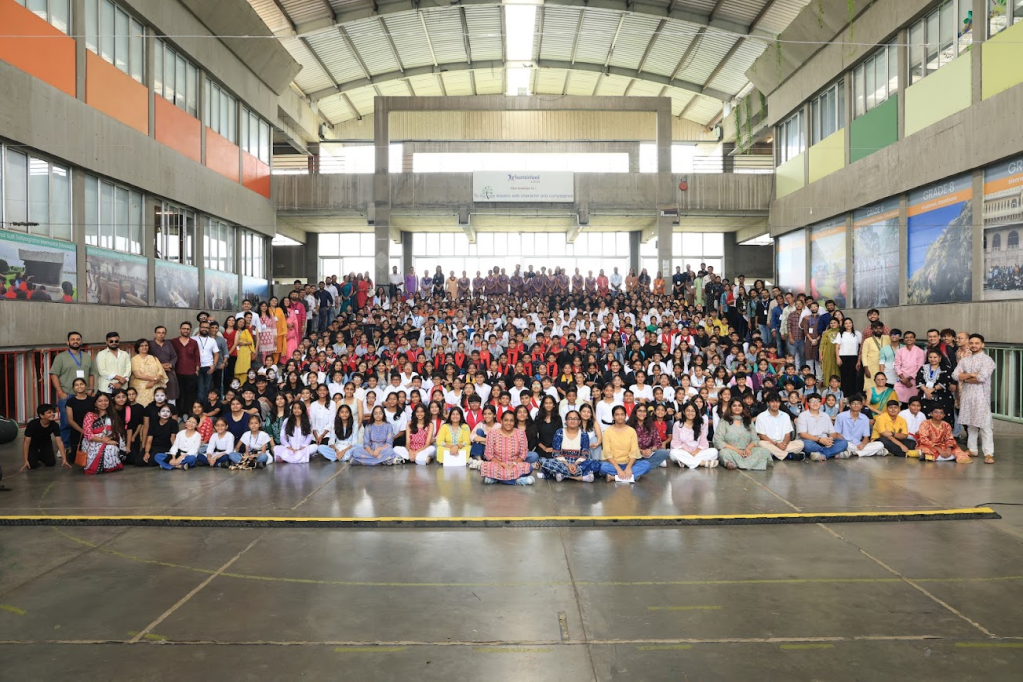
As part of my CAS journey, I took part in Fountainhead School’s inter-school event, Kalakriti, where I served as an anchor for the Band category. Schools from various institutions participated and performed, and my role required me to host the segment smoothly and professionally. I used my creativity to design an engaging yet formal script, which pushed me beyond my comfort zone and helped build my confidence on stage. To maintain audience interest between performances, I thoughtfully included interactive elements such as riddles, jokes, and general knowledge questions, structuring the script to follow the flow of the event. In addition to hosting, I was responsible for managing the category by calling participating schools, assisting performers with stage setup, ensuring the event ran in an organized manner, and helping with award distribution. Through this experience, I was able to address several CAS learning outcomes, specifically LO1, LO3, LO6, and LO7.
Learning Outcome 1 – Identify strengths and develop areas for growth
This experience helped me address the first learning outcome as I was initially reluctant to take part in an event that required public speaking and anchoring on stage. I lacked confidence in my ability to speak clearly and manage the event effectively. However, I was determined to work on self-improvement by recognizing my strengths as well as areas that needed development. Once I began participating, I realized that my key strengths lay in creativity and writing, which I used to design an engaging and enjoyable experience for both the audience and judges. At the same time, hosting the event helped me identify areas for growth, particularly in confidence and voice modulation. There were moments during the event when I experienced stage fright and struggled to deliver parts of my speech smoothly, highlighting the need to improve my confidence and improvisation skills. Despite these challenges, stepping outside my comfort zone allowed me to successfully reflect on and understand my strengths and areas for growth through this experience.
Learning Outcome 3: Demonstrate how to initiate and plan a CAS experience
This experience contributed to this learning outcome as I independently planned and carried out the anchoring process while preparing for the event. We were responsible for both designing the script and executing the event on the day itself, which helped us understand the importance of careful planning and effective implementation. I demonstrated this by structuring my speech to match the flow of the program and by organizing elements of entertainment and event management in advance. Through this initiative, I successfully planned and conducted the experience in a way that kept the audience engaged and ensured a smooth and enjoyable day celebrating music and bands.
Learning Outcome 6 – Engagement with issues of global significance
This experience helped me engage with an issue of global significance by highlighting the role of art and music as universal tools for cultural expression and unity. Events like Kalakriti bring together students from different schools and backgrounds, promoting collaboration, mutual respect, and appreciation for diverse forms of creativity. Music, as a global language, allows individuals to connect beyond cultural and social boundaries, and by anchoring the Band category, I played a role in facilitating this shared platform of expression. Through this event, I contributed to fostering a sense of community and inclusivity, which are essential global values in today’s interconnected world. This experience helped me understand how creative platforms can be used to bring people together and encourage cultural exchange on a broader, global level.
Learning Outcome 7 – Recognize and consider the ethics of choices and actions
This experience helped me recognize and reflect on the ethical considerations involved in my role as an anchor. Hosting an inter-school event required fairness, respect, and responsibility, as my actions directly influenced how participating schools and performers were represented. I ensured that all schools were introduced respectfully, followed the planned schedule, and were given equal importance and opportunity on stage. I was also mindful of using appropriate language, maintaining professionalism, and creating a welcoming environment for both the performers and the audience. Additionally, while managing the event, I considered the impact of my decisions on the smooth functioning of the program and the comfort of the participants. Through this experience, I learned the importance of ethical conduct, accountability, and respectful communication when taking on a leadership role.