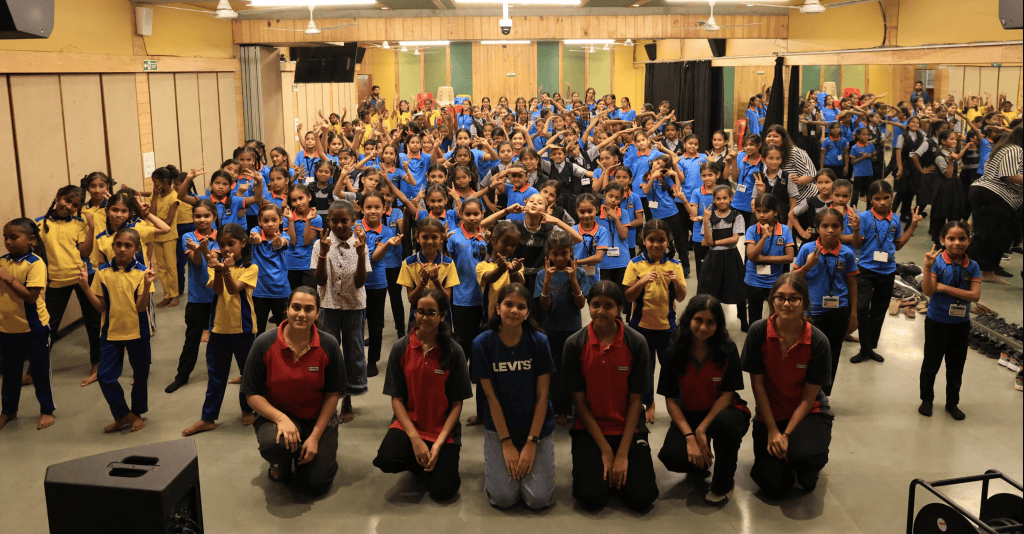
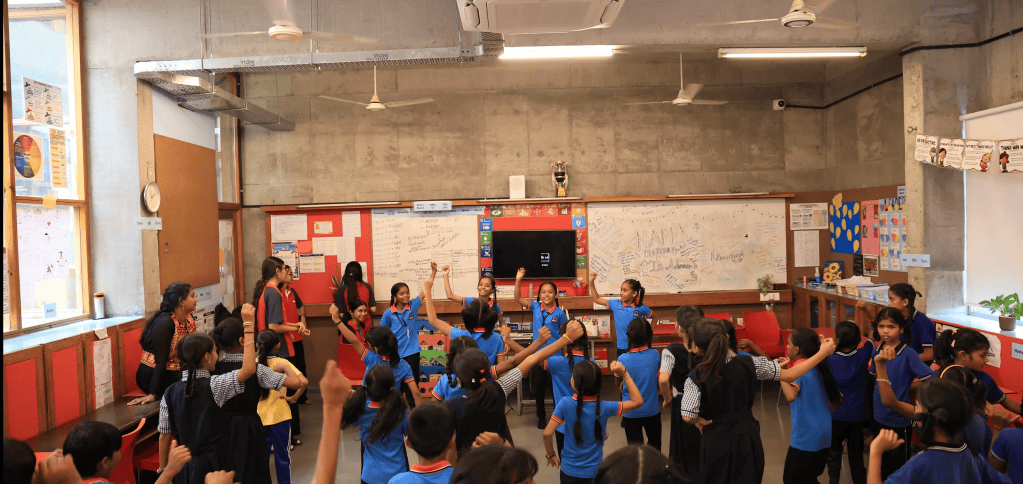
For this CAS experience, I chose to participate in a service initiative where I collaborated with students from government-based schools to teach them dance. This experience aligns with the sustainability goals of “Quality Education” and “Reducing Inequality”, as it aims to provide learning opportunities to students who are often underserved. This service lasted for 3 weekends, from 13th September ’25 to 28th September ‘25, under 6 sessions.
My purpose for selecting this CAS experience was to use my set of skills in a meaningful way. It was to help students express themselves creatively, while building their confidence. Since this experience falls under Service, I chose to focus on the gap in access to extracurricular learning opportunities for students from underprivileged backgrounds. Through this CAS experience, I hoped to contribute to a more equitable educational experience.
LO4: Show commitment and perseverance in CAS experience
Teaching dance over multiple sessions required consistent effort and dedication. There were challenges, some students struggled with rhythm, others needed more time to feel comfortable participating, and maintaining engagement was not always easy. Even on days when progress felt slow, I remained committed to making the sessions beneficial and enjoyable. I adjusted my teaching methods when needed, and ensured that every student felt supported. This experience taught me the value of perseverance, especially when working in a service context where outcomes develop gradually through patience and consistency.
LO3: Demonstrate How to Initiate and Plan a CAS Experience
Before the sessions began, planning was an important part of the process. We had to think about the type of dance routine we would teach and how to break it down into smaller, more doable steps so that the students could do at ease. We also planned how each session would progress, starting with basic movements and gradually building towards the full routine. This planning helped ensure that the sessions were structured and engaging for the students.
LO6: Demonstrate Engagement with Issues of Global Significance
This experience made me more aware of the inequality that exists in access to extracurricular activities such as dance, art, and other creative outlets. Many students from underprivileged backgrounds may not have the same opportunities to explore these activities. Through this initiative, I was able to engage with the broader issue of educational inequality and understand how creative learning can positively impact confidence and self-expression.
LO7: Recognize and Consider the Ethics of Choices and Actions
While teaching the students, it was important to remain respectful, patient, and supportive. Every student learned at a different pace, and it was necessary to create an environment where no one felt judged or left out. I made sure to encourage participation without putting pressure on anyone and treated every student with equal attention and respect. This helped me realize that service requires not only effort but also sensitivity and ethical awareness in how we interact with others.
LO5: Demonstrate skills and benefits of working collaboratively
Collaboration played a central role in this experience. I worked together with the students by encouraging them to help one another, coordinate movements as a group, and practice collectively. I also collaborated with my peers who were part of the initiative, dividing responsibilities, guiding different groups of students, and supporting one another during the sessions. This cooperative environment not only made the learning process smoother but also helped the students develop teamwork and communication skills. Through this collaboration, I strengthened my own ability to work effectively with diverse groups and recognized how collective effort can positively shape the learning experience.
Throughout this process, I also recognized that this experience would allow me to develop important learner profile attributes such as being a “Communicator” and being “Open-minded”. This activity required me to express instructions clearly, listen actively, and adapt to different learning styles. It also pushed me to remain open to the students’ perspectives, backgrounds, and ways of understanding movement and rhythm.
Overall, this CAS Service experience allowed me to contribute meaningfully to a community while growing personally as well. It helped me apply my skills for a good cause, develop important interpersonal skills, and reaffirm the importance of commitment and collaboration in service work.