The community service experience was incredibly meaningful and fulfilling. Teaching mathematics to young students from a government school gave me the opportunity to share my knowledge while contributing positively to the community. Interacting with the children and helping them learn through fun and engaging activities made the experience both educational and heartwarming. It allowed me to express my love for mathematics and teaching while making a small but impactful difference in their learning journey. This activity not only helped me grow as a communicator and mentor but also made me more empathetic and appreciative of the education and resources I am privileged to have access to. Through this CAS experience, I was able to engage with multiple learning outcomes, as explained below.

LO1: Identify own strengths and develop areas for growth
Throughout this experience, I was able to identify my strengths in communication and building rapport with the students. I realized I could explain mathematical concepts clearly and adapt my teaching style according to their understanding. However, I also recognized areas where I could improve, such as being more patient when students struggled with complex topics and developing creative methods to maintain their attention. Over time, I learned to design more interactive lessons that kept the students interested and helped them learn more effectively. This self-awareness has helped me become a better mentor and listener.
LO2: Demonstrate that challenges have been undertaken, developing new skills in the process
Although I had taught before, this experience presented unique challenges. The students had different learning paces and levels of prior knowledge, which required me to adjust my approach constantly. Teaching topics such as fractions and basic geometry in Gujarati was initially challenging, as I had to understand the mathematical terms they were familiar with and ensure clarity. Through this, I developed new skills such as simplified communication, creative lesson planning, and cultural sensitivity. These challenges taught me how to stay flexible and patient while ensuring that each student could grasp the concepts confidently.
LO3: Demonstrate how to initiate and plan a CAS experience
Since I was one of the students responsible for organizing this activity, I had to plan the teaching agenda and divide lessons based on different grade levels. I designed a structure that grouped students by their understanding so that the lessons could be better suited to their learning needs. As the sessions progressed, I made necessary changes to the plan depending on the students’ progress and feedback. This process helped me understand the importance of proper organization, adaptability, and continuous improvement in executing a well-structured teaching plan.
LO4: Show commitment to and perseverance in CAS experiences
This CAS experience required consistent commitment, as it took place over six consecutive weekends. Showing up regularly and engaging with the students despite my academic workload reflected my dedication and perseverance. Some sessions were challenging due to varying student attendance and classroom distractions, but I remained motivated and focused on making each class meaningful. Over time, I built strong connections with the students, which made my commitment even more rewarding. The satisfaction of seeing them understand and enjoy math made all the effort worthwhile.
LO5: Demonstrate the skills and recognize the benefits of working collaboratively
Collaboration played a key role throughout this experience. As multiple volunteers were involved, we divided roles and responsibilities to ensure smooth functioning of the sessions. Working together helped us share ideas, plan creative teaching activities, and support each other during lessons. This teamwork made the learning environment more efficient and enjoyable for both the students and us. It also strengthened my teamwork and leadership skills, as we had to communicate effectively and manage our time and tasks collaboratively.
LO6: Demonstrate engagement with issues of global significant
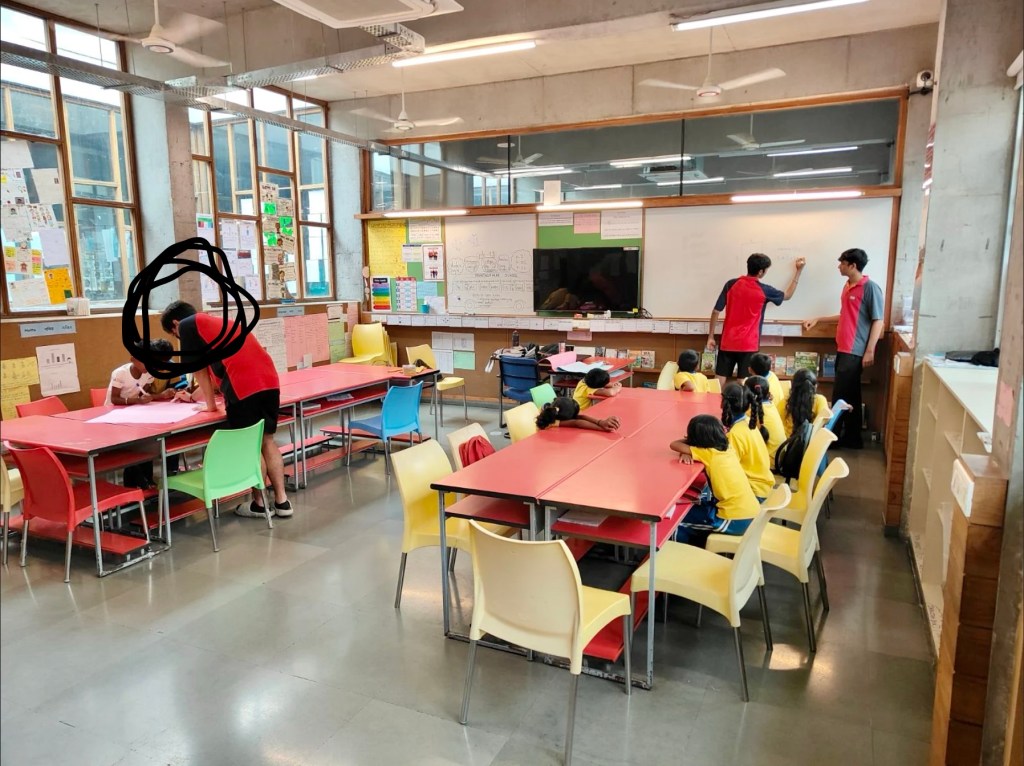
This experience directly connected with global issues such as poverty and unequal access to quality education. Many of the students lacked basic educational support outside school, so helping them learn math in an engaging and supportive way contributed—on a small scale—to addressing these issues. It made me more aware of the importance of educational equity and inspired me to value my own learning opportunities even more. Teaching these children gave me a deeper understanding of how education can empower communities and create positive social change.
LO7: Recognize and consider the ethics of choices and actions
Ethical awareness was an important part of this service. I made sure to treat all students with respect, fairness, and patience, ensuring every child received equal attention and encouragement. I also remained mindful of the students’ backgrounds and ensured that my teaching approach was sensitive and inclusive. By maintaining integrity, empathy, and fairness throughout the sessions, I upheld the ethical principles that define meaningful community service.
Final Reflection
Overall, this community service experience was deeply enriching and eye-opening. It allowed me to connect with students from different backgrounds, share my knowledge, and contribute to their learning in a fun and supportive way. The experience helped me grow as a communicator, planner, and team member while also nurturing empathy and social responsibility. I am truly grateful for the opportunity to be part of an initiative that promotes education and positive change, and I look forward to engaging in more service experiences that allow me to learn, give back, and grow.