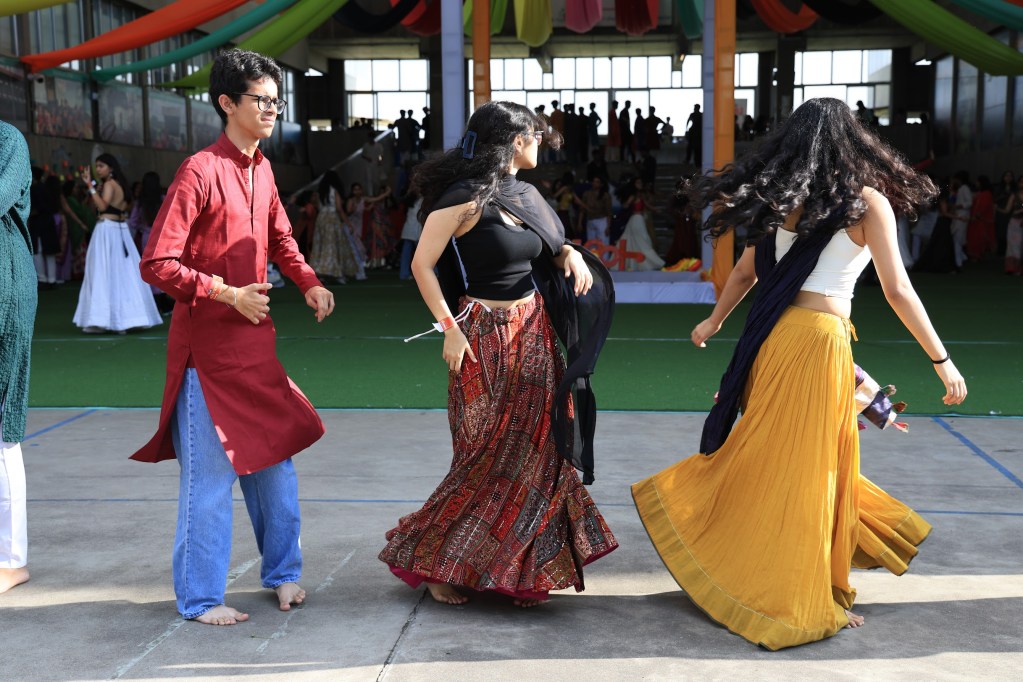
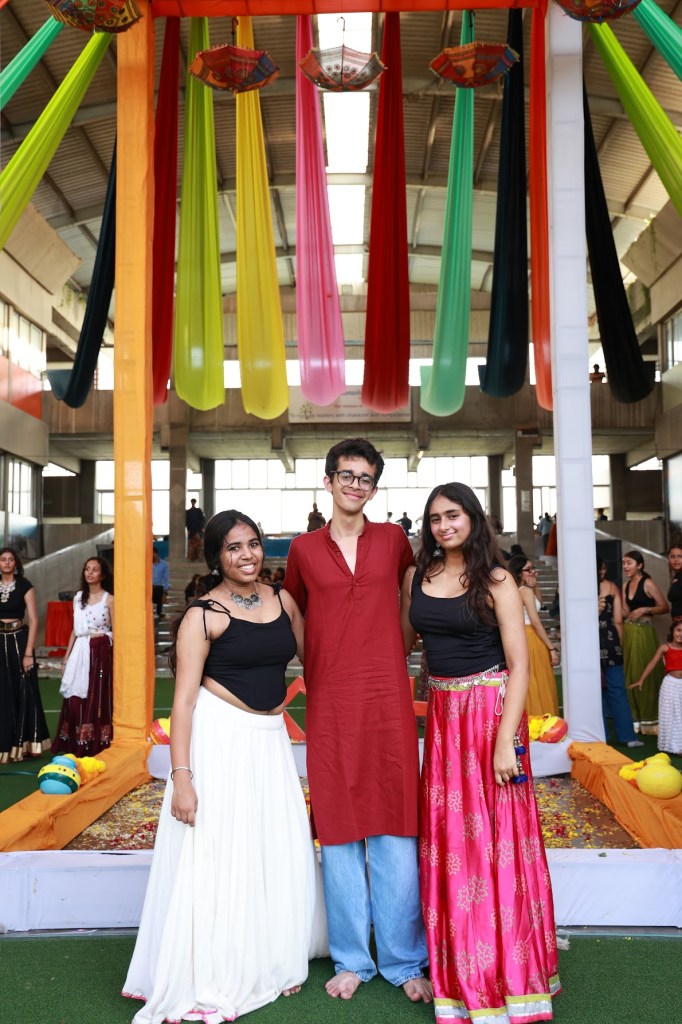
On the 25th of September, I had the opportunity to participate in the Garba Fest organized within the school premises — a vibrant cultural celebration that highlights traditional Indian music, dance, and community spirit. The event allowed me to immerse myself in a meaningful aspect of Indian culture while developing physical coordination, stamina, teamwork, and a deeper appreciation for the heritage behind Garba. Through regular practice, group rehearsals, and my performance at the final event, I strengthened my performing arts skills and experienced firsthand how a shared cultural tradition can unite people and foster a strong sense of community.
Learning Outcome 1 – Identify own strengths and develop areas for growth
Throughout the Garba Fest, I was able to recognize several strengths I possessed as well as areas for improvement. I discovered that I have strong stamina and endurance — I could dance for long durations without losing energy and maintain consistent movement through multiple rounds of the event without taking breaks. While I consider myself a capable dancer, I am not yet an expert, and this realization motivated me to go beyond the basic steps I already knew and challenge myself to learn more complex Garba moves. Mastering these new steps took time, but through steady practice and patience, I gradually improved. I also worked on adapting to faster music and adjusting my pace to match the rhythm more precisely, which helped me gain confidence in performing at higher tempos. Overall, this experience deepened my awareness of my physical strengths while also highlighting areas, such as the speed of learning and refining footwork — where I can continue to grow.
Learning Outcome 2 – Demonstrate that challenges have been undertaken, developing new skills
Participating in Garba presented several small yet meaningful challenges — from mastering intricate and demanding steps to adapting to a fast rhythmic tempo while staying synchronized with a large group of dancers. I approached these challenges with consistent practice, careful observation of more experienced performers, and by seeking guidance from peers and friends proficient in the dance form. At times, it was difficult to keep pace with quick musical transitions or remember extended step sequences, but I overcame this by breaking the choreography into smaller segments and practicing each part repeatedly until it became natural. Through this process, I developed key skills in timing, synchronization, and spatial awareness, along with improved focus and coordination. I also strengthened my ability to receive and apply constructive feedback promptly during rehearsals and the event itself, which noticeably improved my overall performance. Altogether, these challenges enhanced not only my technical dance abilities but also my physical endurance, resilience, and ability to stay composed and attentive in fast-paced, dynamic situations.
Learning Outcome 4 – Show perseverance and commitment in CAS experience
Preparing for the Garba Fest required sustained effort, discipline, and commitment. I began practicing several days before the event to refine my form and improve my stamina. Outside of school, I practiced with a few peers who were more experienced in the dance form, which helped me learn new techniques and polish my performance. All this preparation paid off during the event, where I kept dancing until the very end — driven by genuine enjoyment and determination to give my best. I was able to maintain my energy, rhythm, and focus throughout the performance and felt a deep sense of pride that my consistent effort and practice had culminated in a confident and spirited final presentation.
Learning Outcome 5 – Demonstrate skills and benefits of working collaboratively
Garba is fundamentally a group dance, so my ability to collaborate and coordinate with others was essential to performing well. The skills I demonstrated included clear non-verbal coordination (matching steps and maintaining spacing), verbal communication during the event (calling out adjustments and confirming counts), and situational awareness (avoiding collisions and adjusting positions when someone missed a step). Since many people were dancing together, it was important to move predictably, maintain a steady rhythm, and support one another whenever mistakes occurred. I focused on aligning my movements with those around me and keeping appropriate personal space to ensure smooth group synchronization. Working together taught me that mutual responsibility and small acts of support, such as adjusting my pace to help a partner stay in rhythm — contributed to a cohesive and polished performance. The sense of shared accomplishment and collective joy after the performance made the collaborative effort deeply fulfilling and rewarding.
Learning Outcome 6 – Engagement with issues of global significance
Although Garba is a regional tradition, celebrating it in my school underscored the global importance of preserving and valuing cultural heritage. This year’s Garba Fest also featured food and beverage stalls offering traditional Indian dishes connected to my culture and religion. I chose to purchase and enjoy these items to honor my cultural roots and help ensure that tradition remained a visible part of the celebration. In doing so, I actively practiced cultural continuity and demonstrated how festivals can serve as meaningful opportunities to pass on identity, values, and traditions to younger generations. In a diverse school environment where many events often feature Western food or entertainment, emphasizing traditional foods and practices during Garba reinforced the importance of cultural preservation, mutual respect, and intergenerational learning — themes that align with broader global conversations on cultural sustainability and diversity.
Conclusion
Participating in the Garba Fest was a joyful, educational, and personally meaningful CAS experience that combined physical activity, cultural expression, and collaboration. It strengthened my stamina, coordination, and confidence while deepening my appreciation for India’s rich cultural traditions. Learning new and challenging steps broadened my technical range, and working with peers reinforced the value of teamwork, communication, and shared responsibility. Choosing to engage with traditional foods and customs allowed me to reflect on the role of heritage in contemporary school life and the importance of cultural preservation. Overall, this experience taught me that performing arts can serve as a bridge between culture and community — connecting people, celebrating diversity, and fostering a sense of belonging that extends far beyond the dance floor.