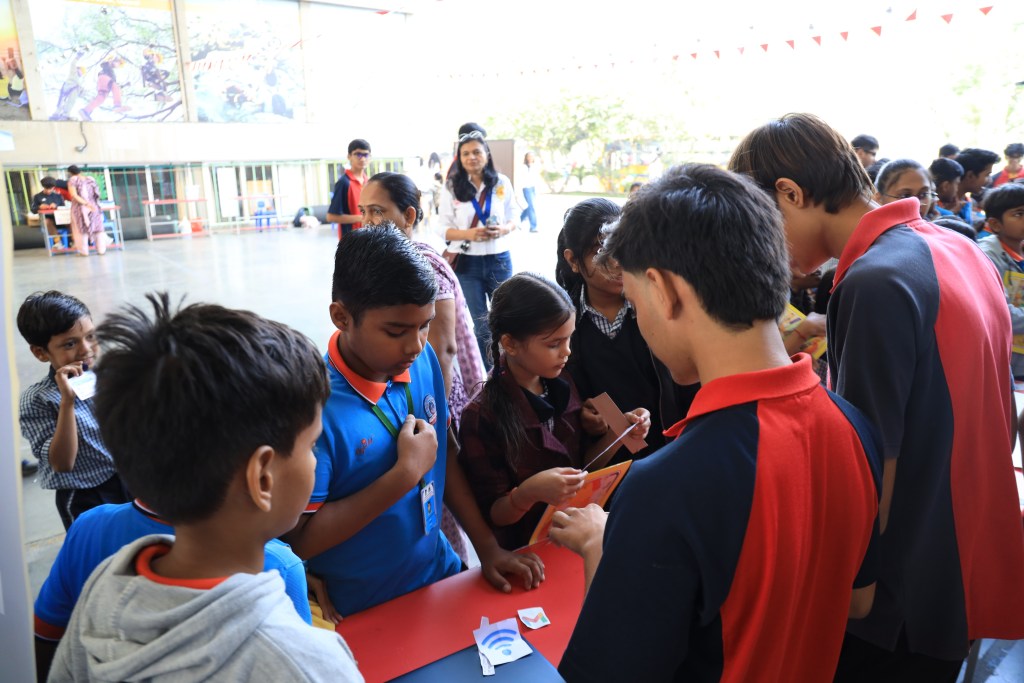
At the Children’s Carnival, I organised a Digital Literacy Awareness activity where children learned about online safety, strong passwords, and responsible digital behaviour through fun riddles and interactive challenges.
Learning Outcome 1: Identify own strengths and develop areas for growth
Designing and leading the “Password Puzzle Game” at the children’s carnival allowed me to recognize both my strengths and areas where I can grow. I discovered that I am particularly good at simplifying complex ideas—such as digital safety and online responsibility—into fun, accessible activities for younger children. My communication and creativity skills helped make the game engaging through colorful riddles, matching cards, and an exciting final puzzle.
However, I also realized that I need to improve my time management and event coordination skills. I underestimated how long it would take to set up materials and explain the instructions to each group. This experience taught me the importance of allocating extra preparation time for interactive activities.
Learning Outcome 2: Demonstrate that challenges have been undertaken and new skills developed in the process
One major challenge was making digital literacy appealing to children aged 7–12. Concepts like “cyber ethics” and “digital responsibility” can be abstract, so I had to find creative ways to simplify them. To overcome this, I developed the skill of educational storytelling—turning technical ideas into riddles and clues that the children could decode.
Facilitating the activity also helped me strengthen my leadership and problem-solving skills. Managing the flow of participants, keeping them engaged, and ensuring fairness required confidence, quick thinking, and clear communication. These skills will support me in future service initiatives.
Learning Outcome 3: Initiate and plan a CAS experience
Our team took full initiative in planning and carrying out the “Password Puzzle Game.” From brainstorming concepts to preparing materials such as flashcards, riddles, and paper tokens, each step required thoughtful coordination. We designed three levels—Match & Learn, Riddle Round, and Password Decoder—to gradually build the children’s understanding of online safety. This process taught me that careful planning can turn simple ideas into impactful learning experiences.
Learning Outcome 4: Show commitment to and perseverance in CAS experience
Preparation required several hours over multiple days, yet our team remained committed to making the activity meaningful. On the day of the carnival, we consistently guided participants, explained clues, and managed the crowds with enthusiasm. positive feedback from teachers and students affirmed the value of our efforts.
Learning Outcome 5: Demonstrate skills and recognize the benefits of working collaboratively
The success of the activity relied heavily on teamwork. Each group member contributed unique strengths—whether designing puzzles, creating crafts, or facilitating rounds. Through collaboration, I learned how essential effective communication, flexibility, and mutual support are in group projects. Working together not only improved the quality of the activity but also made the experience enjoyable and rewarding.
Learning Outcome 6: Demonstrate engagement with issues of global significance
Digital safety is a global concern in today’s technology-driven world. By promoting awareness about online responsibility, privacy, and cyber ethics, our activity supported Sustainable Development Goals 16 and 17, which focus on building safe, responsible communities and partnerships. I learned that service can be educational, and empowering others with knowledge is a meaningful way to make an impact.
Learning Outcome 7: Recognize and consider the ethics of choices and actions
This experience helped me reflect on the ethical responsibilities that come with digital citizenship. Teaching children about respecting others online, protecting personal information, and acting responsibly reminded me that ethics apply both offline and online. Our activity reinforced the idea that being a responsible digital citizen contributes to being a responsible global citizen.
Conclusion
The “Password Puzzle Game” allowed me to combine creativity, teamwork, and education to serve my community in a meaningful way. I learned that impactful service does not always require large-scale action—sometimes, it begins with inspiring awareness in younger learners. This experience strengthened my leadership, empathy, and reflective thinking, making it one of my most rewarding CAS activities so far.