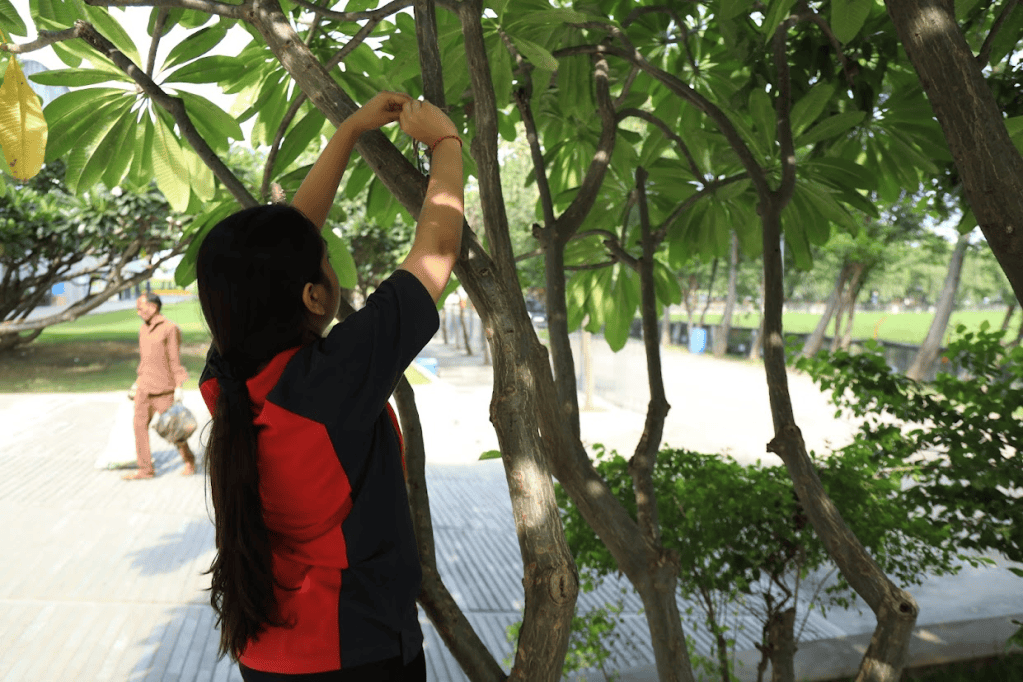
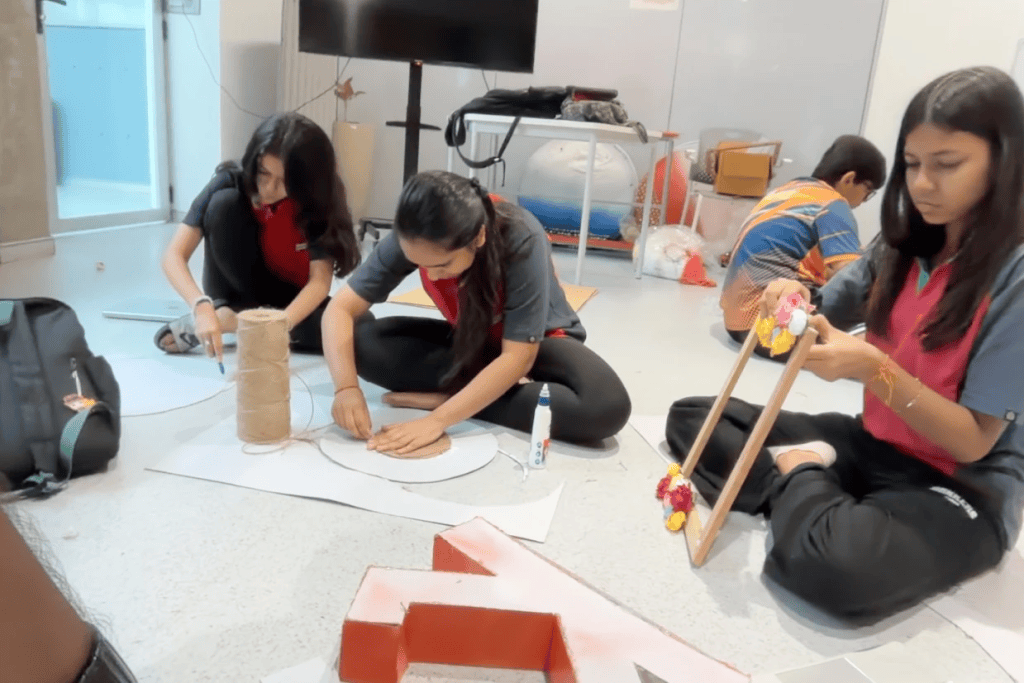
As a member of the core organising team for our school’s Garba Fest, I was responsible for planning and executing the event’s décor while ensuring that preparations were completed smoothly for both celebration days one for Grades 7–9 and another for Grades 10–12 along with the teaching staff. My role involved brainstorming decoration ideas, arranging materials, supervising the setup process, coordinating with volunteers, and ensuring that every element reflected the festive atmosphere while remaining practical and organised. Being involved behind the scenes gave me valuable insight into the amount of teamwork, planning, and responsibility required to successfully host a large-scale cultural event.
Learning Outcome 1
This experience helped me gain a clearer understanding of my personal strengths. I discovered that I naturally enjoy organising tasks, paying attention to details, and ensuring that work is completed systematically. During the preparation, I often found myself anticipating what resources would be needed and planning ahead to avoid delays. At the same time, I realised that I sometimes hesitate to voice my opinions when working with larger groups, especially when multiple ideas are being discussed. I also noticed that I tend to take on extra responsibilities instead of asking others for assistance. Reflecting on this experience has encouraged me to become more confident in expressing my ideas and to trust my teammates by sharing responsibilities more effectively.
Learning Outcome 2
Preparing for Garba Fest involved several unexpected challenges. We had to decorate within limited time while ensuring that everything was ready before participants arrived. Some decoration plans also had to be modified based on the availability of materials and the event schedule. Adapting to these changes required flexibility, quick thinking, and efficient decision-making. Through this experience, I developed stronger problem-solving abilities and learned how to adjust plans without losing sight of the overall objective. I also improved my time management skills by prioritising tasks and completing essential work before focusing on additional decorative details.
Learning Outcome 3
Successful execution of the event depended heavily on careful planning. Before the actual setup, our team discussed decoration concepts, identified the required materials, divided responsibilities, and created a sequence for completing different sections of the venue. We also considered practical aspects such as movement of participants, placement of decorative elements, and ensuring that the venue remained safe and visually appealing. Being actively involved in these planning stages helped me appreciate how thoughtful preparation reduces confusion during execution. It also strengthened my ability to organise resources and contribute to structured event management.
Learning Outcome 4
Organising Garba Fest required consistent dedication over several days of preparation. Even when tasks became repetitive or physically tiring, I remained committed to completing my responsibilities to the best of my ability. There were moments when additional adjustments had to be made shortly before the event began, requiring us to stay focused despite the pressure. Instead of becoming discouraged, I continued contributing wherever needed until every area was ready. This experience reinforced the importance of perseverance and showed me that successful events are often the result of sustained effort rather than a single day’s work.
Learning Outcome 5
Garba Fest could not have been organised successfully through individual effort alone. Throughout the preparation, I worked closely with fellow student organisers, teachers, and volunteers, each contributing different ideas and skills. We regularly communicated to divide tasks, solve problems, and ensure that everyone remained informed about progress. I learned that listening carefully to others’ perspectives often led to better solutions than working independently. The experience strengthened my collaboration skills and showed me that mutual support, shared responsibility, and effective communication create a more productive and enjoyable working environment.
Learning Outcome 6
Although Garba Fest celebrated a regional Indian tradition, it also highlighted the broader global importance of preserving cultural heritage and promoting intercultural understanding. In today’s increasingly interconnected world, cultural festivals provide opportunities for people from diverse backgrounds to appreciate traditions different from their own. By helping organise the event, I contributed to creating an inclusive environment where students could learn about and participate in a meaningful cultural celebration regardless of their background. This experience reminded me that preserving traditions while encouraging participation from diverse communities helps strengthen respect for cultural diversity across the world.
Learning Outcome 7
While planning the decorations, our team considered how our decisions could balance creativity with responsibility. We made conscious efforts to reuse existing decorative materials wherever possible instead of relying entirely on new ones, helping reduce unnecessary waste. We also ensured that the decorations respected the cultural significance of Garba rather than treating it merely as entertainment. Additionally, we planned the venue in a way that allowed participants to move comfortably and safely throughout the event. Reflecting on these decisions made me realise that ethical thinking is an important part of event management, as responsible choices can positively impact both people and the environment.
Overall Reflection
Serving on the core organising team for Garba Fest was a rewarding experience that extended beyond simply decorating the venue. It allowed me to strengthen my organisational abilities, adapt to challenges, collaborate with others, and appreciate the value of preserving cultural traditions through collective effort. Most importantly, it taught me that successful leadership is built not only through planning and execution but also through responsibility, flexibility, ethical decision-making, and the willingness to learn from every experience.