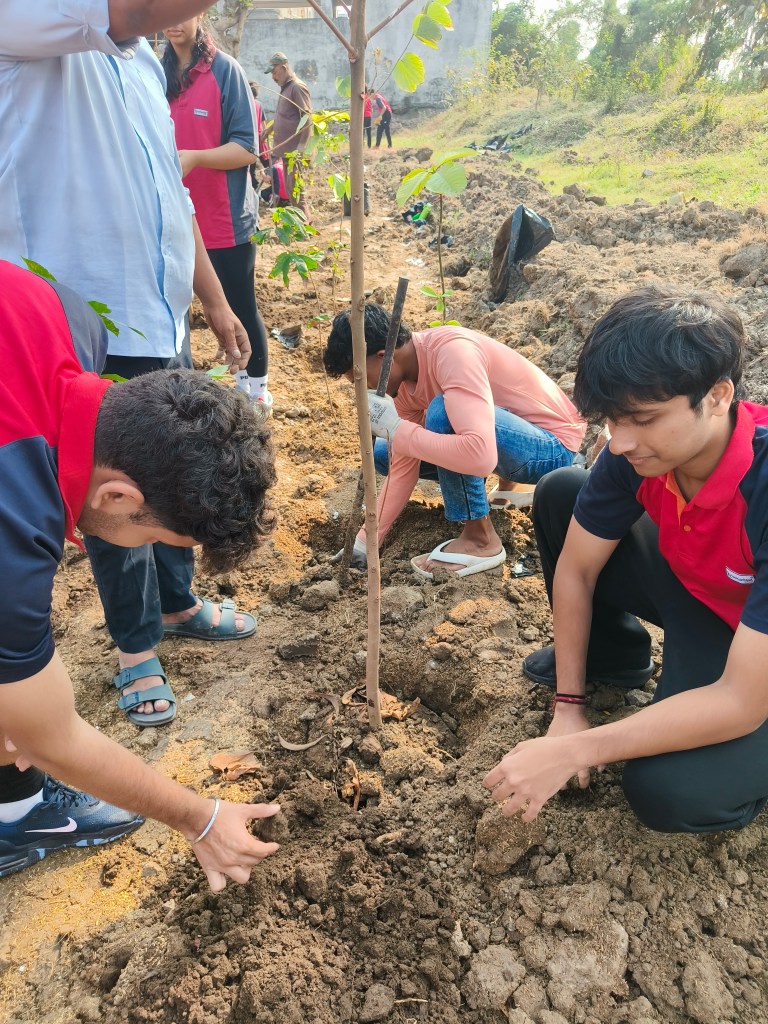
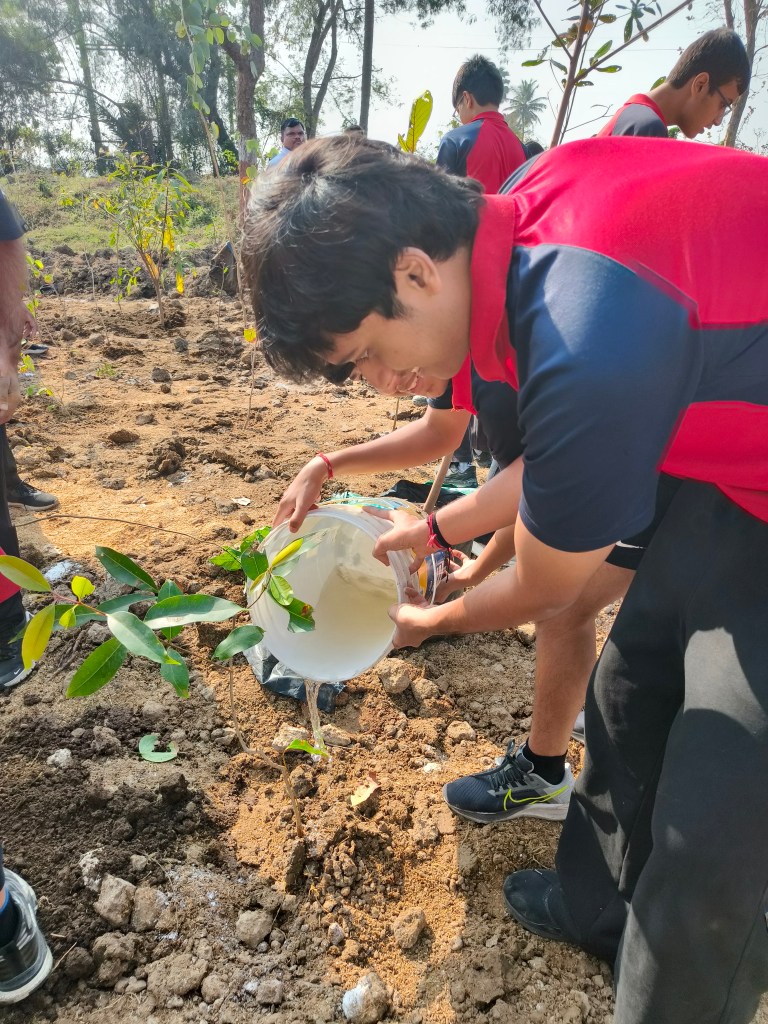
Between August 2025 and January 2026, I participated in three separate plantation drives across various local sites. This initiative was more than just putting saplings in the ground; it was a commitment to combating urban deforestation and restoring biodiversity in areas that have been heavily impacted by urban sprawl. From preparing the soil to selecting native species, this long-term project allowed me to see the tangible impact of environmental stewardship.
LO1 – Identify own strengths and develop areas for growth
Throughout the drives, I identified that my physical stamina and enthusiasm for outdoor work are personal strengths. However, I recognized a significant “area for growth” in my technical knowledge of horticulture. Learning how to properly dig soil to the correct depth and handle delicate root systems was a learning curve, but by the third drive, I had developed the precision needed to ensure the saplings had the best chance of survival.
LO2 – Demonstrate that challenges have been undertaken, developing new skills
Each of the three locations presented unique environmental challenges, from hard, compact soil to limited water access. Taking on these challenges required me to develop new skills in soil aeration and moisture retention techniques. Adapting my planting methods to suit the specific ecological needs of each site was a practical challenge that expanded my understanding of environmental conservation.
LO3 – Initiate and plan a CAS experience
This experience required significant initiation and planning over several months. I had to coordinate my schedule to attend three different drives, research the native species appropriate for our region, and ensure I had the necessary tools for each session. This planning was vital to ensure that my contribution was consistent and that each drive built upon the progress of the last.
LO4 – Show perseverance and commitment in CAS experience
Unlike a one-day event, this experience required sustained commitment. Planting saplings is physically demanding, especially under the sun across three different weekends. I demonstrated perseverance by seeing the project through to completion, ensuring that the commitment I made in August was fulfilled by January, regardless of the physical fatigue involved in the manual labor.
LO5 – Demonstrate skills and benefits of working collaboratively
The success of these drives relied heavily on working collaboratively with a team of volunteers. We had to divide tasks—some digging, some planting, and others watering—to cover large areas efficiently. This collaboration showed me that environmental impact is multiplied when a group works in sync toward a common goal, making the restoration process much more effective than working individually.
LO6 – Engagement with issues of global significance
By participating in these reforestation drives, I engaged directly with the global issue of climate change and biodiversity loss. While my actions were local, I understood that urban carbon sinks are a critical part of a global solution. This experience allowed me to connect my daily actions to the UN Sustainable Development Goals, specifically “Life on Land” and “Sustainable Cities and Communities.”
LO7 – Recognise and consider the ethics of choices and actions
I had to recognize the ethics of my actions by ensuring that we only planted native species. Planting non-native trees can sometimes harm local ecosystems, so it was an ethical responsibility to ensure our “service” was actually beneficial in the long term. Considering the environmental consequences of our choices ensured that our intervention supported, rather than disrupted, the local biodiversity.
Conclusion
Participating in these three plantation drives has been one of my most grounding CAS experiences. It taught me that real change requires both physical hard work and ethical planning. I am proud to have contributed to the green cover of my community, and I look forward to visiting these sites in the future to see the long-term growth of the saplings we planted.