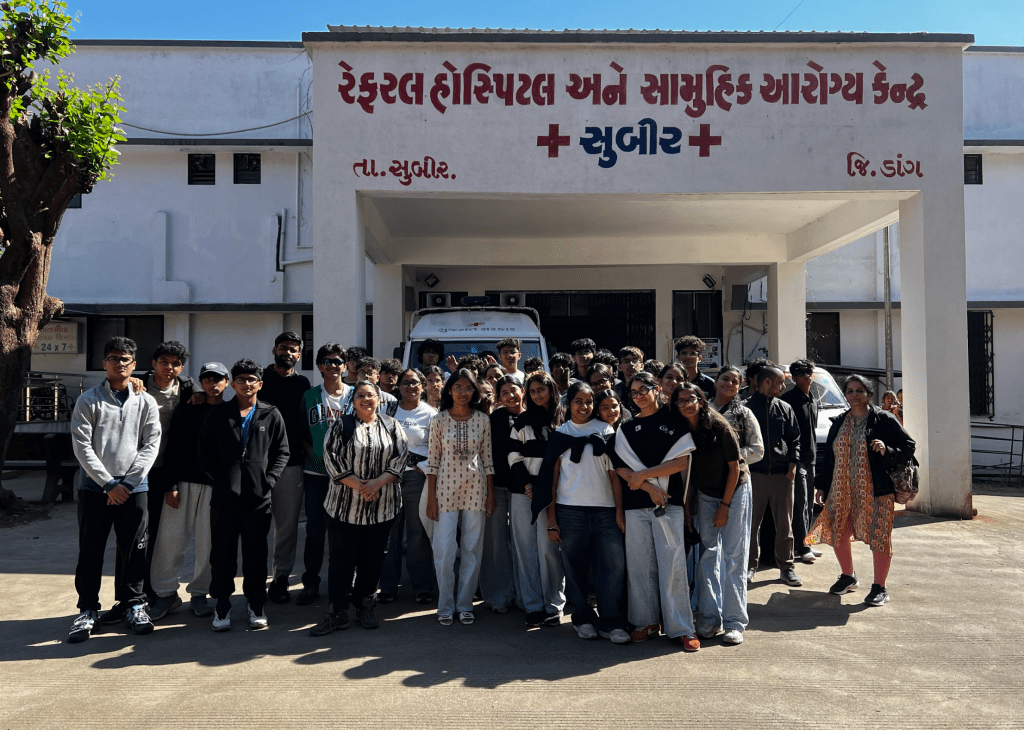
I went to Mokhamal, Dang as part of the annual Rural Immersion Trip. This experience allowed me to step outside my usual urban lifestyle and immerse myself in a completely different environment, where I could observe and understand the realities of rural life.
During the trip, I interacted closely with the local community and villagers, which helped me understand their daily routines, challenges and values. I observed how limited access to resources such as education, healthcare and sanitation impacts their quality of life. Despite these challenges, what stood out to me was the strong sense of community, resilience and contentment among the villagers.
One of the most meaningful aspects of the experience was engaging with children in the government school. Interacting with them helped me realise how different their learning environment is compared to mine, and it made me reflect on the privileges I often take for granted. At the same time, their enthusiasm and curiosity were inspiring, showing that joy and motivation are not dependent on material resources.
Overall, the Rural Immersion Trip was a deeply impactful experience that enhanced my empathy, broadened my perspective and strengthened my sense of social responsibility. It encouraged me to think more critically about issues such as inequality and access to basic resources, and how even small actions can contribute to meaningful change.
LO1 – Through this experience, I recognised my ability to adapt and communicate with new people, while also identifying areas for improvement such as patience, cultural sensitivity, and openness to unfamiliar situations.
LO2 – I had to adjust to a completely different living environment, including changes in food, routines, and facilities. This required adaptability and helped me develop stronger interpersonal and communication skills while interacting with the local community.
LO4 – By actively participating throughout the immersion despite the challenges of adjusting to a new environment, i developed resilience and commitment. Adapting to different living conditions, routines, and physical demands required consistent effort and a willingness to remain engaged throughout the experience.
LO5 – This experience strongly reflected the power of working collaboratively, as I engaged with both my peers and the villagers in group activities. Working together in an unfamiliar setting helped me understand the importance of cooperation, mutual respect and teamwork.
LO6 – I became more aware of rural inequality, including limited access to education, sanitation and healthcare. This experience helped me connect local observations to broader global issues such as poverty and unequal resource distribution.
LO7 – By being mindful of my behaviour, showing respect for the community’s culture and lifestyle, and understanding the importance of ethical engagement when working with different communities