Type of CAS: Service
Location: Outside School
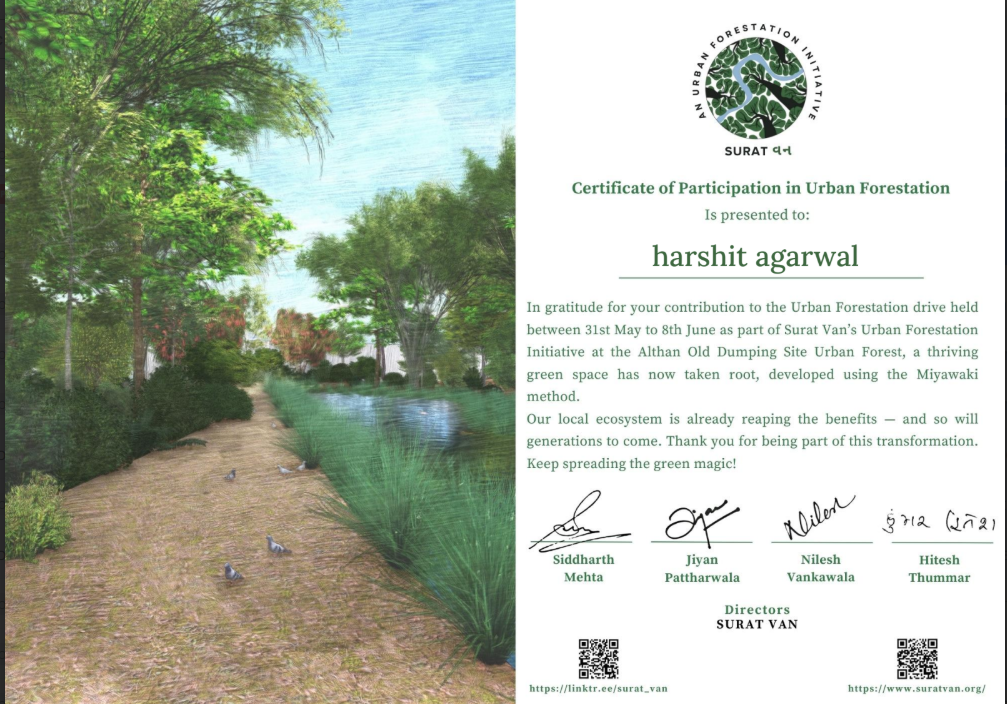
Volunteering in a Tree Plantation Drive during heavy rain was one of the most challenging yet rewarding CAS experiences I have taken part in. The event aimed to increase the green cover in our community using the Miyawaki tree plantation technique, which involves planting dense clusters of native species to create a fast-growing mini forest. As a volunteer, I assisted with planting fragile saplings in muddy and slippery terrain, contributing to an effort that supports biodiversity and long-term ecological restoration.
Learning Outcome 1: Identify own strengths and develop areas for growth
I joined the drive with excitement, thinking it would be straightforward. However, working in pouring rain with unstable soil and delicate saplings quickly changed that perception. I realized my strength was in my determination and ability to stay focused despite discomfort. At the same time, I identified the need to develop better patience and care when handling fragile plants in challenging conditions.
Learning Outcome 2: Demonstrate that challenges have been undertaken, developing new skills in the process
The weather turned the plantation site into a muddy, slippery field, making each step and every planting effort more difficult. I had to learn the proper way to secure the saplings upright, and gently cover their roots without damaging them, all while rain poured continuously. Handling the fragile plants taught me precision and patience — skills I had not practiced before.
Learning Outcome 4: Show commitment to and perseverance in CAS experiences
The tree plantation drive required strong perseverance due to the heavy rain and muddy conditions. Despite the discomfort and difficulty in handling fragile saplings, I stayed committed and continued working carefully. This experience taught me the importance of determination and completing a task even in challenging situations.
Learning Outcome 5: Demonstrate the skills and recognize the benefits of working collaboratively
Volunteering under such weather conditions required strong teamwork. We helped one another carry tools, steady each other on slippery ground, and rotate tasks to avoid exhaustion. Collaboration ensured the saplings were planted properly and efficiently despite the rain.
Learning Outcome 6: Demonstrate engagement with issues of global significance
Planting trees using the Miyawaki technique contributes directly to SDG 13: Climate Action and SDG 15: Life on Land by combating climate change, enhancing carbon absorption, and restoring local biodiversity. Being part of this initiative reminded me how crucial small, collective actions are in addressing global environmental concerns.
Reflection
This plantation drive tested my resilience in unexpected ways — the rain, mud, and fragile saplings made it physically demanding and mentally draining. Yet, it also gave me a deep sense of fulfillment knowing that our efforts would contribute to a greener, healthier environment. I left the site soaked and tired but proud of having played a part in something meaningful. This experience reinforced that even as a volunteer, I can create a positive impact and develop essential skills like patience, teamwork, and adaptability.