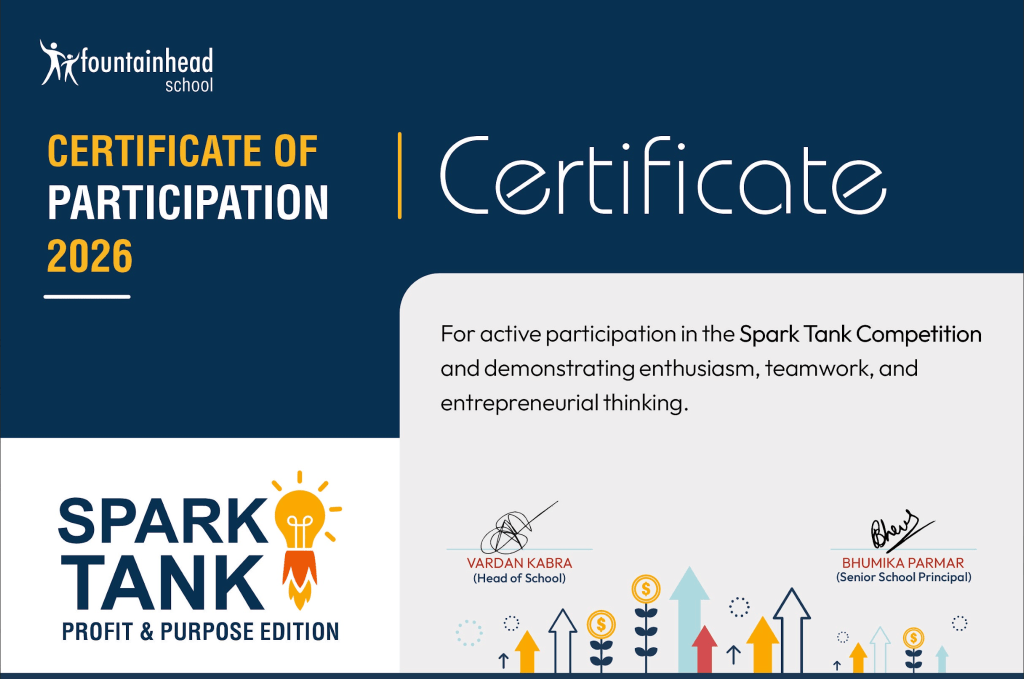
My CAS experience involved participating in the BM Spark Tank activity, where my team and I developed and pitched a business idea similar to the format of the Shark Tank competition. Our idea was QueueZero, a Software as a Service (SaaS) platform designed to reduce long waiting lines in government institutions such as hospitals, courts and RTOs. The platform allows citizens to join a digital queue through SMS and receive updates about their waiting time, making the system accessible even for people without smartphones or high-speed internet. Through this experience, I applied business concepts in a practical setting while developing teamwork, problem-solving and presentation skills.
LO 1: Identify Own Strengths and Develop Areas for Growth
Through this experience, I identified several strengths, particularly in idea development and strategic thinking. I enjoyed discussing the practicality of our business model and exploring how the service could realistically be implemented in public institutions. Contributing to brainstorming sessions helped me realize that I am comfortable analyzing problems and suggesting solutions. At the same time, I also recognized an area for improvement in my public speaking and spontaneous communication. While preparing the presentation, I realized that clearly explaining complex ideas to an audience requires confidence and clarity. This experience encouraged me to work on improving my speaking skills so that I can communicate ideas more effectively in future presentations.
LO 2: Demonstrate That Challenges Have Been Undertaken, Developing New Skills in the Process
Developing the QueueZero concept required us to understand technological and business aspects that were initially unfamiliar to us. Learning about how a digital queuing system could work, especially through SMS-based services, was challenging because it involved understanding both user needs and basic technical feasibility. Through research and discussions within the team, I developed new skills related to problem-solving and structured thinking. We had to carefully consider how the service would function, who the target users were and how the platform would improve efficiency in public services. This challenge helped me develop adaptability and the ability to approach unfamiliar concepts with curiosity and persistence.
Learning Outcome 3 – Demonstrate How to Initiate and Plan a CAS Experience
Planning played an important role in the success of our project. As a team, we organized our tasks by dividing responsibilities such as researching the problem, developing the solution, preparing the business model, and designing the presentation. We scheduled meetings to discuss progress and ensure that each part of the project was completed on time.
Being involved in this planning process helped me understand how structured preparation contributes to the success of a group project. It also allowed me to develop organizational and coordination skills, which are essential when managing collaborative tasks.
LO 5: Demonstrate Skills and Benefits of Working Collaboratively
Collaboration was one of the most important aspects of this experience. Each member of the team contributed different ideas and perspectives, which helped us strengthen our overall concept. By discussing and refining our ideas together, we were able to combine technical, financial, and practical aspects into a coherent business proposal. Working as a team taught me the importance of communication, listening to others’ perspectives and respecting different viewpoints. Through collaboration, we were able to build a stronger and more comprehensive idea than any one of us could have developed individually.
LO 7: Recognise and Consider the Ethics of Choices and Actions
While developing QueueZero, we also considered ethical aspects related to technology and public services. Since the system would potentially handle sensitive information about users and their appointments, it was important to think about privacy and responsible data management. We discussed how the platform should prioritize protecting user information and ensuring that the system remains accessible to all citizens, including those who may not have access to advanced technology. Reflecting on these considerations helped me understand that business innovation should not only focus on efficiency and profit but also on responsibility, fairness and the protection of users.