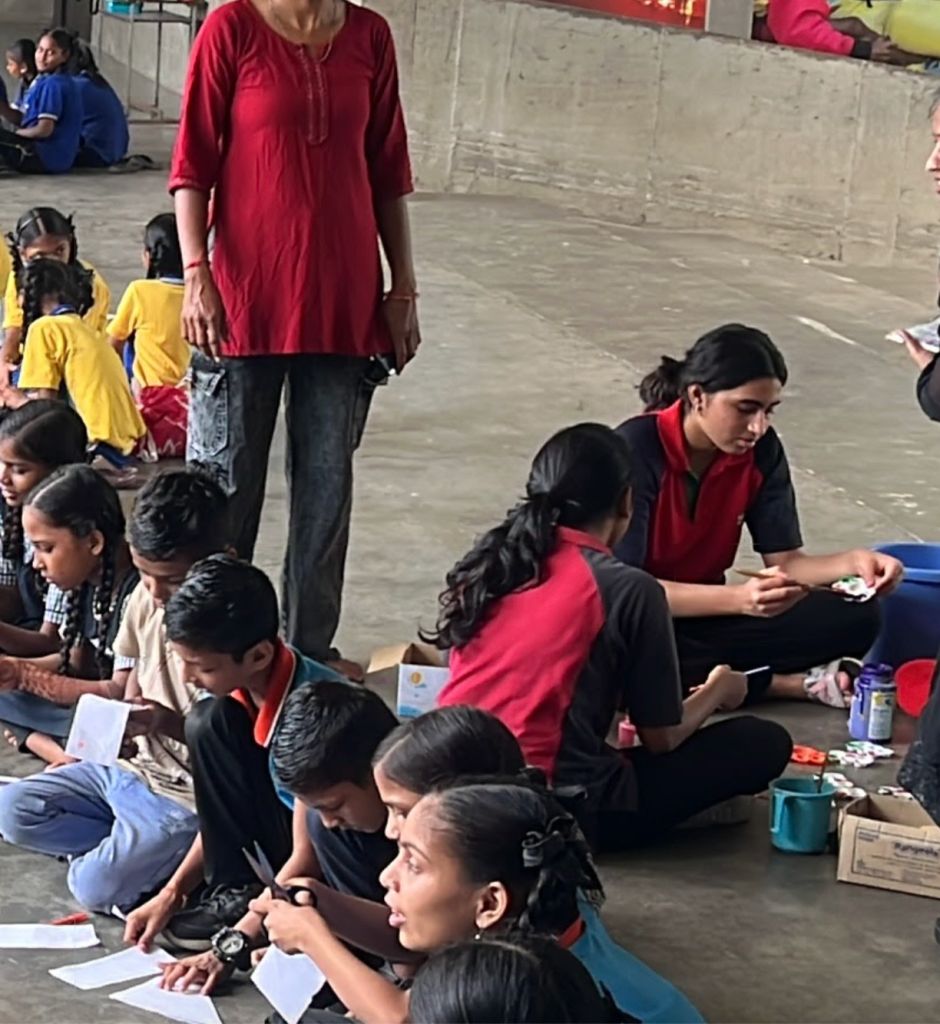
Introduction: For my CAS experience, I was in charge of the Arts during our Community Service Week. Students from underprivileged schools came to our campus, and our job was to teach them creative activities. My main responsibility was to plan all the art activities for six days, choose the best-out-of-waste ideas, watch videos to learn the steps, and list all the materials we would need.On the day of the event, our school volunteers were teaching the children in groups, and I prepared material baskets for every group so they had everything ready. I also helped the volunteers if they needed guidance and made sure the activities were easy, fun, and safe for the children. This experience helped me learn how to organise things properly, communicate clearly, and work with others. It also made me realise how important it is to give creative learning opportunities to children who may not get them regularly.
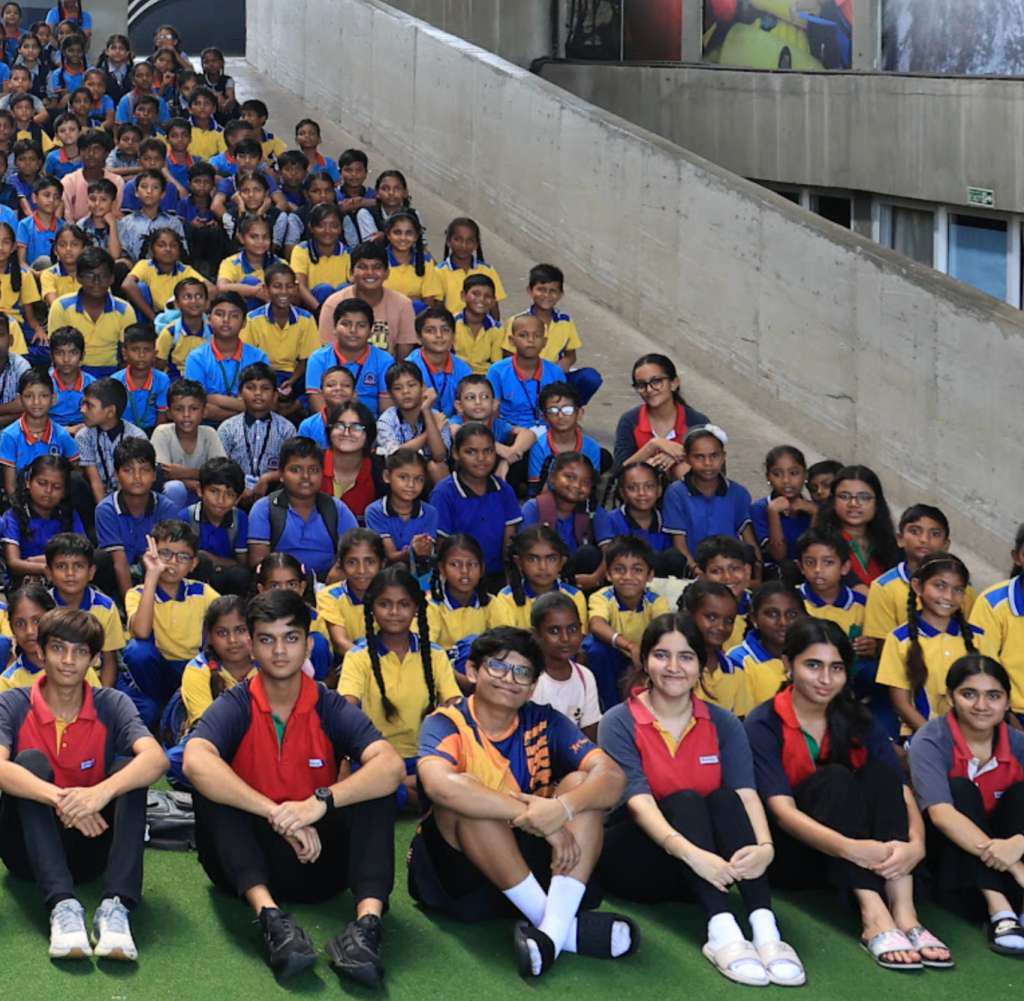
LO1: Identify own strengths and develop areas for growth – During this experience, I noticed some strengths in myself that really helped me manage my responsibilities well. One big strength was my creativity. I was able to choose and design best-out-of-waste activities that were easy enough for younger children but still fun and meaningful for them. I also realised that I am good at planning and organising tasks. Making a full six-day activity plan, finding the right videos, and writing down all the materials needed showed me that I can structure work clearly and confidently.At the same time, I became aware of some areas where I still need to grow. Handling such a big task made me understand that I sometimes get stressed when many people depend on me at the same time. I realised I need to work on staying calm under pressure and improving my time-management when many tasks are happening at once. Recognising both my strengths and my weaknesses helped me understand myself better, especially as a leader and as someone who takes responsibility for others.
LO2: Demonstrate that challenges have been undertaken, developing new skills in the process – This CAS experience involved many challenges, especially because it required me to work with volunteers, teachers, and students from underprivileged schools. One of the biggest challenges was making sure that every volunteer group received the exact materials they needed for their activity. Preparing baskets for each group took careful checking and attention to detail. Another challenge was selecting activities that were safe and easy for the children, since some of them might not have used craft tools before or done similar activities.Facing these challenges helped me develop important skills. My communication skills improved because I had to explain steps clearly to volunteers and coordinate with teachers. I also got better at solving problems, especially when some materials were unavailable or when sudden changes happened. I learned how to make quick decisions and how to adjust the plan when needed. This whole process helped me grow and become more confident, organised, and responsible.
LO3: Demonstrate how to initiate and plan a CAS experience – This experience required me to take a lot of initiative because I had to plan the entire creative part of our community service week. I researched different best-out-of-waste activities on my own, watched videos to understand them properly, and chose the ones that fit the children’s abilities and time limits. I also created a detailed schedule for each day, prepared full material lists, coordinated with teachers for support, and made sure volunteers had everything they needed.Planning this experience from the beginning to the end allowed me to show leadership and careful thinking. It also made me realise how much effort and organisation is needed to turn a simple idea into a real activity that benefits many people.
LO4: Show commitment to, and perseverance in, CAS experiences – Throughout this CAS experience, I had to stay committed because the planning took several days and required steady work. I spent time researching activities, shortlisting ideas, writing lists, organising materials, and checking everything again before the event. Even when the work felt tiring or repetitive like watching videos again or rechecking materials I continued because I knew how important it was for the event to go smoothly. On the day of the service, I also had to stay focused, available, and ready to help volunteers or answer doubts. This required patience and motivation. From this experience, I learned that true commitment means giving your best effort from start to finish, not only during the exciting parts. It taught me how to keep working even when things become difficult or when I feel tired. This helped me become more disciplined and responsible.
LO5: Demonstrate the skills and recognize the benefits of working collaboratively – Working with others taught me to listen, share responsibilities, and understand different people’s ideas. I learned that when everyone works together, the work becomes easier and the results are much better. This experience helped me see that I don’t have to do everything alone, and that asking for help or helping others creates a more positive and successful outcome for everyone. It also improved my leadership and communication skills.
LO6: Demonstrate engagement with issues of global significance – This experience connected to global issues like quality education (SDG 4) and responsible consumption and production (SDG 12). By creating and running creative activities for underprivileged children, I helped support equal learning opportunities. Many of these children might not get the chance to do hands-on art activities or learn in a creative environment, so this experience gave them something new and meaningful. It made me more aware of my responsibility toward the environment and toward helping create equal opportunities for others.
Conclusion: Overall, this CAS experience was very meaningful for me. Being in charge of the Arts section taught me how much planning, teamwork, and responsibility are needed to organise something for others. I learned new skills, improved old ones, and understood more about how to manage time, guide people, and stay calm even when things get stressful. Working with underprivileged students also made me appreciate small opportunities that many of us take for granted.This experience helped me grow both personally and as a leader. It showed me that I can take initiative, handle big tasks, and support others when needed. It also made me more aware of global issues like equal education and sustainability. I feel proud that I could contribute to something that made the children happy and gave them a creative learning experience.