
From 25th August to 10th September 2025, I had the opportunity to participate in the Hindi Immersion Event at our school, an initiative that celebrated the depth, diversity, and expressive power of the Hindi language. This experience went far beyond performing on stage—it became a journey of self-discovery, collaboration, cultural appreciation, and creative growth.
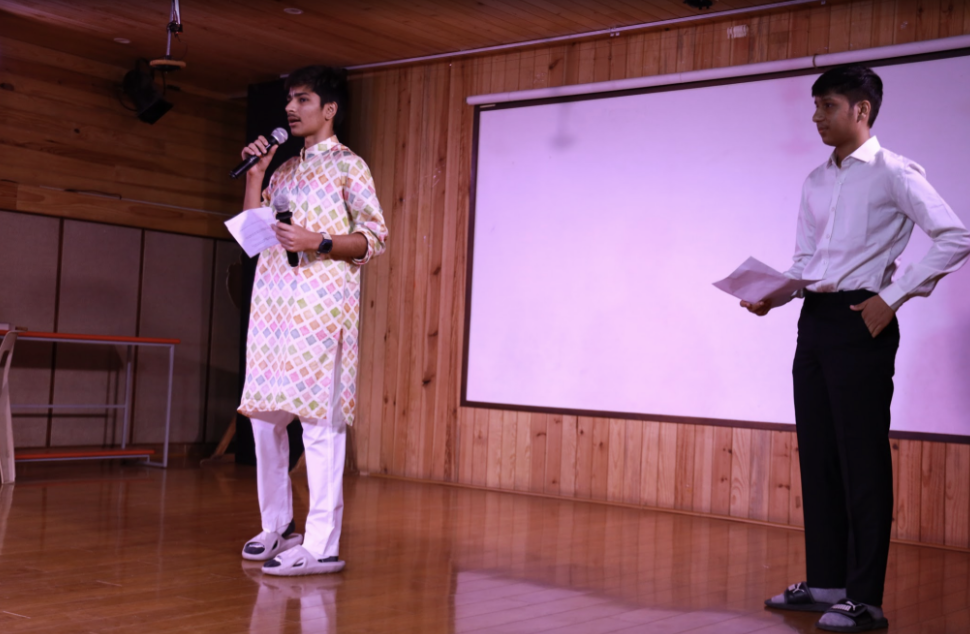
For this event, I performed as a news reporter, delivering the same news content in different tones and styles alongside a partner. By shifting between serious, humorous, dramatic, and informative deliveries, we explored how language, voice modulation, and expression can completely change meaning and emotional impact. This activity highlighted the versatility of Hindi and allowed us to creatively engage with the language in a dynamic and modern way.
LO1: Identify own strengths and develop areas for growth
This experience helped me clearly recognize my strengths in communication and performance. My background in Trinity Communication exams and street plays gave me confidence on stage and helped me engage effectively with the audience. During rehearsals, I realized that my strengths lay in voice modulation, expressive delivery, and improvisation, which allowed me to adapt smoothly to different tones and emotions.
At the same time, the experience made me aware of areas I needed to improve. Despite preparation, I felt anxious while performing live, especially when switching emotional tones quickly. Through repeated rehearsals and reflection, I learned to manage my nervousness, stay composed, and focus on clarity and connection with the audience. Identifying both strengths and weaknesses gave me a clearer direction for improving my public speaking and performance skills.
LO2: Demonstrate that challenges have been undertaken, developing new skills
One of the main challenges was delivering the same script in multiple emotional styles without losing clarity or coherence. This required careful control over pitch, pace, pauses, facial expressions, and body language. Experimenting with these elements helped me develop a deeper understanding of how voice and expression influence communication.
Another significant challenge was working closely with my partner. Coordinating rehearsals, synchronizing cues, and agreeing on how each section should be delivered required problem-solving, adaptability, and open communication. Overcoming these challenges helped me develop new skills in creative thinking, teamwork, and flexibility, which are valuable beyond academics.
LO3: Demonstrate how to initiate and plan a CAS experience
This performance required active planning and initiative from the start. Together with my partner, I contributed to shaping the concept of the act—deciding how to structure the news segments, allocate speaking parts, and transition smoothly between different tones. We planned rehearsals around our academic schedules, refined our script based on feedback, and adjusted our delivery to improve clarity and impact.
Taking responsibility for planning taught me the importance of organization, preparation, and adaptability. I realized that creative success depends not just on talent, but on thoughtful planning and consistent effort.
LO4: Show perseverance and commitment in CAS experience
Preparing for the Hindi Immersion Event demanded sustained effort over more than two weeks. Balancing rehearsals with schoolwork tested my time management and commitment, especially during periods of increased academic pressure.
Despite these challenges, I remained dedicated—arriving early for rehearsals, revisiting difficult sections, and constantly refining my performance. This perseverance allowed me to deliver a confident and expressive presentation on stage and reinforced the importance of consistency and discipline in creative pursuits.
LO5: Demonstrate skills and benefits of working collaboratively
Collaboration was central to the success of our performance. My partner and I worked closely to divide the script, agree on emotional interpretations, and synchronize our delivery. Listening to each other’s ideas, accepting feedback, and resolving creative differences helped strengthen mutual respect and teamwork.
In addition, coordinating with teachers and event organizers ensured that our performance aligned with the broader goals of the event. This experience showed me how collective effort, empathy, and shared vision can significantly enhance both the quality of a performance and its impact on the audience.
LO6: Demonstrate engagement with issues of global significance
Language is deeply connected to cultural identity, and Hindi—one of the most widely spoken languages globally—holds immense cultural significance. Through this event, I engaged with the broader issue of preserving linguistic heritage in an increasingly globalized and English-dominated world.
By presenting Hindi through a creative performance format, we encouraged peers and younger students to view the language as expressive, relevant, and powerful. This experience helped me understand how creative expression can promote cultural awareness and contribute to preserving linguistic diversity on a global scale.
LO7: Recognize and consider the ethics of choices and actions
While preparing for the performance, I became more conscious of the responsibility involved in representing a language and culture respectfully. Delivering news in humorous or dramatic tones required sensitivity to ensure that the language was not trivialized or misrepresented.
Ethical awareness also played a role in collaboration—respecting my partner’s ideas, sharing responsibility equally, and maintaining professionalism throughout the process. This experience reinforced the importance of integrity, respect, and accountability in both creative expression and teamwork.

Through the Hindi Immersion Event, I not only celebrated Hindi language and literature but also strengthened my communication, creativity, planning, and collaboration skills. Performing the same content in multiple tones highlighted the emotional depth and flexibility of Hindi, helping both the audience and myself appreciate the language more deeply.
This CAS experience allowed me to embody the IB Learner Profile attribute of a Communicator, as I expressed ideas clearly, connected with others meaningfully, and engaged audiences through creative performance. Beyond the stage, I gained valuable life skills such as perseverance, ethical awareness, teamwork, and thoughtful planning.
In conclusion, the Hindi Immersion Event was a transformative CAS experience that blended cultural appreciation with personal growth. It strengthened my passion for language, performance, and meaningful collaboration while reinforcing the importance of preserving Hindi for future generations.