This year’s Children’s Carnival Day at Fountainhead School—organized by the Rotary Club and Interact Club—provided an enriching platform to intertwine academic learning, community service, and joy. Government school children were welcomed to our campus for a day of thoughtfully curated games and activities, each designed to foster both engagement and understanding. As part of the CAS Service strand, I collaborated with two peers to develop an educational initiative centered on SDG 6: Clean Water and Sanitation, striving to transform service into a vehicle for impactful, experiential learning.
Our objective was to design a game that was not only simple and engaging but also pedagogically meaningful. Following a brief ideation session, we devised an interactive activity that sustained the children’s enthusiasm while imparting a critical real-world concept: the intrinsic value of water and the necessity of conserving it.

The Water Basket Challenge
Our game had a fun twist. We set up two buckets filled with water and formed two teams with five children each. The rule was that one player would be blindfolded for every lap. The blindfolded participant had to fill a plastic cup with water from the bucket, walk to the finish line, and pour it into another container. Meanwhile, their teammates could only guide them verbally—no touching.
They had a total of two minutes, and the team that completed the most successful laps without spilling too much water won the challenge.
The atmosphere was vibrant—echoes of laughter, instructions, and jubilation accompanied each successful attempt. Yet, beneath this exuberance, the central message remained salient: every drop of water is consequential. The exercise demonstrated the tangible impact of teamwork, patience, and careful action, effectively reinforcing SDG 6’s ethos that responsible water stewardship is imperative.
CAS Learning Outcomes Demonstrated

LO1: Identifying Strengths and Areas for Growth
During the planning and implementation phases, I recognized my aptitude for generating creative activity concepts and articulating them with clarity. However, I also identified a need to improve my ability to deliver concise instructions to large, energetic groups—an area that requires both precision and composure.
LO2: Undertaking Challenges and Developing New Skills
Managing a dynamic group of young participants—ensuring their safety, facilitating order, and responding to emergent situations—presented considerable challenges. Through this process, I cultivated new competencies, notably in event coordination, adaptive problem-solving, and effective guidance, all while sustaining a seamless and enjoyable experience.

LO3: Demonstrating How to Initiate and Plan a CAS Experience
Our team assumed full responsibility for orchestrating the game—from conceptualization and material procurement to spatial arrangement, rule development, and the creation of a coherent structure. This comprehensive process demanded initiative, critical thinking, and foresight to ensure alignment with our SDG-centric objectives.
LO4: Showing Commitment and Perseverance
We facilitated multiple iterations of the activity for various cohorts of children. Despite growing fatigue, we remained steadfast in maintaining high energy levels, delivering instructions with clarity, and ensuring a positive experience for all participants.
LO5: Working Collaboratively
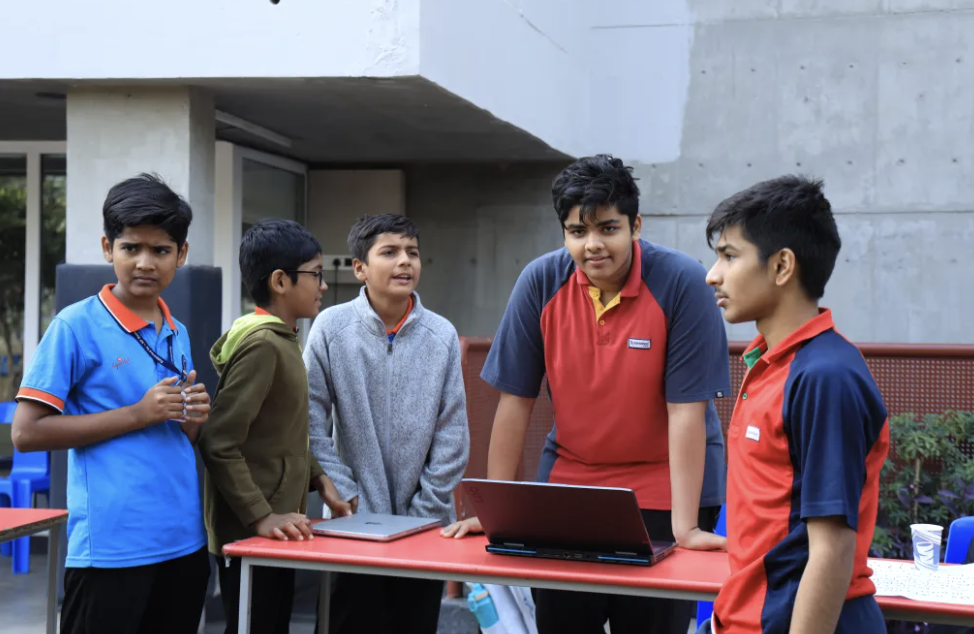
This endeavor was fundamentally rooted in collaborative effort. My peers and I delineated roles—one elucidated the rules, another ensured safety, and the third managed lap counts and timekeeping. Our collective coordination facilitated a seamless execution, while the children themselves experienced the intrinsic value of teamwork in enhancing performance.
LO6: Engagement with Issues of Global Significance (SDG 6)
Our initiative was singularly devoted to advancing awareness of water conservation—a matter of profound global significance. By transforming this abstract imperative into a concrete, participatory challenge, we enabled the children to internalize the notion that responsible water usage is both pragmatic and essential in everyday life.
LO7: Recognizing and Considering the Ethics of Choices and Actions
This experience prompted reflection on the ethical responsibility individuals hold toward shared natural resources such as water. By designing a game where water could easily be wasted if participants were careless or poorly guided, we intentionally highlighted the consequences of irresponsible actions. The activity encouraged participants—and ourselves—to recognise that water conservation is not merely a practical concern but an ethical one, involving accountability toward communities, ecosystems, and future generations. This reinforced the understanding that everyday choices, even seemingly small ones, carry broader moral implications.

Conclusion
Children’s Carnival Day transcended the bounds of a mere event; it exemplified how substantive service is embedded in the creation of formative experiences yielding enduring lessons. The central tenet—that service both influences and educates—remained paramount throughout.
Observing the children assimilate the imperative of water conservation through experiential learning underscored the profound fulfillment inherent in the CAS experience. This activity demonstrated the synthesis of creativity, collaboration, and global consciousness, illustrating how service initiatives can foster a nuanced understanding of critical global challenges.