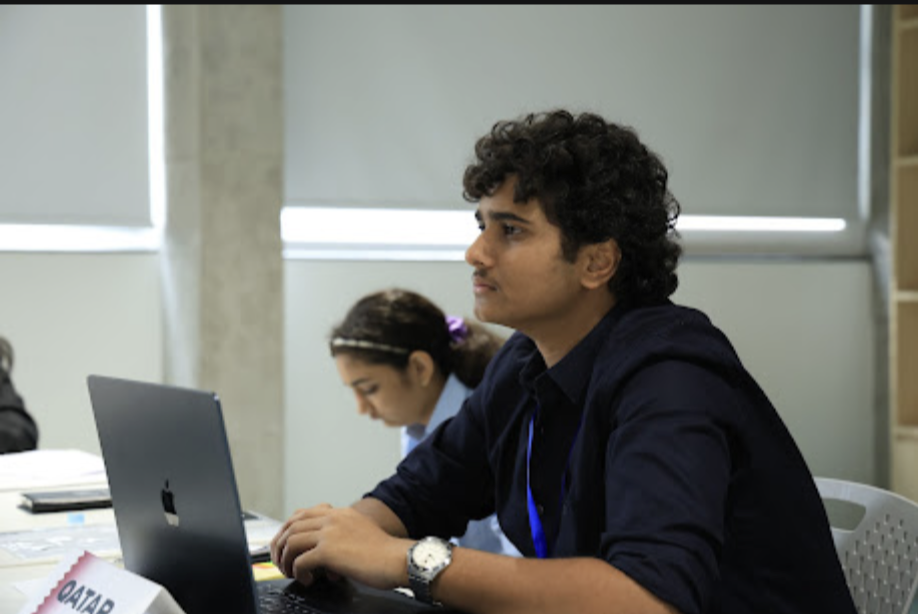
Participating in FSMUN 12.0 as a delegate in the International Court of Justice (ICJ) was one of the most intellectually demanding CAS experiences in my portfolio. Representing a country in a legal setting required me to think beyond general debate and focus on structured legal argumentation, evidence, and interpretation of international law. This experience went beyond public speaking; it demanded analytical precision, ethical awareness, perseverance, and deep engagement with globally significant issues.
LO1: Identifying strengths and areas for growth
This experience helped me identify my strengths in research, logical reasoning, and structured communication. Preparing legal arguments required analysing case studies, treaties, and precedents, which I was able to organise into clear and convincing submissions. However, I also recognised areas for growth, particularly in spontaneous rebuttal and confidence during cross-questioning. The ICJ format pushed me to think quickly and respond under pressure, helping me become more adaptable and self-aware.
LO2: Undertaking challenges and developing new skills
Participating in the ICJ was a significant challenge as it required a shift from traditional debate to legal reasoning. I developed new skills such as constructing memorials, applying international law principles, and presenting arguments in a formal courtroom style. I also learned how to interpret legal documents, build evidence-based arguments, and respond to counterarguments with precision. These were entirely new skills that I developed through active participation.
LO3: Initiating and planning a CAS experience
My preparation for FSMUN 12.0 required careful planning and organisation. I independently structured my research, divided my time between understanding legal frameworks and preparing arguments, and ensured I was ready for both written and oral components. This planning allowed me to approach the conference with clarity and confidence, demonstrating initiative and responsibility in managing my workload effectively.
LO4: Perseverance and commitment
The ICJ committee demanded consistent effort, from pre-conference preparation to active participation during sessions. Despite the complexity of legal discussions and the pressure of presenting arguments without receiving any awards, I remained committed and engaged throughout. I continued contributing thoughtfully, which reflected my perseverance and dedication to the experience rather than external recognition.
LO5: Working collaboratively with others
Although the ICJ focuses on legal argumentation, collaboration was still essential. I worked with other delegates during discussions and informal interactions to understand different interpretations of the case. This helped me refine my arguments and appreciate multiple perspectives, strengthening my ability to work respectfully and effectively with others.
LO6: Engagement with issues of global significance
The ICJ deals directly with disputes between states, making it deeply connected to global issues such as justice, sovereignty, and international law. Through this experience, I engaged with real-world legal conflicts and understood how international disputes are resolved through legal frameworks. It deepened my awareness of global governance and strengthened my interest in international law.
LO7: Ethical consideration of choices and actions
Representing a country in a legal dispute required careful ethical consideration. I had to present arguments that aligned with my assigned position while maintaining respect for justice and fairness. This experience taught me to separate personal opinions from professional responsibilities and to approach sensitive issues with integrity and balance.
Conclusion
FSMUN 12.0 was a meaningful CAS experience that contributed significantly to my personal and intellectual development. Even without receiving any awards, the experience challenged me, strengthened my skills, and broadened my understanding of international law and global issues. It has shaped how I approach complex problems and reinforced the importance of perseverance, ethical awareness, and continuous learning in my CAS journey.